

The vacuum cleaner was already whining, and I had hardly finished my coffee.
There was a sock on the stairs, a mark on the fridge door and breakfast crumbs beneath the table - although breakfast seemed to have happened only five minutes earlier.
I was not truly cleaning the kitchen. I was trying to clean away the knot in my stomach that kept telling me, “You’re behind, you’re messy, you’re failing at this.”
I would bite at my partner for abandoning a mug, then immediately feel absurd.
I would scrub until my back hurt, only to sit on the sofa scrolling through immaculate Instagram homes and feel worse still.
Then, one day, while looking at a sticky patch of floor I had already wiped twice, I asked myself: who was I really doing all this for?
I wasn’t cleaning my home, I was cleaning my conscience
Once I recognised it, I could not ignore it.
The crumbs were not why I was vacuuming; it was the guilt.
If I tried to sit down with a book at 3 p.m., I could usually manage about six minutes before my mind began shouting: “You didn’t fold the laundry. The sink. The entryway. The bathroom.”
I would leap up and start wiping something - anything - simply to quieten the persistent hum in my head.
Cleaning had turned into my preferred excuse.
When I was occupied, I could feel like a capable adult. The moment I stopped, shame would creep back under the door like dust.
The turning point arrived on an ordinary Tuesday evening.
My child asked me to sit and draw, and I heard myself reply, “I just need to tidy first.”
“Again?” they replied, not even annoyed, just resigned.
That single word landed harder than any untidy room ever could.
I looked around at the wiped worktops, plumped cushions and toys in baskets. The house was not flawless, but it was certainly “good enough.”
Still, my body was running on autopilot, repositioning coasters as though my life depended on it.
I was not deciding to clean; cleaning was deciding for me.
That was when I understood that my actual problem with dirt was not on the floor - it was in the rules I had made for myself.
After recognising the guilt pattern, the reasoning behind it seemed almost painfully obvious.
We are sold the quiet idea that a “good” person keeps their home under control all the time.
Add social-media tours of beige lounges and gleaming cleaning rituals, and ordinary household mess starts to seem like a personal failing.
Every sock, every plate with dried-on food and every dusty shelf becomes a small accusation.
The brain dislikes being accused.
It prefers an immediate victory.
So we pick up the sponge not because the mark cannot wait, but because the discomfort cannot.
Honestly, nobody lives this way every day.
Yet we compare ourselves with that fantasy, turning cleaning into a measure of morality rather than a practical part of life.
The day I tried “neutral cleaning” instead of guilt-cleaning
The change began as a small experiment: for one weekend, I chose to clean only because I wanted to, never because I was panicking.
I named it “neutral cleaning.”
I took a piece of paper and wrote one line:
“My home exists to support my life, not to judge it.”
Next, I created two defined cleaning periods: 20 minutes after breakfast and 20 minutes before dinner.
If I felt compelled to scrub outside those times, I had to stop and ask, “Is something actually dirty enough to bother me right now, or am I just uncomfortable?”
When it was genuinely dirty, I noted it down for the next cleaning period.
When it was guilt, I sat back down.
On that first day, it felt strangely defiant, as if I were skiving school.
Dust was not the difficult part. It was the quiet that came afterwards.
Once the continual buzz of “I should be cleaning” disappeared, unexpected emotions started surfacing.
I realised I reached for the vacuum when I was worried about work.
I cleaned the sink most thoroughly when I felt lonely or excluded from friends’ plans.
I wiped the worktops again whenever my inbox frightened me.
That was the uncomfortable realisation: cleaning had become my emotional mute button.
So I began replacing the action.
Rather than grabbing the mop at 11 p.m., I would message a friend, stretch for five minutes or simply say, “I’m stressed” aloud.
The house did not fall apart.
Nobody arrived to take away my adult card.
Dinner was still cooked and clothes were still washed, just without the constant soundtrack of “never enough.”
I learnt one thing very quickly: replacing guilt-cleaning with choice-cleaning does not mean abandoning every task.
It means making the work more manageable, more defined and more truthful.
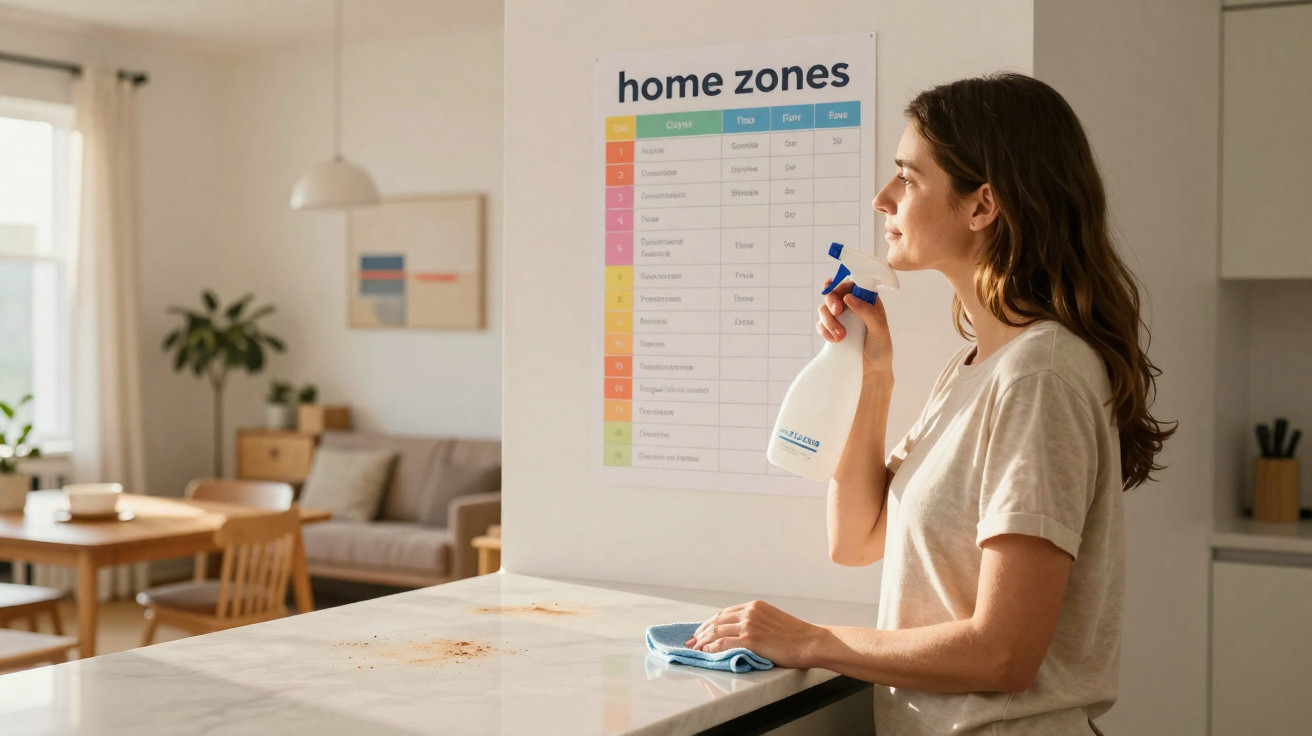
On a sticky note, I made a “good-enough baseline” list: dishes once a day, rubbish taken out regularly, the bathroom wiped twice a week and floors cleaned when they looked dusty - not when an influencer suggested it.
Once those essentials were covered, everything else was a choice rather than a moral crisis.
This was the straightforward sentence that released me: a messy corner doesn’t mean you’re a messy person.
It only means that you live there.
When I stopped connecting my self-worth to my skirting boards, I could finally view cleaning as it really was: several small jobs, not a judgement on who I was.
Turning cleaning into a choice: the method that actually stuck
The approach that endured was not a colour-coded timetable or a military-style checklist.
It was three uncomplicated steps I could manage even when my brain felt like mashed potatoes.
Step 1: Tiny non-negotiables.
I chose three brief jobs that made the home feel calmer straight away: emptying the sink once a day, resetting the sofa and doing a 5-minute sweep of the floor in the most-used room.
On difficult days, that was my “bare minimum”.
Step 2: Time boxing.
Rather than pursuing an unseen finish line, I set a timer for 15–20 minutes and stopped as soon as it rang.
There were no extra minutes “just to do a bit more.”
Step 3: A “guilt-free mess zone.”
I designated one chair, one table and one basket where piles could exist without criticism.
The moment my mind knew that one space was officially allowed to be imperfect, it stopped screaming.
Something amusing happened when I stopped cleaning from guilt: I began doing more of the useful tasks and fewer of the theatrical ones.
Instead of reorganising shelves that were already tidy, I finally tackled the sticky microwave.
There were still occasions when the old urge returned.
I would catch myself reaching for a cloth because visitors were coming, while that familiar voice whispered, “They’ll think you’re lazy.”
Rather than arguing with it, I began labelling it: “That’s guilt talking, not reality.”
Most of us were never taught a balanced relationship with mess.
We either grew up in homes ruled by chaos or in homes where a magazine-ready lounge mattered more than rest.
Naturally, we can swing too far into the extremes as adults.
The aim is not to become a carefree slob.
It is to clean like an adult rather than a frightened child trying not to get into trouble.
One sentence helped ground this new way of thinking.
I wrote it on a sticky note and placed it above the washing machine:
“Clean for comfort, not for worth.”
Whenever I felt tempted to go too far, I read it and asked myself: “Will this task actually make my life easier today, or am I just trying to feel ‘enough’?”
I also kept a brief list on the fridge, in a small mental “box”:
- What genuinely bothers my senses? (Smells, sticky surfaces, cluttered table)
- What really affects health and safety? (Trash, dishes, bathroom)
- What is purely cosmetic? (Perfectly folded towels, aligned books, decor dusting)
If a job belonged to the final category, I did it only when I had spare energy, never when I was already exhausted.
That small act of separating my standards into reality and performance changed everything.
Living with chosen mess and chosen order
The most surprising part of this experiment is not that my home is now magically spotless.
It is that I can walk past a stack of post on the table and feel… nothing.
There is no hidden shame and no restless need to abandon everything else.
Some days, the lounge looks as though a tornado has auditioned there.
On those days, I no longer ask, “How could you let it get like this?”
Instead, I ask, “What did today give you instead? Rest? Work done? Time with someone you love?”
We will never live in a showroom, and deep down, we do not want to.
We want homes that make room for our real lives: midnight snacks, sick days, unexpected visitors, difficult weeks and slow mornings.
The more I see cleaning as one small element of that life, rather than the stage on which everything must appear perfect, the lighter it all becomes.
Your version may be different.
Your routines, standards and “I can live with that” areas may not resemble mine.
But when you stop cleaning from guilt and begin cleaning by choice, the entire feeling of your home shifts - even if there are still a few crumbs underfoot.
| Key point | Detail | Value for the reader |
|---|---|---|
| Move from guilt to choice | Use defined time periods and a “good-enough baseline” list | Lowers mental load and the continual pressure to clean |
| Tiny non-negotiables | 3 small daily tasks that steady the space | Produces a visible difference without overwhelming effort |
| Emotional awareness | Recognise when cleaning is masking stress, anxiety or loneliness | Helps interrupt compulsive cleaning patterns and address genuine needs |
FAQ:
Question 1 How can I tell whether I am cleaning from guilt or a genuine need? Ask yourself: “If no one ever saw this room, would I still feel like I have to clean it right now?” If the pressure eases when you picture having no witnesses, it is probably guilt rather than urgency.
Question 2 What happens if my partner or family has higher (or lower) standards than I do? Begin by agreeing a shared “health and safety” baseline: rubbish, dishes, the bathroom and food-preparation areas. Then discuss the rest as preferences, not moral issues. Neither of you is right or wrong; you are simply different.
Question 3 Can this approach work with children or pets, when the mess never ends? Yes, although the emphasis moves to rapid resets. Short daily bursts, baskets for quick tidying and realistic expectations matter much more than chasing a permanently tidy home that does not exist.
Question 4 What if I am too overwhelmed even to begin the tiny non-negotiables? Halve them. Do one dish, one surface and one small patch of floor. Once that feels secure, build from there. Overwhelm usually means your expectation is too large for your current energy, not that you are incapable.
Question 5 Will my home really become cleaner if I let go of guilt? For most people, paradoxically, yes. When cleaning no longer feels like punishment, doing it regularly becomes easier. There is less drama and more small, manageable actions that accumulate over time.


Comments
No comments yet. Be the first to comment!
Leave a Comment