
The air fryer has reshaped cooking in many homes, reducing the need for oil while making weekday meals quicker to prepare. Lidl, the German retailer, has now introduced a new 9-in-1 appliance in Spain that seeks to take the idea further, combining multiple cooking techniques in one unit and potentially reducing the number of appliances taking up worktop space.
A new rival in the air fryer era
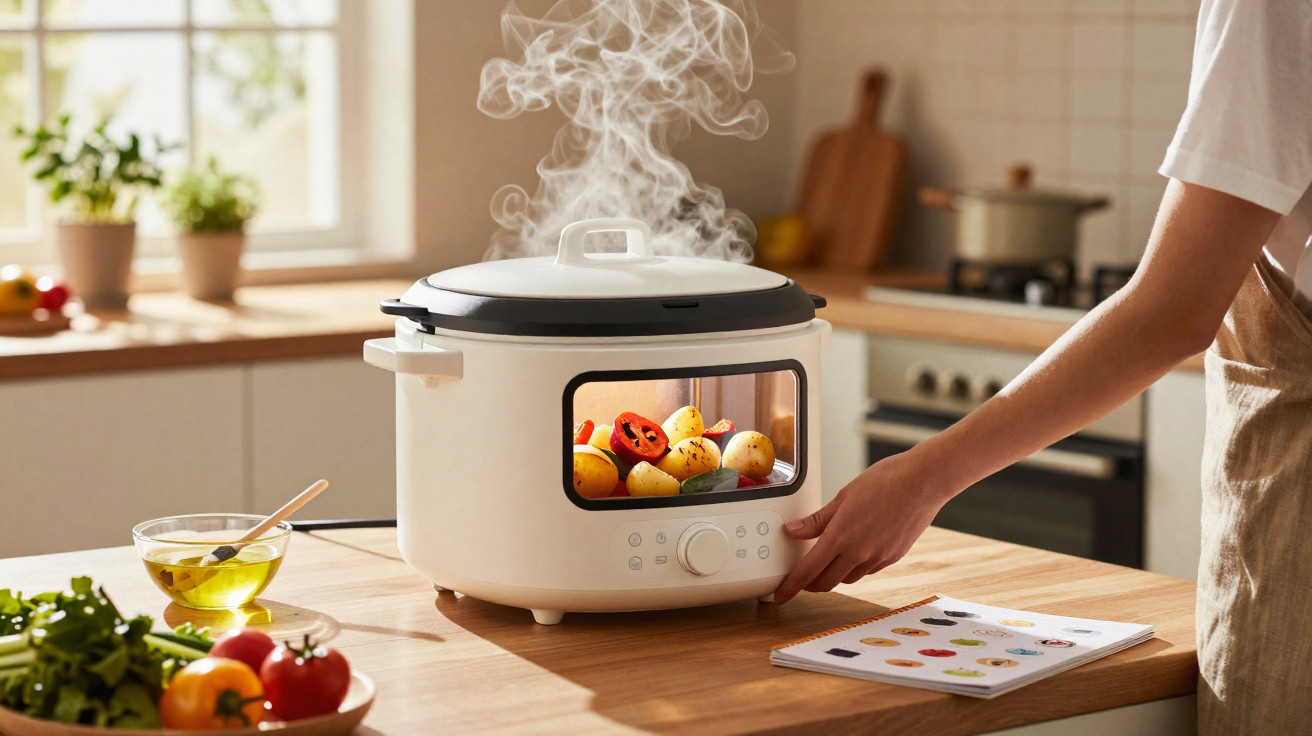
Lidl’s Silvercrest 9-in-1 is more than an air fryer carrying an elaborate label. It works more like a compact oven with a viewing window, while also being able to roast, dehydrate, slow-cook and turn a whole chicken on a rotisserie spit.
It is aimed at people who enjoy the crunchy results of air frying but find small baskets and single-purpose devices restrictive. Rather than moving between an oven, grill, dehydrator and reheating device, owners can use one appliance offering a 12-litre capacity. This makes it better suited to families and batch cooking than many earlier air fryer models, which frequently found it difficult to cook a complete meal at once.
Rather than replacing deep fryers alone, the Silvercrest 9‑in‑1 aims to replace several core appliances at once: oven, grill, dehydrator and rotisserie.
A 1,800-watt hot-air circulation system sits at the centre of the appliance. Fast-moving airflow circulates heat around food in an attempt to reproduce the browning associated with an oven or fryer, without immersing ingredients in oil. The familiar claim is a crisp exterior and tender centre, using less fat and taking less time to cook.
Nine cooking modes in one appliance
The Silvercrest 9-in-1 uses both software and physical accessories to accommodate a wide selection of cooking methods. Its front-mounted digital touch panel provides automatic programmes alongside manual settings. Preset modes deal with common foods and techniques, instead of leaving users to estimate temperatures and timings themselves.
From air frying to slow cooking
Lidl’s specifications state that the appliance has nine main modes, combining functions normally spread across several separate machines. They are:
- air frying for chips, vegetables and breaded snacks
- roasting and baking for meat, casseroles and cakes
- grilling for skewers, vegetables and steaks
- dehydrating fruit and herbs at low temperatures
- reheating leftovers without making them soggy
- slow cooking for stews and tougher meat cuts
- steam-assisted cooking for selected recipes
- a rotating basket setting for chips and small snacks
- rotisserie cooking for whole chicken and kebab-style meat
This range of capabilities places the product more firmly in the multi-cooker category than in the straightforward air fryer market. In particular, its rotating accessories let food cook more consistently as it turns through the hot airflow, much like a spit in a conventional rotisserie oven.
The 9‑in‑1 label refers less to marketing jargon and more to the reality that one appliance now covers frying, roasting, grilling, dehydrating and rotisserie cooking.
Key specifications and accessories
Lidl presents the Silvercrest 9-in-1 as one of the more fully equipped options within its price bracket. Its principal specifications are:
| Feature | Specification |
|---|---|
| Power | 1,800 W |
| Capacity | 12 litres |
| Temperature range | 40 °C to 200 °C |
| Timer | Up to 24 hours for dehydration mode |
| Automatic programmes | 10 presets via digital touch screen |
| Cleaning | Removable accessories dishwasher-safe |
Its 40 °C minimum setting is significant for dehydrating food and gently proving dough, while the maximum temperature of 200 °C is sufficient for routine roasting and crisping. Extended timer settings, reaching 24 hours, allow fruit, herbs and even homemade pet treats to dehydrate slowly without continual monitoring.
The package contains several accessories that make the chamber more adaptable: internal shelves, a drip tray, a rotating basket, a spit for whole chicken, a kebab set with skewers, a removal handle, and a recipe booklet designed around the appliance’s individual modes.
Watching food through the front window
One of the more useful design features is positioned at the front: a broad viewing window. With early air fryers, users often had to remove the drawer to inspect the food, allowing heat to escape every time. In this case, the glass panel enables home cooks to observe a chicken browning or apple slices drying out without stopping the programme.
The front window cuts down on guesswork and heat loss, making it easier to judge doneness without repeatedly opening the device.
This visibility is particularly relevant when changing between cooking methods. Dehydration, for instance, relies greatly on texture rather than time alone. Seeing whether fruit slices remain moist or have become leathery can help avoid ruining a batch.
Price, intended buyers and availability
In Spain, Lidl offers the Silvercrest 9-in-1 exclusively through its online shop for 79.99 euros. Based on current exchange rates, this is roughly 490 Brazilian reais and considerably less than many branded multi-cookers or large air fryers sold across the broader European market.
Silvercrest is Lidl’s own brand for electronics and small household appliances, and it generally pursues a mid-range mix of price and functionality. It does not usually compete on premium styling. Its emphasis is instead on value, appealing to consumers who want a versatile appliance but are reluctant to spend heavily on an item that could eventually go unused.
Limited availability beyond Europe
Officially, the Silvercrest 9-in-1 is limited to countries in which Lidl operates. This rules out Brazil and much of Latin America, while also leaving consumers in the US and UK without direct access. Some overseas shoppers have instead looked to worldwide marketplaces including eBay and AliExpress, where third-party sellers list imported models.
These options come with different drawbacks. Importing directly can mean additional delivery costs, customs charges and longer waiting periods. Warranty protection may disappear after the product crosses a border, while authorised servicing can become difficult to obtain. With a heating appliance that uses 1,800 watts, the absence of such support may create concerns over reliability and safety.
Buying the 9‑in‑1 through grey‑market imports can lower the upfront price compared to premium rivals, but shifts the risk of faults and repairs entirely to the buyer.
Why multi-function cookers are gaining ground
Even in places where this Silvercrest model is not sold, its arrival underlines an evident trend. Many households are dealing with restricted kitchen space, higher energy bills and busy routines. A single device capable of grilling steak, drying mango slices and roasting chicken can be much more appealing than several appliances designed for one task each.
There is an advantage for manufacturers, too. Multi-cookers create a learning curve for their owners. After a household has adjusted its recipes and habits to a particular machine, it may return to the same manufacturer when replacing or upgrading it. Recipe apps, cookbooks and social-media communities can then reinforce that pattern by exchanging timings and tips tailored to individual devices.
Health, energy and practical compromises
From a health viewpoint, appliances such as the Silvercrest 9-in-1 make lower-oil cooking possible without necessarily losing texture. Chips, chicken wings and breaded vegetables may become crisp with only a light layer of oil, or none at all depending on preference. Dehydration settings also make homemade snacks possible, including dried banana chips, vegetable crisps and granola without added sugar.
The energy picture is less straightforward. An appliance rated at 1,800 watts has a peak demand similar to that of many ovens. However, cooking durations are often shorter, and its smaller cavity warms up more rapidly than a full-sized oven. For a single tray or smaller meal, this may result in lower total energy use. A conventional oven can still be the more sensible choice for large roasts or extensive baking.
There are limitations as well. Multi-cookers seldom equal the capacity or baking consistency of a premium built-in oven when making bread or pastry. Some people may also find the learning process frustrating, since cooking temperatures and times differ from those in printed recipes and experimentation remains necessary.
What this indicates for future kitchen appliances
The Silvercrest 9-in-1 suggests the likely next direction for the air fryer market. Buyers now expect more than a basket and timer. Glass doors, digital presets, rotisserie accessories and dishwasher-safe components are rapidly becoming standard features rather than extras.
For those considering a similar appliance, a straightforward checklist is useful: measure available worktop space; compare capacity with the size of meals normally prepared; choose a model with a clear temperature range reaching at least 40 °C if dehydration is important; and confirm that spare parts and servicing are available in your country. A lower-cost import may seem attractive, but a failed heating element or unresponsive touchscreen can turn any multi-cooker into an expensive storage box.
As more manufacturers enter the segment, the term air fryer may gradually give way to a wider category of compact ovens with front windows that air fry, roast, dehydrate and slow-cook in one chamber. The Silvercrest 9-in-1 is Lidl’s version of this approach, but it points towards a next generation of worktop appliances that will act less like fryers and more like adaptable mini-kitchens in a single cube.





Comments
No comments yet. Be the first to comment!
Leave a Comment