
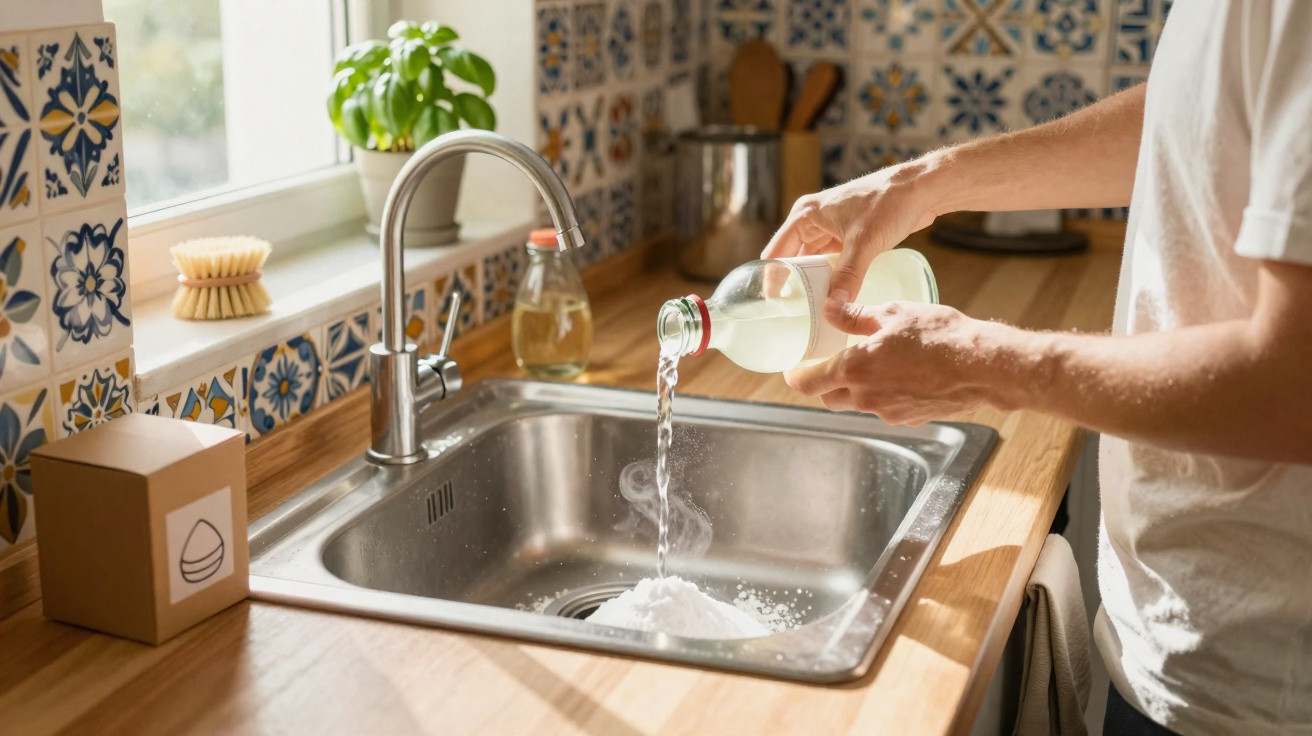
The earliest warning is barely noticeable.
It might be no more than a sluggish swirl as water lingers in the sink, with a few bubbles caught around the rim. You are hurrying, turn off the tap sharply and pay it no attention. Then, one evening, the odour arrives first – damp, unwashed, rather like something abandoned at the back of the fridge. The water stops draining away. It sits moodily in the basin, thick and grey, mirroring your irritated expression.
Your hand pauses midway. You study the label on the back, where the tiny print suddenly seems far too serious for a Tuesday evening. Children. Pets. Gloves. Eye protection. Ventilation.
There is an ageing box of baking soda in the cupboard, alongside a dusty bottle of vinegar. They appear safe. They seem inexpensive. You pause, then wonder: what if the quieter remedy is more effective than the harsh one?
Why this gentle fizz is becoming popular in our sinks
After seeing baking soda and vinegar bubble inside a clogged drain, it is difficult to forget the sight.
The reaction can seem almost alive, as though the pipe is exhaling years of soap residue and lost hair bands. People record it, share it online and leave comments such as, “Tried this at 11 pm and my sink is a new person.” It is strangely satisfying, much like watching patios being pressure-washed or neatly organised fridges.
That small moment of apparent magic reflects a subtle rebellion. Many households no longer want to keep harsh cleaning chemicals beneath the sink. Large plastic bottles can feel excessive for a trickle of slow-draining water. Replacing them with a spoonful of white powder and a dash of clear liquid feels, briefly, like stepping off the chemical treadmill.
A recent survey by a UK consumer group found that more than 40% of people have cut back on harsh cleaners in recent years.
This change is not driven by major campaigns. It begins on a Sunday morning when the kitchen sink blocks just after breakfast, children are rushing about and there is no time to visit the shops. A parent in Manchester tested the “grandma method” of baking soda and vinegar without expecting much. The water drained, the familiar gurgle returned, and she passed the tip on through the school WhatsApp group.
After that, the idea spreads quickly. Colleagues mention it beside the office coffee machine. A neighbour over the hedge says, “Use what you have in the pantry first.” Gradually, the thinking changes. Perhaps we do not need a separate fluorescent bottle for every issue. Perhaps our drains are not as fragile as marketing would have us believe.
What takes place in that concealed network of pipes is remarkably straightforward. Baking soda is a mild alkali, while vinegar is a mild acid. Separately, they are gentle and almost unremarkable. Combined, they react by releasing carbon dioxide bubbles, which work their way into sticky layers of grease and soap scum. The fizz does not “eat” the blockage. Instead, it loosens and agitates it, allowing hot water to wash it away.
Rather than using corrosive products that may damage pipes before entering wastewater systems, you are using ingredients suitable for baking or dressing a salad. It is the same science used for school volcano projects, only now it is helping with real life in the bathroom at 9 pm. This blend of childhood familiarity and grown-up usefulness is precisely why the technique endures.
How to unclog a drain with baking soda and vinegar without sacrificing your evening
The basic process is almost ridiculously easy, which is why people often miss out steps.
First, boil a full kettle and pour the water slowly into the drain. This warms the pipe and softens grease. Next, scatter about half a cup of baking soda straight into the opening. If necessary, gently tap the pipe to help it travel further down. Leave it for several minutes inside the dark, still pipe.
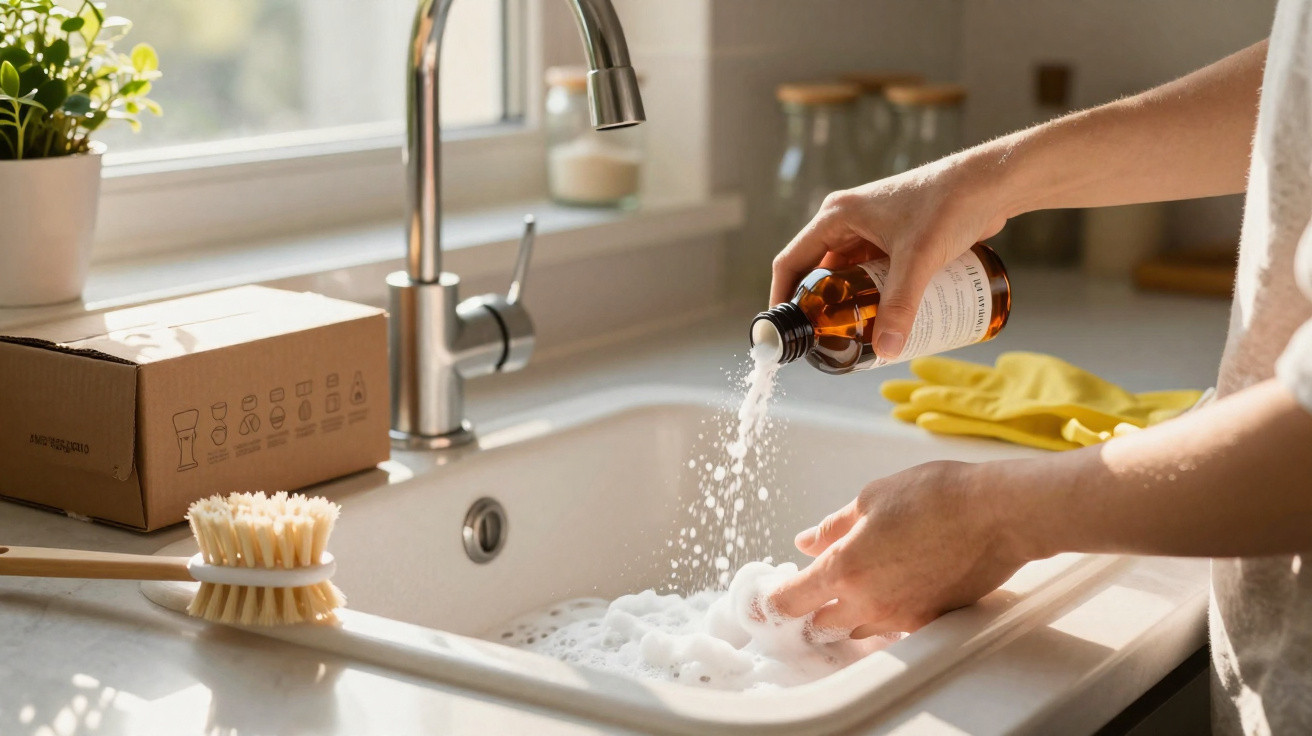
Then combine one cup of vinegar with one cup of hot water and pour the mixture slowly over the baking soda. You will hear it before it becomes visible – a quiet hiss, like opening a fizzy drink in an otherwise silent room. Foam rises through the pipe and forces its way into sticky deposits. Cover the drain with a plug or small plate to direct the reaction downwards, then leave it for 15 to 20 minutes.
When the waiting time is over, pour another kettle of very hot water down the drain. This final rinse carries away the debris that has been loosened. At times, the improvement is immediate. Water spins away more quickly and the smell disappears. Just like that, your sink is back in use without a gas mask or a warning label.
In an ideal world, you spot the blockage early. Real life is less tidy. During a hectic week, water may have been pooling in the bath for days before anyone mentions it. The truth is that natural methods have their limits. If a drain is entirely blocked or a solid item is lodged inside, no amount of fizz will dissolve the problem by magic.
When it does not work, people often make the same mistakes. They panic, add more baking soda and immediately follow it with a chemical drain cleaner. That combination is a poor cocktail for your pipes and can create fumes you certainly do not want in a small bathroom. Let us be honest: nobody really carries out that small, regular maintenance of the trap every day.
Instead, use a layered approach. Try the baking soda and vinegar mixture once, or perhaps twice. If the water still will not drain, stop there. Reach for a plunger or drain snake, or contact somebody able to take apart the trap. There is no embarrassment in recognising that a mouse-sized mass of hardened toothpaste and hair requires more than cupboard ingredients.
One plumber I spoke to put it bluntly:
“I’d rather you try baking soda and vinegar ten times than pour acid down your pipes once a month. I make less money, but your house lasts longer.”
His message is not that every solution must be “natural” at any cost. It is about selecting the least aggressive option that will still do the job. For most day-to-day issues – slow drainage, a mild odour or a greasy coating – the gentle fizz is enough. For deep or recurring blockages, skilled hands and proper equipment are still better than any bottle.
- Use baking soda and vinegar for mild or early blockages, rather than completely blocked drains.
- Always finish by flushing away loosened debris with plenty of hot water.
- Do not combine natural remedies with harsh chemical cleaners during the same attempt.
Beyond the drain: what this small ritual really changes
Once you have saved a sink using two ingredients from the back of a cupboard, the way you view your home changes slightly. You begin to see that not every issue requires a specialist product backed by a marketing budget. Sometimes it only needs patience, heat and a reaction that lasts a few minutes while you look at your phone and wait for the kettle to boil.
This technique is not simply about saving a few pounds or avoiding the headache caused by strong fumes. It brings a quiet sense of self-sufficiency. On a difficult day, clearing a drain without waiting for a plumber or purchasing yet another bottle can feel like a small victory. It is a reminder that you retain some control over your surroundings, even when everything else feels slightly blocked too.
On a broader level, choosing baking soda and vinegar means less plastic waste, fewer chemical residues entering water systems and fewer toxic-labelled products under the sink where children play. It is not heroic, and it will not change the world by itself. Still, everyone knows change seldom arrives with a drumroll; it slips in through countless ordinary choices made in kitchens and bathrooms.
You may try it once from curiosity and then not think about it again for months. One evening, however, the bath begins sulking once more. You remember the fizz and reach for the same two containers with a familiarity that feels homely, almost old-fashioned. If you live with others, somebody will ask, “What are you doing?” and that is how the story continues to spread.
| Key point | Detail | Benefit for the reader |
|---|---|---|
| Baking soda + vinegar method | Use half a cup of baking soda, then one cup vinegar mixed with one cup hot water, followed by a hot water flush. | Provides a clear, step-by-step routine for unclogging drains safely. |
| Limits of the natural approach | Works best on slow drains and mild clogs, not on fully blocked or mechanical obstructions. | Helps prevent frustration and dangerous combinations with harsh chemical cleaners. |
| Wider benefits | Cheaper, less toxic, fewer plastic bottles, and gentler on pipes and the environment. | Shows why the method is worthwhile beyond clearing today’s blockage. |
FAQ:
- Can baking soda and vinegar damage my pipes? When used occasionally, they are much gentler than many commercial drain cleaners. The reaction is mild and brief, so there is no meaningful risk of corrosion in standard household plumbing.
- How often should I use this method for maintenance? Many people choose a monthly treatment for kitchen and bathroom sinks, particularly if they cook frequently or have long hair. If water is draining normally, there is no reason to use it more often.
- What if the drain is completely blocked and water doesn’t move at all? Avoid home chemistry and try a plunger or drain snake first. If that does not work, call a plumber. Thick, solid blockages and foreign objects generally need to be removed mechanically.
- Is there a difference between white vinegar and other vinegars? Choose plain white vinegar. It is less expensive, clearer and less sticky than balsamic or cider vinegar, which may leave behind colour or odour.
- Can I mix baking soda and vinegar in a bottle and store it? No. As soon as they are combined, the reaction begins and then quickly fades. You need that reaction to happen inside the drain, not in a sealed bottle on a cupboard shelf.

Comments
No comments yet. Be the first to comment!
Leave a Comment