
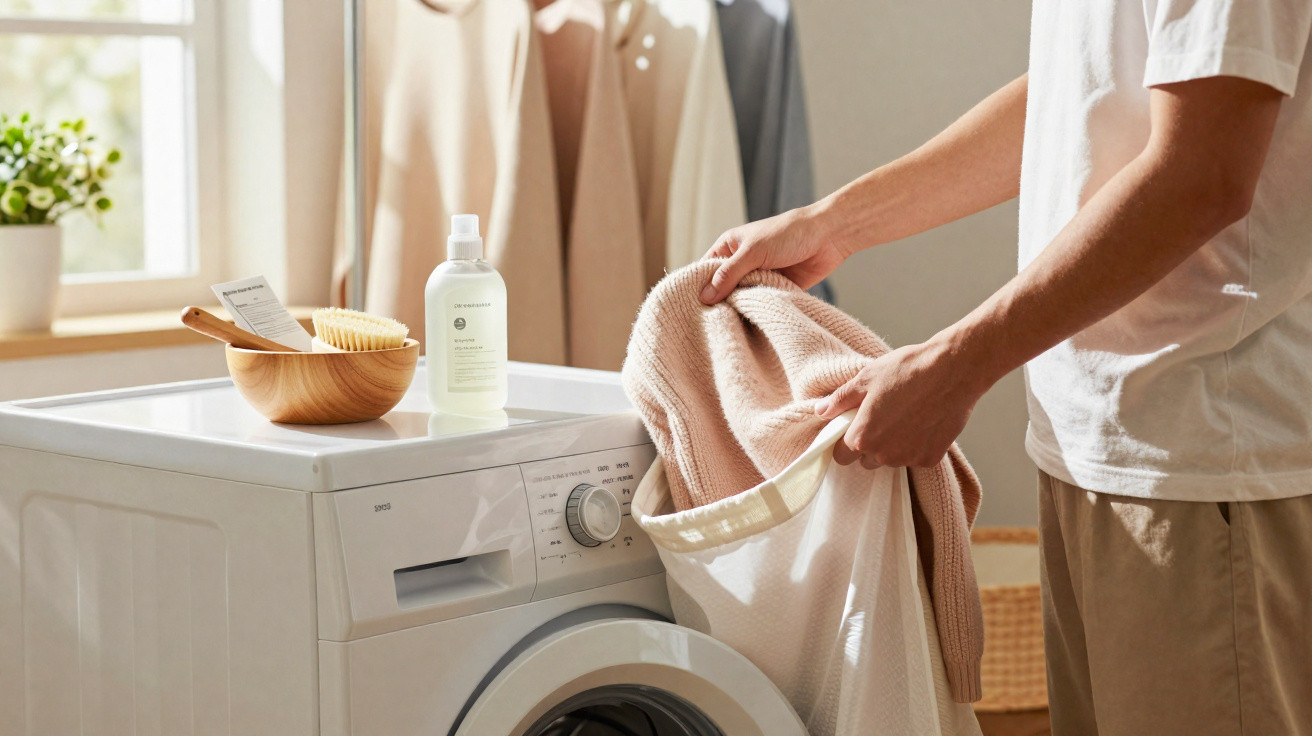
The washing machines keep humming well past midnight in a cramped London laundrette.
A woman wearing an oversized hoodie pulls out a knotted pile of T-shirts, notices their dulled colours and lets out a familiar sigh: “I swear this top was new last month.” Beside her, a man shakes out a black jumper dotted with pathetic little bobbles, already destined to become something he wears only at home.
We spend more on clothes than we may care to acknowledge, quietly expecting them to last for years. But after only a few washes, they can look limp, faded and far older than they should. Not old in a “vintage” way. Simply… worn out.
What is odd is that clothes are seldom ruined by one spectacular error. More often, it is a tiny action repeated every time we do the laundry.
How we quietly ruin our clothes
Walk through any hallway on a Sunday evening and the scene is familiar: overflowing laundry baskets and people trying to force “just one more” T-shirt into the drum. The door shuts with a click, the machine goes on a “Quick 40°” programme, and we leave feeling as though we have achieved something.
We rarely consider the fibres being twisted and rubbed together in such a packed space. We cannot watch colours gradually run or elastic slowly lose its bounce. Instead, we spot the damage weeks later, when favourite jeans seem to have lost their shape for no obvious reason, or a formerly soft jumper feels scratchy on the skin.
Garments do not usually disintegrate in a single dramatic moment. They quietly grow old inside the spinning drum we scarcely look at twice.
One British survey revealed a notable contrast: people thought their clothes “wore out” after around two years, yet fabric testing found that many items could physically last far longer. The difference was not down to poor quality alone, but to how clothing is treated after it has been bought.
Consider the shirt whose colour faded after only three washes, or leggings that began thinning at the knees after a month of gym visits and hot cycles. Most people point to the brand. Hardly anyone blames the way the machine is loaded or the settings chosen in a rush.
Individually, every wash seems harmless. Across an entire wardrobe, the effect is severe. That is how we find ourselves buying clothes repeatedly, not necessarily because we want more, but because what we already own does not last.
There is straightforward physics behind it. High temperatures loosen and weaken many fibres, particularly elastics and delicate blends. An overloaded drum increases friction as fabrics scrape, pull and stretch against one another. Powerful all-purpose detergents remove more than stains: they can also strip the subtle finishes that give new clothes their sharp appearance, rich colour and near-luminous look.
We have made “wash after every wear” seem normal, even for clothes that barely touched our skin. That routine means more spinning, more heat and more detergent on the same fabrics long before they genuinely require it.
The outcome is more than faded jeans. It is money slipping away unnoticed, along with T-shirts and dresses reaching the bin or charity bag sooner than necessary. All because of a ritual we seldom challenge.
The small habit: treat clothes like skin, not dishes
The little habit that can change everything sounds almost absurdly simple: before putting anything in the wash, ask yourself whether it truly needs it. If it does, wash it as carefully as you would treat your own skin, rather than as though you were scrubbing dirty plates.
That comes down to three small actions: pause, sort for gentleness and use a cooler wash. Smell and examine an item before throwing it in automatically. Air out anything that only needs a night on a hanger by an open window. When clothes really do need washing, turn them inside out, fasten zips, close hooks, then select a gentle, lower-temperature programme with a shorter spin.
This does not mean becoming the mythical person who handwashes silk blouses in a porcelain sink every evening. It means creating a 10-second check that prevents needless damage before it happens.
Remember the last time you washed a jumper after one evening at a restaurant, despite it neither smelling nor feeling dirty. Or the jeans placed in the machine after only a few hours at a desk, purely out of habit. Those are the overlooked occasions when garments lose years of wear for no visible “reason”.
Let’s be honest: no one genuinely does this every day. Nobody has the time or mental energy to care for every garment as though it were a museum object. The aim is to shift the default, not to become obsessive.
Make a different routine normal: jeans should only go into the machine after several proper wears, rather than after “one outing”. Air jumpers and spot-clean them before deciding to wash them. Dresses worn to the office without spills can simply hang overnight to freshen up. Shirts marked by deodorant? Those should be washed. A blazer worn over a T-shirt? Probably not.
“The most sustainable garment is the one you already own, worn for as long as possible.”
The quote may sound broad and abstract, but with a full laundry basket on a Tuesday night, it becomes highly practical. It means choosing a 30° gentle programme rather than a 40° “intensive” one. It means using half the detergent dose when garments have only been lightly worn. It means resisting the urge to fill the drum to the top just to finish everything in one load.
- Turn garments inside out to preserve their colour and outer surface.
- Choose 30° or cold washes for everyday loads.
- Keep room in the drum: about a hand’s width at the top.
- Use less detergent than the “heavy soil” mark indicates.
- Air, brush or spot-clean clothes before opting for a full wash.
Wearing clothes for longer - and the quiet difference it makes
When you begin pausing before each wash, a subtle change takes place. Clothes stop being merely a pile of laundry and become items you actually enjoy again. Your favourite blue shirt retains its depth of colour. The black in your jeans does not fade to that miserable grey quite so quickly.
You may start mentally counting wears instead of washes. A dress that once looked tired after a single season can suddenly still feel “new enough” the following year. This modest habit offers a different sort of satisfaction: not the thrill of purchasing, but the reassurance of preserving.
There is another aspect that clothing labels do not mention. Each wash consumes water and energy, while releasing tiny fibres down the drain. Washing less often and more gently does more than protect your wardrobe; it quietly reduces your impact too, without any grand declaration.
On a personal level, it is unexpectedly liberating. Fewer washes bring fewer evenings tied to the machine and fewer times you have to look at a drying rack taking over the living room. It is one of those uncommon habits that saves both time and money without feeling like deprivation.
On a more personal note, it poses a gentle question: if such a small, nearly invisible adjustment can extend the life of our clothes, where else might a brief pause, a softer setting or a gentler choice prolong the life of the things - and people - we value?
| Key point | Detail | Benefit for the reader |
|---|---|---|
| Cut unnecessary washing | Inspect, smell and air clothes before putting them in the laundry basket | Less wear, fewer chores and savings over time |
| Wash more gently | Use 30° cycles, leave the drum less full and reduce spin speed | Colours last longer, shapes hold better and clothes stay more comfortable |
| Change the “laundry reflex” | Create a 10-second micro-ritual before every load | An easy habit to maintain, with a genuine effect on wardrobe lifespan |
FAQ:
- How many times can I wear jeans before washing? For many people, 4–6 wears is reasonable if they do not smell and have no visible stains. Hang them up to air between wears and spot-clean any marks.
- Is a quick 30-minute cycle better for clothes? It often is, particularly with lower temperatures and a lighter load. Shorter, cooler programmes are generally kinder to fibres than long, hot washes.
- Do laundry bags really protect clothes? Yes. Mesh bags lessen friction and prevent snagging, especially for bras, knitwear, lace, and garments with delicate trims or straps.
- Can I skip fabric softener to make clothes last longer? For many fabrics, yes. Softener may build up on fibres and damage elastics over time. Try using less, or keep it for towels and bedding.
- What’s the best way to freshen clothes without washing? Hang them where air is moving, apply a light fabric spray if you wish, and brush away lint or dust. Often, one night on a hanger is all that is needed.




Comments
No comments yet. Be the first to comment!
Leave a Comment