
The mark seems tiny at first.
A speck of olive oil on a favourite shirt, a shiny circle of gravy on a cuff, or a splash of butter that missed the napkin and landed squarely on your clean jeans. You blot it with a serviette, hold it under the tap and assume the washing machine will deal with it. A few hours later, though, it remains: a darker patch in the cloth that seems almost pleased with itself.
Under the kitchen light, that greasy area can feel more noticeable than the rest of your outfit. You begin doing the maths in your head: is the top beyond saving, or is there still hope? You search the cupboard for a miracle cleaner and find salt, washing-up liquid, bicarbonate of soda and cornflour instead. Everyday items. Unexciting items. Items that may quietly work better than the expensive stain remover you meant to buy.
You pick up the washing-up liquid and bicarbonate of soda, wondering what might happen if you approach grease as you would a dirty pan rather than a hopeless stain.
Why kitchen grease stains seem “impossible” to remove
Grease stains can make even sturdy clothing seem delicate and valuable. Oil on an old pyjama top is irritating; the same mark on a silk blouse just before a meeting can feel disastrous. Some of the alarm comes from how quickly it happens. One moment you are eating, and the next your clothes have acquired an unwanted new design.
The most frustrating part is that water on its own appears useless. You can soak, scrub and rinse it under the tap, only for the mark to alter shape. It may lighten around the edges before settling back into the fibres, softer-looking yet still clearly present. That resistance convinces us that we need specialist cleaners, laboratory formulas or something with a warning label and an unpronounceable name.
In fact, grease is straightforward: it sticks to fibres because oil and water do not combine. A washing machine can throw water at it all day, and the oil will barely react. Unless something can capture and break down the grease, you have simply given the stain a pleasant soak. Seen this way, the question changes from “Why won’t this come out?” to “What in my kitchen actually cuts grease?”
One woman I spoke to in Manchester still recalls spilling chorizo oil down the front of a cream jumpsuit. It was only 30 minutes before a birthday dinner. There was no time to change or sit scrolling through Google for miracle solutions. Looking at the orange tide mark spreading across the fabric over the sink, she thought, “Right. That’s it. Outfit ruined.” Her flatmate passed by, looked once and said: “Dish soap. Now. Trust me.”
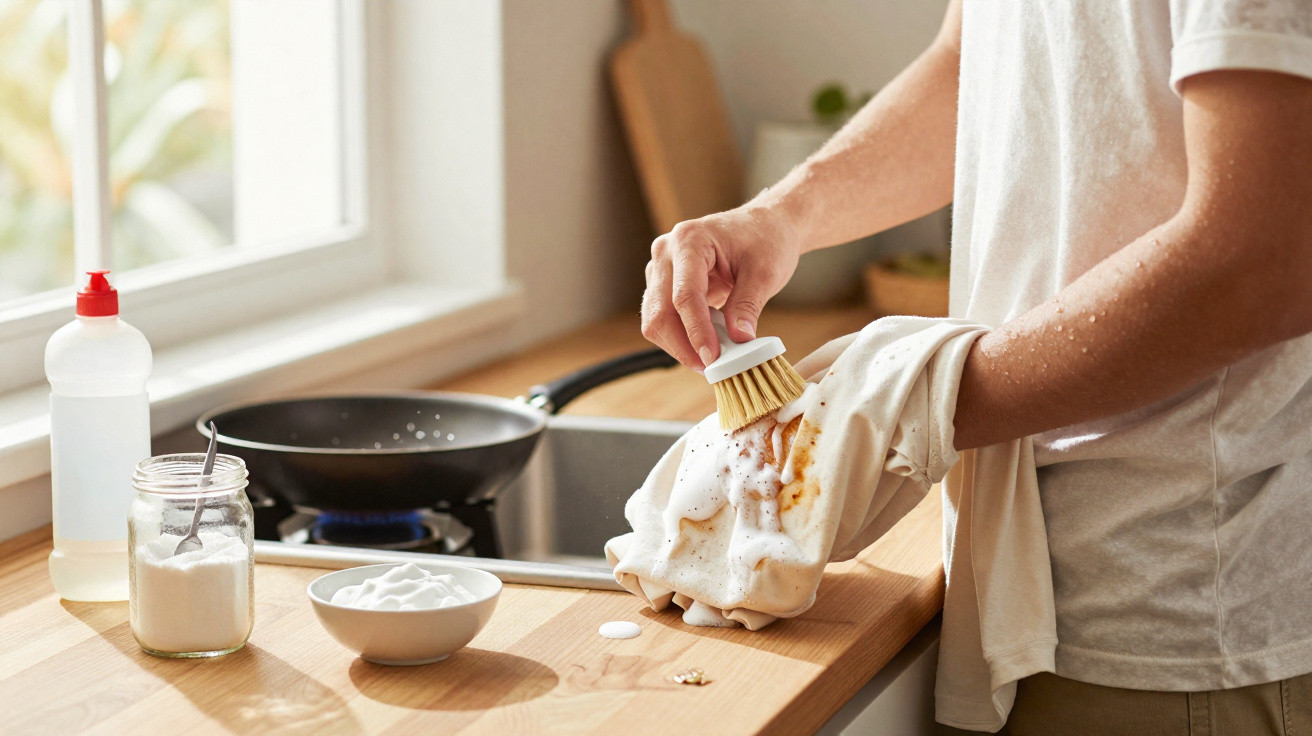
They spread the jumpsuit across the worktop, placed a tea towel beneath it and used an old soft toothbrush to work a drop of washing-up liquid into the stain. There was no frantic scrubbing, only patient small circles. They then rinsed it, blotted it with kitchen roll and repeated the process. Within 10 minutes, the orange patch had become little more than a shadow. After the jumpsuit went through the wash, it had disappeared completely. No specialist spray and no fuss: just the liquid they used on greasy pans every day without a second thought.
Once you start paying attention, similar stories are everywhere. People dust cornflour over beloved linen trousers after a barbecue accident. Someone’s grandad quietly rescues a wool cardigan using plain bar soap and lukewarm water. It is not the stuff of polished advertising campaigns. It is ordinary kitchens, slightly sticky tables and familiar items used with a little more purpose.
There is a simple explanation for why these household methods can work: they account for the nature of grease. Oil molecules hold together and resist water. To remove them, you need either something that attracts oil more strongly than the fabric does, or something that can position itself between the oil and water to help them mix. This is what washing-up liquids are designed to do: their surfactants surround the grease and draw it into the water.
Powders such as bicarbonate of soda, salt and cornflour work differently. Rather than washing grease away, they absorb it. When left on a fresh mark, they behave like tiny sponges, pulling oil from the fibres so there is less left for the wash to tackle. It is not magic but simple kitchen-counter physics. The key is to act before the oil has settled into the material like an unwelcome guest getting comfortable on the sofa.
The major misunderstanding is often timing versus effort. People expect to need 30 minutes of scrubbing, when a few careful minutes at the start will usually achieve more than a frantic deep clean several days later.
Step-by-step: using kitchen staples to remove stubborn grease stains
Begin as soon as you spot the mark. Blot it rather than rubbing. Press a clean piece of kitchen roll, a cloth or even the dry inner side of a napkin gently onto the stain. The aim is to lift excess oil, not force it further into the weave. Once the surface shine has been dabbed away, use an absorbent powder: plain cornflour, talc, bicarbonate of soda or, if necessary, fine table salt.
Scatter a small mound over the stain and leave it in place. Ten to fifteen minutes is a useful minimum, although longer is better if possible. While it sits, the powder draws oil out of the fibres. Afterwards, shake or brush it away. You may notice that the powder has darkened or formed clumps where it absorbed grease. Next, apply a pea-sized amount of washing-up liquid directly to the area and gently work it in with your fingertips or a soft-bristled toothbrush.
This is the stage at which many people understandably worry and use too much force. At the sink, with a favourite top in hand, seeing bright green or yellow washing-up liquid spread across pale fabric can seem alarming. Take your time. Make a few small circular movements, then add a splash of lukewarm water to help the liquid move through the threads. Rinse, inspect and repeat. You’re not trying to erase the stain in one dramatic gesture; you’re nudging it out in stages. Once it has lightened, wash the garment normally at the warmest temperature permitted by its care label.
This is also where advice and reality can diverge. We all see instructions telling us to “treat stains immediately”, as though life pauses whenever oil is spilled. Let’s be honest: hardly anyone manages that every day. You may be in a restaurant, dealing with screaming children or simply fail to spot the stain until the following morning.
If you have missed the ideal window, do not be too hard on yourself. Dried grease is more difficult, but it is not unbeatable. Leave out the powder and go straight for concentrated washing-up liquid or a plain bar of soap. Work it into the dry stain and allow it to sit for 20 minutes before rinsing. The thing that causes the most damage is not usually the soap but angry scrubbing. Vigorous rubbing can stretch fibres, especially in delicate fabrics, and leave a fuzzy area that looks worse than the original mark.
Another frequent mistake is reaching immediately for boiling water. It can feel logical, as though you are trying to burn the stain away. Hot water is unsuitable for protein stains such as blood, egg and milk; with grease, very hot water may spread the oil before the soap can capture it. Lukewarm water is sufficient. Always test washing-up liquid or any home method on a concealed seam when the material appears expensive or fragile. Those quiet 30 seconds of testing have saved countless shirts.
“The thing that changed my laundry life,” says Carla, a 34-year-old chef from Bristol, “was realising I didn’t need a special product for every little disaster. The same liquid that cuts lamb fat off my roasting tray can save my black jeans. I stopped feeling helpless and started feeling a bit like a fabric mechanic.”
It is useful to remember a few straightforward principles, almost as if they were displayed on a small poster above the sink.
- Blot first; never rub dry grease further into the fabric.
- Apply an absorbent powder early if you can.
- Allow washing-up liquid time to work instead of rinsing immediately.
- Read the care label before using heat or scrubbing firmly.
- Repeat the treatment calmly rather than attacking the fabric in one go.
These steps will not make you a stain-removal expert overnight, and they do not need to. Their value lies in replacing panic with a process. Rather than looking at a mark and thinking “Game over”, you can think, “Right. Powder, soap, rinse. Then see how we’re doing.” That little bit of order makes it feel less like a personal betrayal by your clothes and more like a problem to solve with tools already in the kitchen.
From “ruined” to rescued: a different view of grease stains
When you realise the solution may already be in the kitchen, something changes. Grease stains stop being tiny catastrophes and become practical puzzles. There is a quiet pleasure in setting out cornflour, washing-up liquid and an old toothbrush, knowing you are about to correct a small mishap. It will not work perfectly every time, and there may still be the occasional casualty, but it can change your reaction when a drop of oil goes astray.
More broadly, there is a gentle kind of rebellion in this approach. Rather than discarding a T-shirt because of one dark speck near the hem, you give it another opportunity. Instead of buying several spare tops “just in case”, you place some trust in your ability to save the garment you actually prefer. It is a modest, almost invisible change, but it can quietly extend the time clothes remain in our wardrobes and reduce the guilt that comes when everyday life makes a mess of fabric.
Most of us own one item we assumed was finished: a shirt marked by a burger, a dress splashed with cooking oil or trousers worn to a family lunch. When kitchen ingredients bring those clothes back from the brink, it becomes more than a housekeeping tip. It reminds us that something which appears ruined may not truly be beyond repair. That is worth sharing around the dinner table or in the group chat the next time someone sighs at a fresh, gleaming spot of grease on a garment they love.
| Key point | Detail | Benefit for the reader |
|---|---|---|
| Pre-treat as early as possible | Blot, use an absorbent powder, then apply washing-up liquid | Maximises the chance of saving a favourite garment |
| Use kitchen products | Washing-up liquid, bicarbonate of soda, cornflour, fine salt | Avoids buying expensive specialist stain removers |
| Keep the treatment gentle | Rinse with lukewarm water, avoid hard rubbing and follow the care label | Protects fibres and extends the life of clothing |
FAQ:
- Can I use olive oil or cooking oil to “lift” old grease stains? Not really. Adding new oil just swells the existing stain. You need soap or powder to break it down or absorb it, not more of the same problem.
- Does hot water always make grease stains worse? Very hot water can spread oil if there’s no soap present. Use warm water with dish soap first, then a warmer wash if the care label allows and the stain has already been treated.
- Will washing-up liquid damage coloured clothes? On most everyday fabrics, no. Use a small amount, avoid products with bleach, and spot-test on a hidden seam if the colour looks delicate or the fabric is very dark.
- What’s the best kitchen powder for fresh oil stains? Cornflour or talc are great, baking soda works well, and fine table salt can help in a pinch. The main thing is giving the powder time to sit and absorb.
- Is it worth repeating the process if a faint mark remains? Yes. Light, repeated treatments are safer than one aggressive attempt. A second round of dish soap and a normal wash often erases that last shadow of grease.

Comments
No comments yet. Be the first to comment!
Leave a Comment