
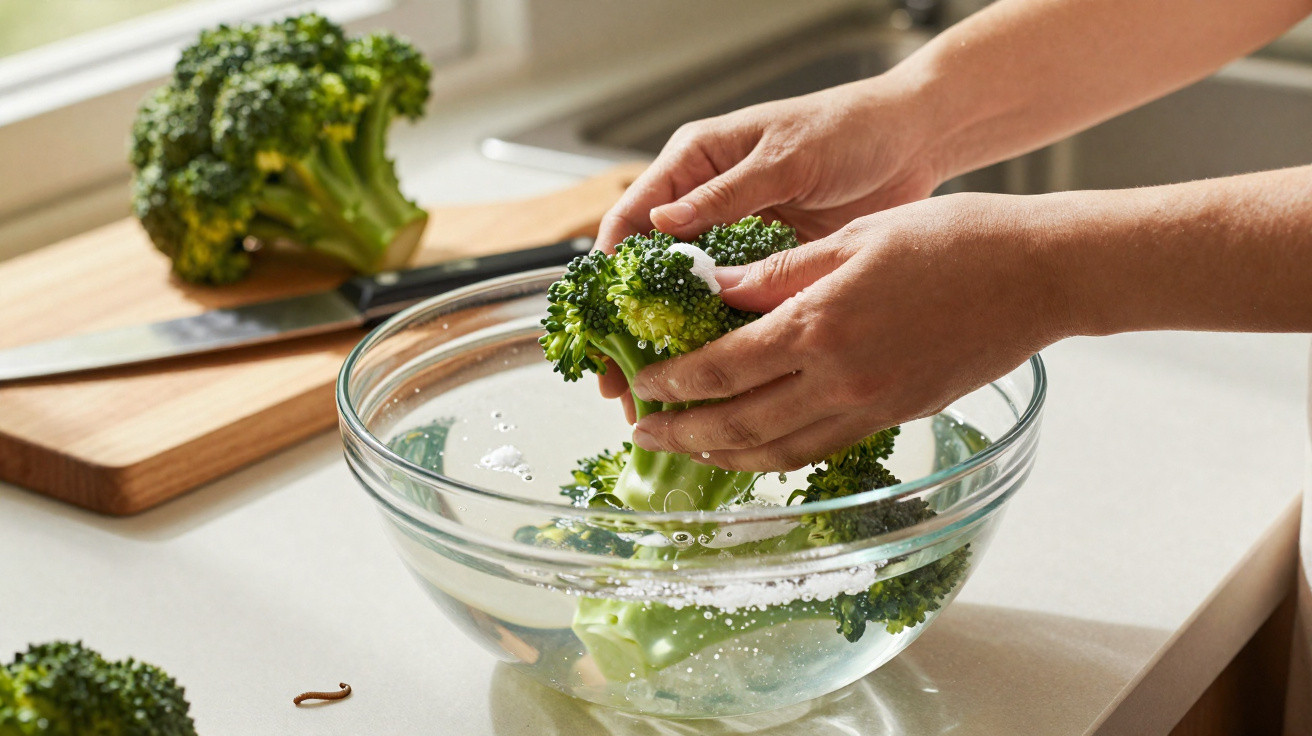
I turned the broccoli head upside down and gave it a gentle swirl, watching the florets separate like miniature woodland in the wind. Then I noticed it: a pale strand rising through the water, writhing and clearly alive. My stomach sank before curiosity won out. As I continued to swirl, the water became murky with debris I had not even seen on the chopping board. Most of us have experienced a healthy ingredient exposing something unexpected. It is not a tale of horror, but a useful reminder. Three pale worms drifted to the top like commas, quietly punctuating a hectic weekday evening. The solution is straightforward: allow a little time, add a pinch of salt and follow the steps in the right sequence. Tiny hitchhikers are very fond of broccoli.
The hidden passengers in your broccoli
Broccoli’s densely packed florets provide an ideal hiding place for small creatures. Its close buds catch field dust, soil carried by the wind and tiny larvae curled amongst the green, rather like punctuation scattered through tree branches. A quick rinse beneath running water is helpful, but the crevices can still retain debris. What matters is giving water proper access. Nutritionists describe how water needs pathways: opening up the crown and taking a little longer lets the flow do most of the work. It may not be a pleasant sight, but it brings reassurance. Your sink turns into a small clearing where water can quietly do its job.
During a recent home-kitchen test, two broccoli heads were cleaned in different ways. One received the familiar brief rinse before going directly into the pan. The other was rinsed while whole, divided into bite-sized florets, soaked in cold salted water, then rinsed and swished. The contrast was obvious. The soaking bowl resembled a tiny pond after heavy rain, with specks of soil on top and three small floaters. The quickly rinsed broccoli, meanwhile, left grit on the plate and had a faintly earthy taste that did not seem clean.
This happens because broccoli has a fractal structure, with branches upon branches and capillary spaces where surface tension holds water - and anything light - between the buds. Salt water alters buoyancy and disrupts that surface tension, encouraging tiny larvae to let go. A further soak in a mild alkaline solution can help release some pesticide residues attached to waxy cuticles. Running water then washes everything away from the edges. There is nothing magical about it, only patience and the correct order. The science is simple enough to rely on during a busy Tuesday.
How nutritionists wash broccoli step by step
Begin by rinsing the broccoli while it is still whole. Hold it beneath cool running water for 20–30 seconds, turning the crown and rubbing the outside with your palm. Remove the woody end, then divide the head into florets, cutting thicker pieces in half to expose their centres. Fill a large bowl with cold water and dissolve 1 tablespoon of salt per litre (about 4 cups). Place the florets in upside down. Gently swirl them for 10 seconds, then leave them for 5–10 minutes. Swirl once more and check the surface, which is where the tiny passengers tend to appear. Drain the broccoli in a colander.
Next, use a soak aimed at residues. Fill a clean bowl with fresh cold water and add 1 teaspoon of baking soda per litre. Put in the florets and swish for 10 seconds. Leave them for 10–15 minutes so residues attached to waxy surfaces can loosen. Rinse under running water for 30–60 seconds, gently massaging every floret with your fingers as you would when washing berries. If you can still see movement, give the broccoli a 30-second dunk in hot, but not boiling, water - roughly the temperature of a hot shower - then return it to cold water and rinse again. Salt soak + swish deals with living creatures, while an alkaline rest targets residues. Clean, calm, finished.
Here are the common mistakes, explained as a friend might put it. No soap or bleach on vegetables: those products belong with washing-up, not your meal. Do not combine vinegar and baking soda in one bowl, as they neutralise one another and achieve very little cleaning. Focus on one method at a time. Avoid excessively long soaking too. Extended baths can mute the flavour and draw out water-soluble nutrients. Realistically, no one follows the full process every day. When you are short of time, stick with the essentials: pre-rinse, cut, soak in salted water and rinse thoroughly. That quick sequence gets you most of the benefit.
“You’re not sterilizing broccoli; you’re giving water enough time and access,” a clinic dietitian told me. “Cold water removes dust, salt draws out life, and friction does the rest.”
- Ratios that work: 1 tbsp salt per litre; 1 tsp baking soda per litre; or 1 tbsp white vinegar per litre (use vinegar as an alternative to baking soda, not together).
- Order matters: rinse whole first, cut, use a salt soak, rinse, optionally soak in baking soda, then rinse again.
- Finish properly: shake the florets dry, then pat them dry or use a salad spinner. Drier florets roast more effectively and last longer.
What thoroughly cleaned broccoli gives you
When broccoli is cleaned properly, it tastes noticeably different. Its bite is sweeter, the stem has the flavour of a freshly snapped pea, and the florets roast to a true crisp rather than steaming in leftover water. You will also cook it with less uncertainty. That sense of ease affects how you season it and how children at the table lean towards it rather than away from it. One small habit can make the rest of dinner feel more manageable. We are all trying to put good food from real life onto real plates. Rinse, rest, rinse is not merely a slogan. It is a small promise from your sink: give water a minute, and it will give your broccoli back.
| Key point | Detail | Why it matters to the reader |
|---|---|---|
| Rinse whole, then cut | Rinse the intact head for 20–30 seconds, then divide it into florets to reveal concealed crevices | Reduces grit transfer and opens routes for water to reach the places where worms hide |
| Two-stage soak | A salt bath for 5–10 min floats larvae; a baking-soda bath for 10–15 min loosens residues | Addresses both living hitchhikers and persistent pesticide films without harsh chemicals |
| Final rinse and drying | Run water for 30–60 sec while massaging; use an optional 30-second hot dunk; dry thoroughly | Clears away loosened debris, improves flavour and texture, and extends fridge life |
FAQ
- Do I need a commercial produce wash? Not really. For everyday home use, cool water, time, salt or baking soda, and gentle friction work better than most sprays.
- Vinegar or baking soda-what’s better? Choose vinegar (1 tbsp/L) if you want a rinse focused on microbes; baking soda (1 tsp/L) helps with certain residues. Use one for each soak rather than mixing them.
- Will soaking draw out every worm? You will remove the great majority. Salt water and a thorough swirl encourage tiny larvae to release and float, allowing you to see and pour them away.
- Does organic broccoli need the same routine? Yes. Organic broccoli still carries soil and insects from the field. You will probably find fewer synthetic residues, but soaking and rinsing remain important.
- Will I lose nutrients by soaking or a brief hot dunk? Losses are minimal when timings are short. Keep soaks below 15 minutes and any hot dunk to 30 seconds, then cool and dry the broccoli.

Comments
No comments yet. Be the first to comment!
Leave a Comment