
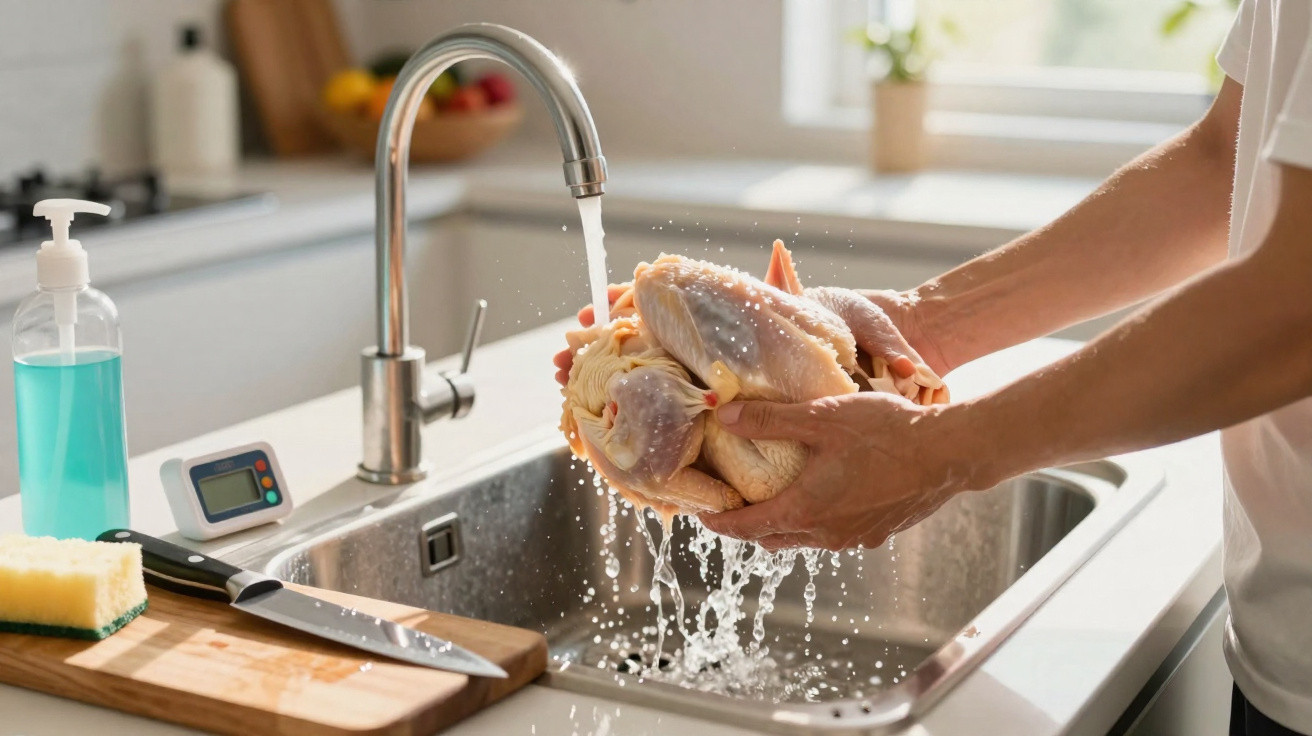
You peel open a pack of raw chicken above the sink, bin the wrapping and switch on the tap. Water strikes the skin with a smack, sending droplets up the sides of the bowl. Almost without thinking, you rub the chicken beneath the stream, with the satisfying sense that you are removing something invisible and slightly suspect.
The tap continues to run. Fine spray lands on the sponge, salad spinner and the baby's bottle drying on the rack, but you do not spot it.
The routine feels hygienic. Comforting.
Then a health department official tells you that this very action can spray salmonella up to three feet around the sink.
Suddenly, that supposedly “clean” routine feels anything but clean.
Why washing raw chicken creates a false sense of cleanliness
People who rinse raw chicken are usually not taking risks on purpose. They are attempting to be cautious. Perhaps their grandmother did it, cookery programmes once showed it, and putting meat under the tap can seem much like rinsing soil from an apple.
But chicken is not simply “dirty”. It may carry living bacteria that thrive in your kitchen just as readily as you do.
As soon as the water stream hits the slippery chicken, reassurance becomes contamination. Your sink, the nearby chopping board and even the tap handle can fall within an unseen splash zone. You may think you are getting dinner ready; in fact, you could be scattering salmonella across the worktop.
Food safety researchers have measured what occurs when people wash raw poultry. In a US study, home cooks were filmed in test kitchens while following their normal routines. Roughly half rinsed their chicken.
Once they had finished, scientists swabbed the areas around them. They found bacteria on worktops, sinks, fridge handles and even foods intended to be eaten raw, including salad leaves.
The most startling finding was that these tiny droplets travelled up to three feet in every direction. In other words, nearly the whole area around your sink can be affected by a practice many people sincerely regard as “good hygiene”.
Scientifically, the issue is straightforward: water pressure combined with raw poultry produces a germ-filled aerosol. You cannot see, smell or feel it. All you notice is a tidy kitchen and rinsed chicken.
Salmonella and Campylobacter thrive on damp surfaces at room temperature. That harmless-looking splash on your tea towel or sponge is effectively a VIP invitation for bacteria to settle and wait until the next contact.
Thorough cooking destroys bacteria on the chicken itself. However, the oven cannot deal with droplets already sitting on your chopping board, knife handle or a child's lunchbox left nearby. That is how evenings of “I don’t know what made me sick” can start.
How to handle chicken safely without making your sink a petri dish
Safe raw chicken handling begins before the tap is switched on. First, do not turn it on for the chicken at all. Move the chicken directly from its packaging to a dedicated chopping board. No rinsing, no brief splash, nothing.
If you want crisper skin, pat it dry using disposable paper towels. Put the towels straight into the bin afterwards.
When the chicken is in the frying pan, oven dish or slow cooker, stop for a moment. Wash your hands with soap and warm water for at least 20 seconds, rubbing between your fingers and beneath your nails. Yes, it can feel like a long time. That is the point. This is when you truly “clean” what matters: your hands rather than the chicken.
A major pitfall is thinking, “I’m just being thorough”. You handle the raw chicken, reply to a message on your phone, push up your glasses or open a drawer before washing your hands. We have all had that moment of realising we have touched everything in the kitchen with chicken-covered fingers.
Build small habits that are easy to keep. Store a roll of paper towels and a soap dispenser beside the sink. Reserve one chopping board for raw meat, preferably a plastic board that can be cleaned in the dishwasher.
Do not rely on colour alone, either. Use a food thermometer: 165°F (74°C) at the thickest part means the chicken is safe. To be honest, no one does this every single day. But whenever you do, you reduce the chance that dinner will leave someone in bed with stomach cramps.
Food safety specialist Dr. Jennifer Quinlan summed it up bluntly in a public campaign: “You’re not washing away bacteria when you rinse chicken. You’re washing them around your kitchen.”
- Skip the rinse entirely
Do not wash it, do not splash it and do not create a three-foot salmonella spray. - Cook it hot and all the way through
Use a thermometer and target 165°F (74°C) in the thickest section of the meat. - Clean the contact zone immediately
Wipe worktops, sink edges and handles with hot, soapy water or disinfectant. - Keep tools separate for raw and ready-to-eat food
Use one board and knife for chicken, and different ones for salad, bread and fruit. - Treat your dish cloths and sponges as suspects
Wash cloths on hot cycles, replace sponges regularly and do not leave them warm and damp.
Rethinking what “clean” means in your kitchen
Kitchen rituals can be hard to let go of. Washing chicken at the sink often comes from a place of care: a wish to cook safely and do things “right”. Giving it up may even feel like ignoring a family rule.
However, once you imagine invisible droplets travelling three feet from the tap and landing on everything nearby, the meaning of “clean” changes completely. Clean is not clear water flowing over pale chicken skin. Clean is a calm, dry chicken on the board, moved straight into the pan, with a sink that never became a bacteria sprinkler.
The next time you unwrap chicken, you may pause with your hand on the tap. That brief hesitation is where a new routine begins. Perhaps you will skip the rinse, wash your hands instead and quietly alter how your kitchen operates. It is a simple decision that will never appear on the plate: the meal that did not end in food poisoning, the child who did not become ill and the evening that remained ordinary.
| Key point | Detail | Value for the reader |
|---|---|---|
| Stop washing raw chicken | Running water spreads bacteria up to three feet around the sink | Reduces hidden contamination on worktops, utensils and nearby food |
| Focus on cooking temperature | Heat at 165°F (74°C) kills salmonella and other pathogens | Provides a clear, dependable way to tell when chicken is genuinely safe |
| Clean the “splash zone” smartly | Soap, hot water and separate utensils for raw and ready-to-eat foods | Reduces the everyday risk of foodborne illness for the whole household |
FAQ:
- Should I ever rinse raw chicken before cooking?
No. Rinsing does not make it safer; it merely spreads bacteria over your sink, worktops and nearby items.- What if the chicken looks slimy or has liquid in the package?
Pat it dry with disposable paper towels and then bin them. Do not use running water.- Does lemon juice or vinegar “disinfect” raw chicken?
They may alter its smell or flavour, but they do not reliably destroy harmful bacteria such as salmonella.- Is organic or free-range chicken safer to rinse?
No. Bacterial risk exists regardless of how the chicken was raised, and rinsing still spreads germs.- What actually protects my family from food poisoning?
Keeping raw chicken separate from ready-to-eat food, cooking it to 165°F (74°C), washing hands and cleaning surfaces after they contact raw poultry.

Comments
No comments yet. Be the first to comment!
Leave a Comment