
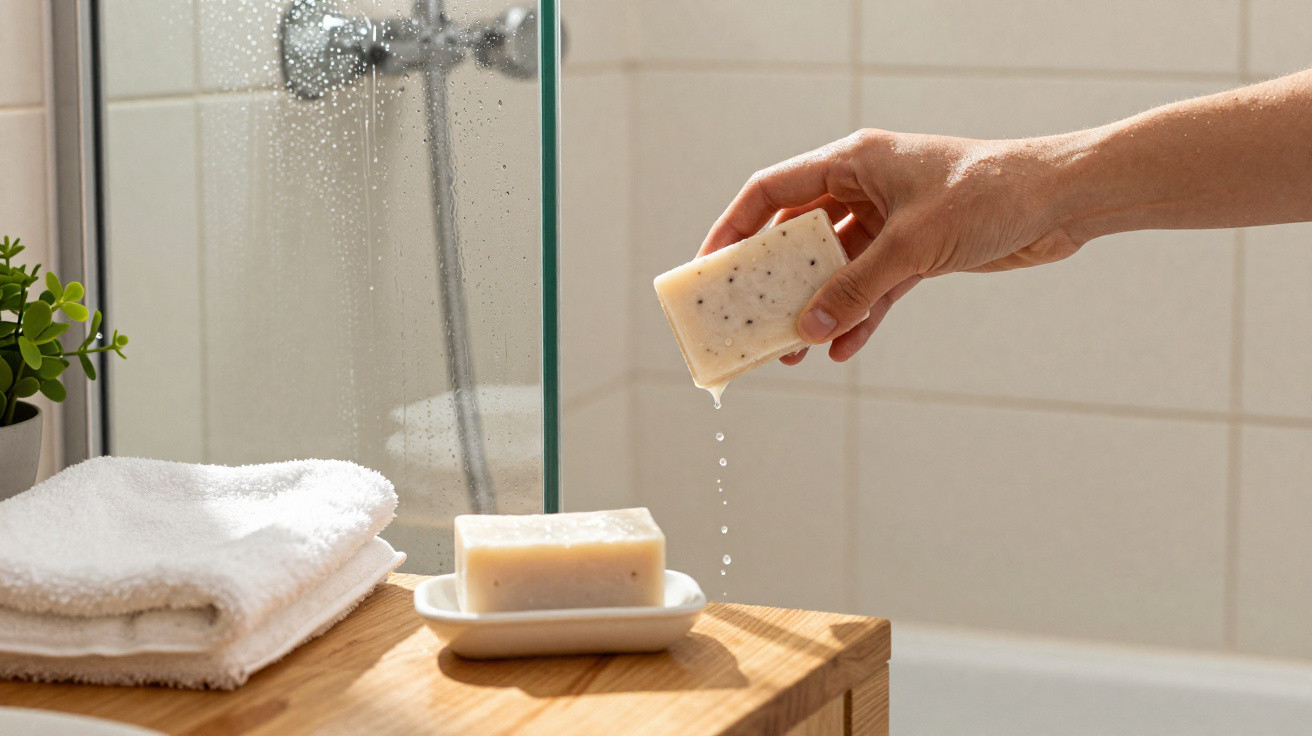
Keeping hygiene products in the wrong place directly reduces how long they last. The habit of leaving soap inside the shower enclosure compromises the item’s condition, as constant humidity greatly speeds up the everyday waste of this essential product.
Why does soap deteriorate inside the shower enclosure?
Frequent exposure to steam and splashes of water changes the physical composition of a cleansing bar. Ongoing contact causes a damaging alteration because it continues to absorb water unnecessarily, leading to premature melting.
This harmful process takes place in the periods between the household’s normal uses. Liquid collecting in the shower soap dish prevents natural drying, directly affecting the material’s physical condition and producing the following negative effects on its durability:
- Waste: Faster consumption occurs because of continual contact with water.
- Bacteria: The growth of microorganisms increases on a damp surface.
- Durability: The cleansing bar lasts far less time when it is left exposed inside the shower enclosure.
How does humidity affect the preservation of the product?
The shower enclosure remains warm, enclosed and wet for extended periods throughout the day. This unfavourable environment makes the product continually retain liquid, accelerating unnecessary waste and radically reducing the preservation time of this daily cleansing bar.
Without enough time to dry fully, its structure softens and quickly loses its original firmness. Understanding this deterioration process helps reveal the financial losses caused by unsuitable storage, since excess water damages this hygiene product.
What is the biological risk of keeping soap in the shower enclosure?
In addition to the obvious material damage, leaving the item in a wet place creates serious hygiene concerns. The build-up of hot steam creates conditions that speed up the growth of harmful bacteria on the damp surface of this daily-use bar.
Harmful Germ Proliferation
A favourable damp environment
Constant steam creates the ideal setting for dangerous microorganisms to develop in the soap dish.
This invisible build-up of impurities directly undermines the daily cleansing provided by the product.
These microorganisms find the conditions they need to multiply uncontrollably in the bathroom environment. Direct contact with this contamination carries significant risks, clearly reflected in the following factors associated with this damp surface:
- Rapid multiplication on the wet bar.
- Build-up of impurities between uses.
- Waste of the product’s cleansing potential.
How long does soap last when stored outside the shower enclosure?
A simple change in storage location has a surprising effect on the lifespan of the cleansing bar. Once the product is removed from the wet area, it can dry completely, providing effective protection against wear and increasing the durability of this protective bar.
Practical data show that soap stored properly outside the shower enclosure lasts up to three times longer. This considerable saving prevents frequent waste and provides clear benefits, which become apparent when considering the following direct advantages of this preservation:
- An increase of up to three times in its useful life.
- A drastic reduction in product waste.
- Protection from the shower’s constant humidity.
How should soap be stored correctly?
To ensure the product performs as effectively as possible, it should be kept in a dry soap dish positioned outside the shower enclosure. This small change to the routine prevents contact with steam, protecting the hygiene bar from premature softening.
Take the item into the shower only at the time of bathing and remove it immediately afterwards to protect the cleansing bar effectively. This straightforward care extends its useful life, combats the harmful build-up of bacteria and optimises the product’s overall yield.
Comments
No comments yet. Be the first to comment!
Leave a Comment