
Keeping the house clean calls for daily strategies that stop dirt from building up in everyday life. Taking quick bathroom maintenance steps prevents exhaustion and saves time, turning the demanding domestic cleaning routine into a simple and practical task for everyone.
How do Germans prevent water marks in the bathroom?
The secret behind German organisation lies in dealing with small daily tasks straight away. Rather than leaving splashes until the weekend, regularly drying surfaces prevents stubborn stains from forming and maintains the appearance of clear glass.
Droplets left behind after showering or using the basin contain substances that dry and harden quickly. By cleaning these areas in just a few seconds, householders prevent the troublesome build-up of limescale on the surface, dramatically reducing the effort required for weekly deep cleaning.
How can old stains be removed from a bathroom shower enclosure?
A traditional method uses simple household ingredients to dissolve ingrained grime without harming the surface and restores the… Read more
What effect do mineral residues have on surfaces?
As water naturally evaporates, the minerals in it settle on tiles and metal fittings. Over time, this creates dull layers that are difficult to remove, affecting the look of the room and encouraging stains that later require strong chemical products.
The most effective way to tackle this gradual damage is to act before the deposits dry completely. Removing moisture at once stops mineral residues from forming a hard crust, protecting the materials and ensuring straightforward maintenance.
Below is a video from the YouTube channel Organise sem Frescuras! that explores the points discussed in this topic in greater depth:
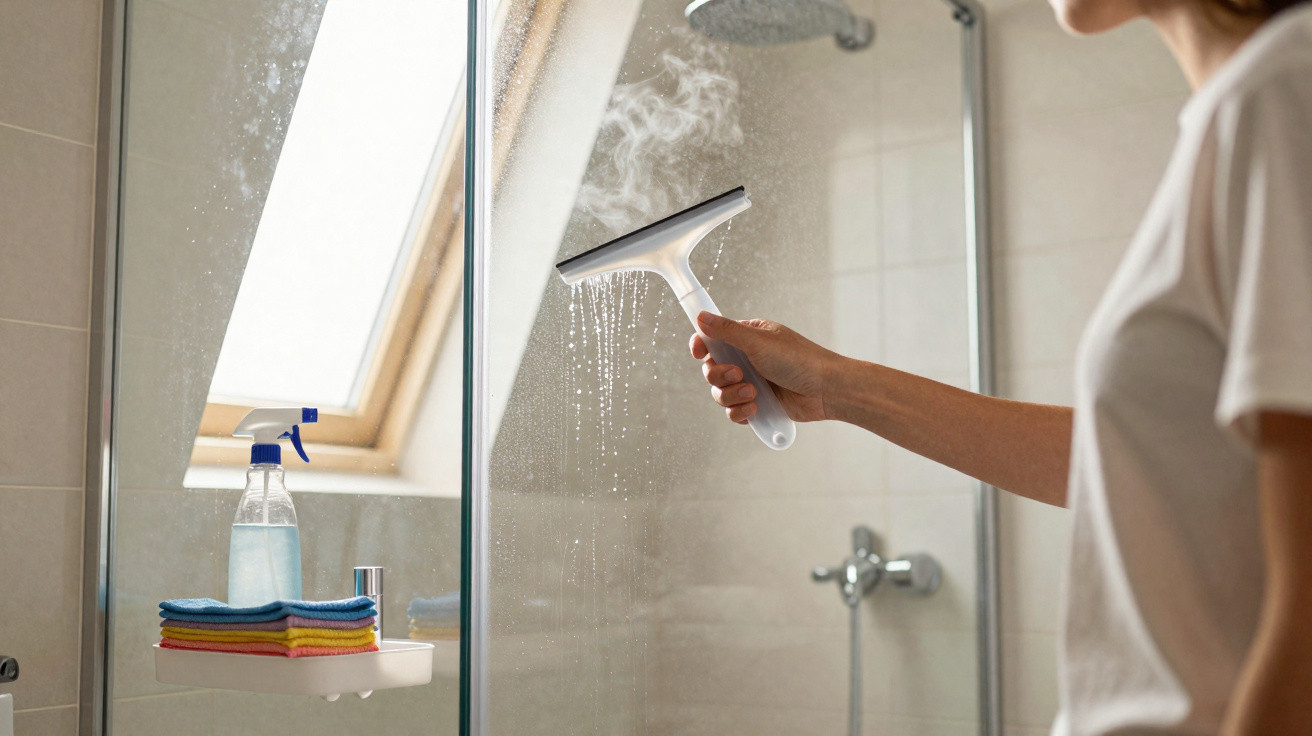
How should a silicone squeegee be used correctly?
Using this tool as soon as a shower has finished is the main defence against accumulated damp. Drawing the rubber blade from top to bottom across the glass quickly clears away collected water, removing harmful moisture and preventing limescale deposits.
This habit should also be applied to the tiled shower-enclosure walls, where droplets tend to settle. Spending thirty seconds on this simple job prevents unwanted fungi from appearing, keeping the room visually pleasant and free from micro-organisms harmful to family health.
Quick Maintenance Kit
Practical items: Keep these tools in the bathroom itself to make daily after-shower care easier:
- Silicone squeegee for the shower enclosure;
- Soft microfibre cloth;
- Spray cleaning solution.
Why is a microfibre cloth essential?
For basin and tap surfaces, this technical fabric offers excellent absorbency without shedding lint. It easily lifts soap and toothpaste residue, providing immediate drying that prevents visible marks and retains the original metallic shine.
Using the cloth immediately after brushing your teeth or washing your face stops grime from accumulating around the basin. This routine replaces long periods of intensive scrubbing, making sanitising much faster, more economical and highly efficient each day.
Adopt this set of quick actions to improve your results:
- Wipe the taps after use;
- Dry the edges of the basin regularly;
- Hang the damp cloth to dry in a well-ventilated place.
How does proper ventilation help preserve the bathroom?
Opening the window or switching on the extractor fan immediately after showering speeds up the removal of concentrated steam. This straightforward habit prevents damp from being trapped on the ceiling and walls, combating the development of mould and extending the life of the interior paintwork.
Continuous air circulation works alongside manual drying to create an environment that is unfavourable to germs. Spending a few seconds combining these practical care measures keeps the bathroom consistently spotless, free from unpleasant odours and with a fully refreshed atmosphere that supports wellbeing.


Comments
No comments yet. Be the first to comment!
Leave a Comment