
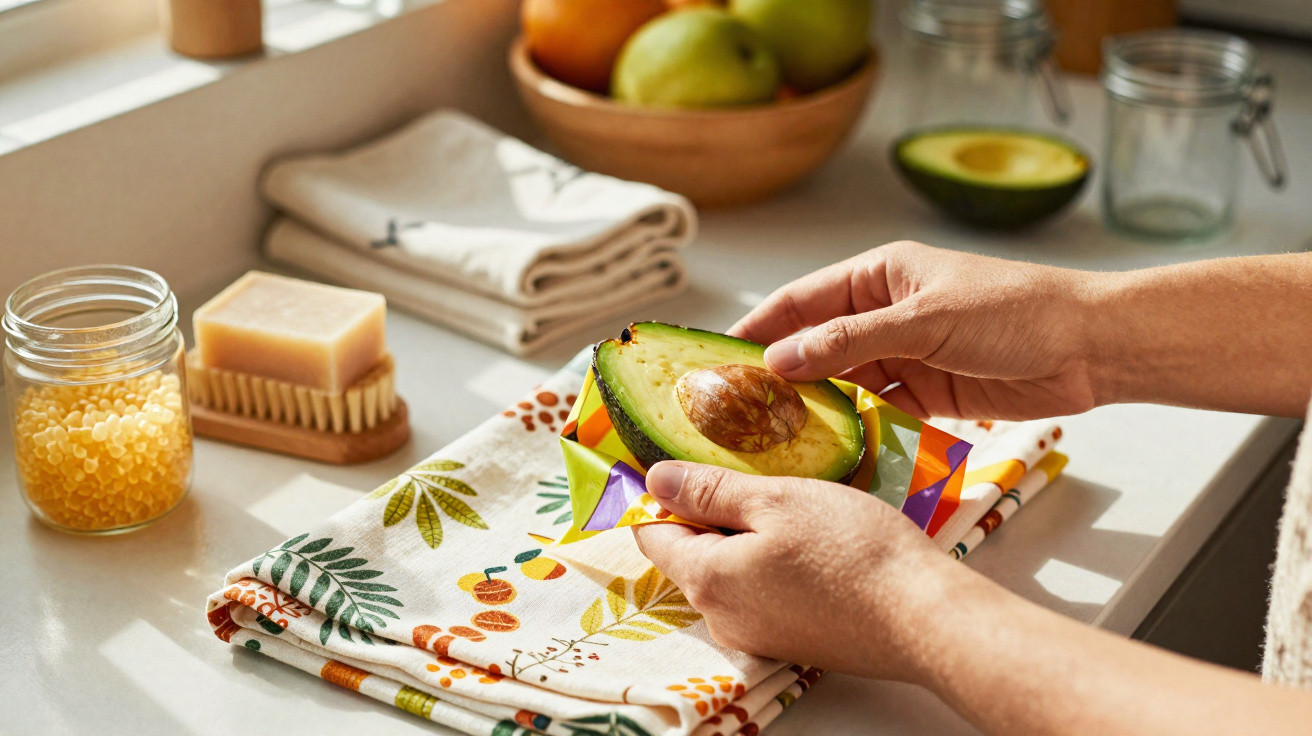
Covering containers and food with cling film remains a familiar habit in many kitchens, yet more sustainable alternatives are steadily becoming commonplace. One option in particular-a reusable wrap made from fabric coated in wax-has stood out for helping food keep better, cutting the amount of disposable waste and adding a surprisingly straightforward convenience to everyday routines.
What is reusable waxed cloth and how does it work?
The best-known alternative to cling film is reusable waxed cloth, usually made from cotton combined with beeswax or plant-based waxes, natural oils and resins. This creates a flexible, mildly adhesive fabric that can be shaped with the warmth of your hands to fit jars, bowls or food itself.
When the cloth is rubbed, the wax blend softens and produces a moderate seal, shielding food from direct exposure to air, dust and fridge odours. The coating acts as a barrier that helps retain moisture, so cut fruit, cheese and washed vegetables keep their pleasing texture and appearance for longer.
Why is conventional cling film being replaced?
Conventional cling film has faced growing scrutiny because of its environmental impact, the difficulty of recycling it and its long-term cost. As it is single-use, it readily builds up in household rubbish. Waxed cloth, by comparison, can be used again for months, substantially reducing the amount of waste produced during everyday kitchen use.
Beyond the environmental issue, cling film tears easily, loses its grip and does not always fit a range of containers properly. As waxed cloth is sturdier and more pliable, it withstands daily handling without quickly losing its shape, while many people say it leaves the kitchen more organised and results in less food waste.
How should reusable waxed cloth be cared for to maximise its lifespan?
Wax-coated cloth generally lasts from 6 months to 1 year, depending on how often it is used and how it is cleaned. With light use, some wraps can last beyond this timeframe, replacing several rolls of cling film and becoming a small household experiment in more conscious consumption.
A few straightforward habits can keep the material in good condition and extend its performance in daily use:
- Wash only in cold or slightly warm water, using mild soap.
- Avoid abrasive sponges, as they strip away the wax layer and lessen adhesion.
- Allow it to air-dry in a well-ventilated place before storing it folded or rolled up.
- Do not use it with hot food, in the oven or in the microwave, as the wax may melt.
- Avoid extended contact with raw meat to make subsequent cleaning easier.
Where can reusable waxed cloth be found and how can it be used every day?
Sustainable cling film in a reusable form is now available in supermarkets, natural product shops, zero-waste stores and numerous online retailers specialising in eco-friendly goods. Both factory-made and handmade versions are available, in different sizes and patterns, making it possible to put together sets suited to the containers most commonly used in each home.
Using it is straightforward: select the right size, place the cloth over the container or food, warm it gently with your hands and press down the edges to create adhesion. It can then be removed, washed and left to dry naturally before being stored somewhere dry. Once the wax layer becomes less effective, many types can be disposed of with organic waste or sent to textile reuse schemes, making the switch a small yet useful practical step towards a kitchen that produces less rubbish.
Comments
No comments yet. Be the first to comment!
Leave a Comment