
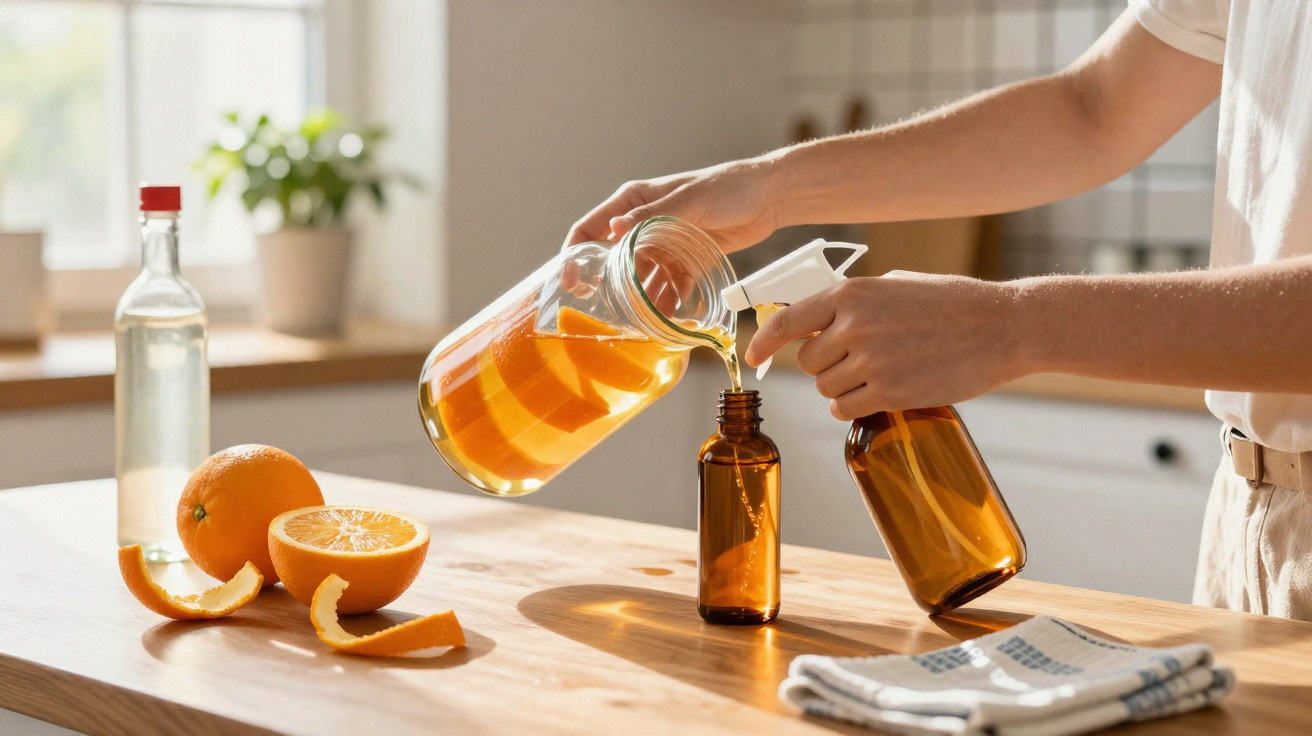
Combining orange peel with vinegar has become increasingly popular in households as a straightforward, affordable cleaning alternative made from natural ingredients. It brings together vinegar’s grease-cutting properties and the essential oils in the fruit peel, creating a product that can clean various areas while leaving a mild citrus scent.
What is orange peel and vinegar cleaner?
Orange peel and vinegar cleaner consists of white spirit vinegar infused with orange peels. During the infusion, the acetic acid draws out citrus oils and pigments, retaining the vinegar’s cleaning ability while adding its distinctive fragrance.
It is a simple, multi-purpose product containing no artificial colourings or synthetic fragrances, often chosen by people looking to reduce the number of manufactured products used at home. Although it cannot replace every hygiene product, it can serve several purposes in a regular household cleaning routine.
How can you make orange peel and vinegar cleaner at home?
To make it, gather thoroughly washed fresh orange peels and place them in a clean glass jar, filling at least half of the container. The white pith can be left on, as it does not interfere with the infusion and allows more of the fruit to be used.
Then fully submerge the peels in white spirit vinegar, seal the jar and leave it somewhere cool and out of direct light for 10 to 20 days. Once this time has passed, strain the mixture and dilute the liquid with water before use, adjusting the strength according to how dirty the surface is.
Where can orange peel and vinegar cleaner be used in the home?
This cleaner can be used in a range of areas, particularly on washable surfaces, where it helps lift light grease and dust. On tiled floors, and in kitchens and bathrooms, it is commonly used for everyday cleaning of ceramic surfaces, wall tiles, worktops and shower screens.
Certain materials need additional care, however, because vinegar is acidic and may lead to staining or wear. Before using it regularly, it is important to understand which surfaces are more vulnerable and, where appropriate, test the product on an inconspicuous spot first:
- Natural stone, including marble and certain granites, which can be eroded by acid;
- Unsealed wood or wood that is vulnerable to moisture, which may stain or warp;
- Delicate metals, which can oxidise after frequent contact with vinegar;
- Electronic surfaces, where excessive moisture may damage components.
What are the benefits and limitations of using orange peel with vinegar?
Its main advantages are its low cost and the reuse of kitchen waste, helping to cut down on waste and reduce the number of cleaning bottles kept at home. The blend of vinegar and citrus oils provides effective grease-cutting action on hobs, extractor hoods and cupboards, while also helping to neutralise unwanted odours.
On the other hand, it has only moderate antimicrobial action and is not a replacement for dedicated disinfectants in situations requiring more rigorous sanitation. It is therefore most useful as a support for everyday cleaning, rather than as a single answer to every form of dirt and contamination.



Comments
No comments yet. Be the first to comment!
Leave a Comment