
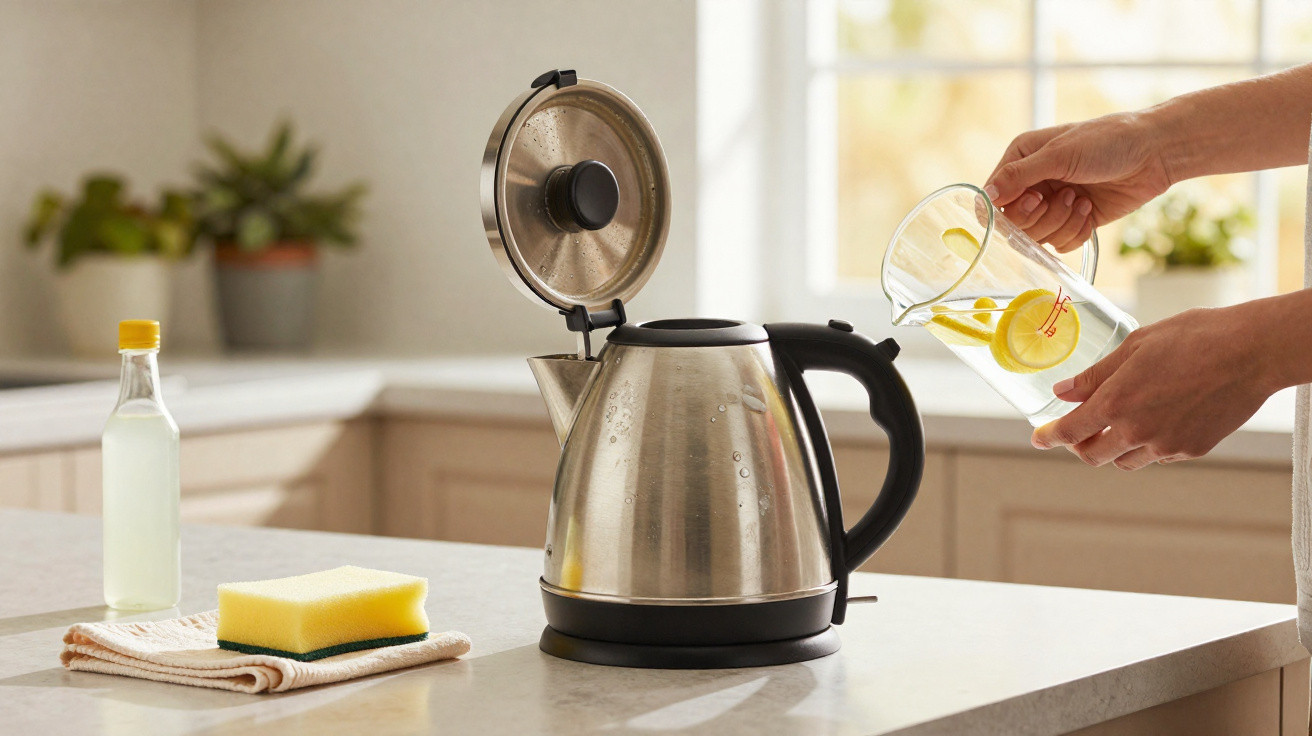
Over time, an electric kettle commonly develops limescale on its base, particularly in areas with “hard” water that contains high levels of mineral salts. This whitish or yellowish build-up directly affects how the water heats, can influence the taste of prepared drinks and raises energy use, making regular cleaning important for protecting the appliance.
Why does limescale form in an electric kettle?
Limescale develops little by little with every boil, as water evaporates and leaves minerals such as calcium and magnesium behind. These residues build up on the kettle’s base and inner walls, creating a hard crust that does not appear overnight.
Where water has a higher mineral content, deposits develop more quickly and may insulate the heating element, causing the appliance to take longer to boil. As well as reducing performance, tiny particles can break away into the water, affecting the quality of tea and coffee.
Watch the video below from the Cátia Alves YouTube channel, which shows how to remove limescale from an electric kettle:
What effects does limescale build-up have on everyday use?
With continued use, limescale layers act as an “unwanted coating”, making heat transfer between the heating element and the water less efficient. As a result, the kettle takes longer to reach boiling point, uses more electricity and places greater strain on its internal components.
Small flakes may also come loose, leaving the water looking cloudy and changing the flavour of drinks. On models with a transparent viewing window, the build-up also spoils the appearance, making the kettle look dirty even when its exterior is clean.
How to remove limescale from an electric kettle safely
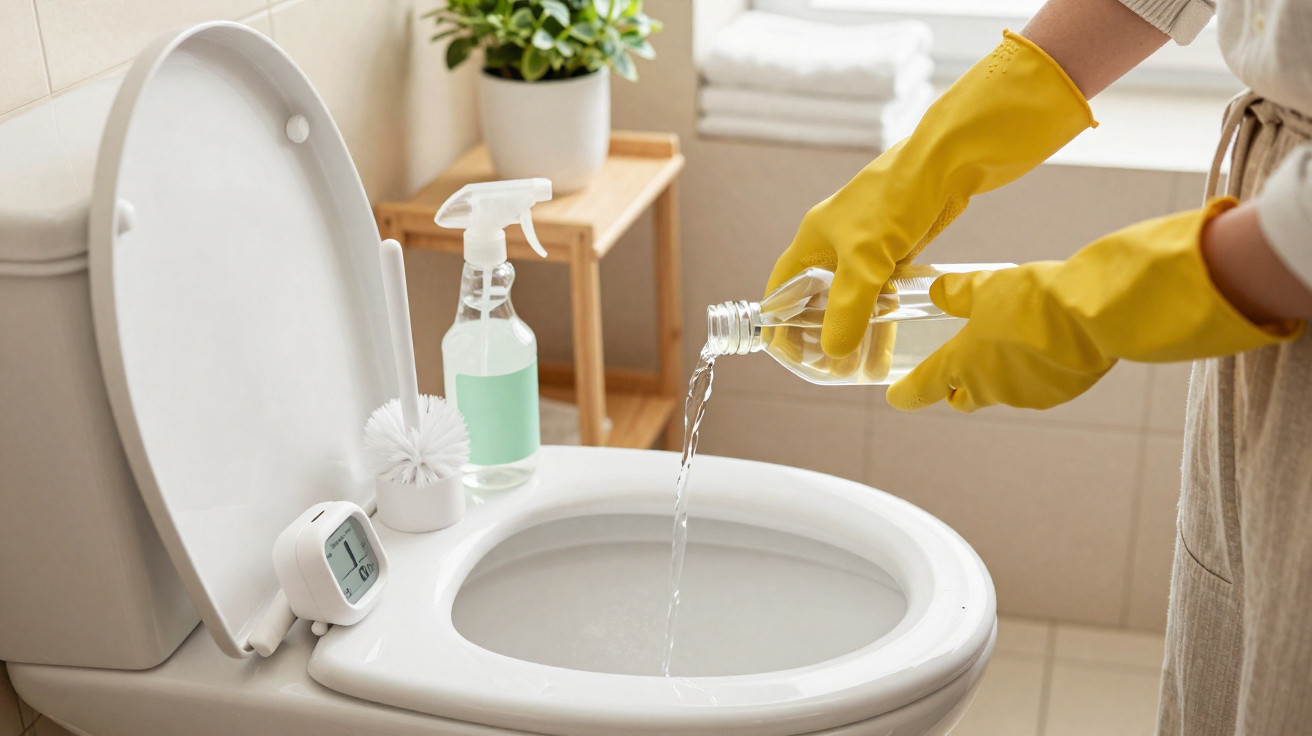
Limescale can be removed using a straightforward home method with water and white distilled vinegar, without abrasive products. This mixture helps dissolve mineral deposits without damaging the heating element or metal base, making it an affordable and practical everyday option.
To avoid damaging the appliance, follow the steps carefully and do not use steel wool or sharp objects, which can scratch the interior. Use this clear process to clean it safely and effectively:
- Switch off and allow the appliance to cool: make sure the kettle is unplugged and cold before starting.
- Make the solution: combine equal parts water and white distilled vinegar, ensuring the limescale-covered area is submerged.
- Heat the mixture: switch on the kettle and allow the solution to boil until it switches off automatically.
- Leave it to work: wait for 20 to 30 minutes so the vinegar can act on the limescale.
- Discard the solution: pour out the liquid carefully to prevent splashes.
- Remove loosened residue: finish with a soft cloth or non-abrasive sponge.
- Rinse thoroughly: boil clean water once, then discard it to eliminate the vinegar smell.
How often should you clean an electric kettle and prevent limescale?
The best cleaning frequency depends on the water quality and how often the appliance is used. In areas with harder water and heavy use, descaling every 2 to 4 weeks is usually enough; where water contains fewer minerals, this can be extended to every 1 to 2 months.
A few simple routines can slow the formation of deposits, extend the kettle’s working life and maintain more efficient heating. Avoiding water being left standing for long periods, using filtered water whenever possible and following the manufacturer’s instructions are measures that make a difference to the appliance’s performance and durability.

Comments
No comments yet. Be the first to comment!
Leave a Comment