
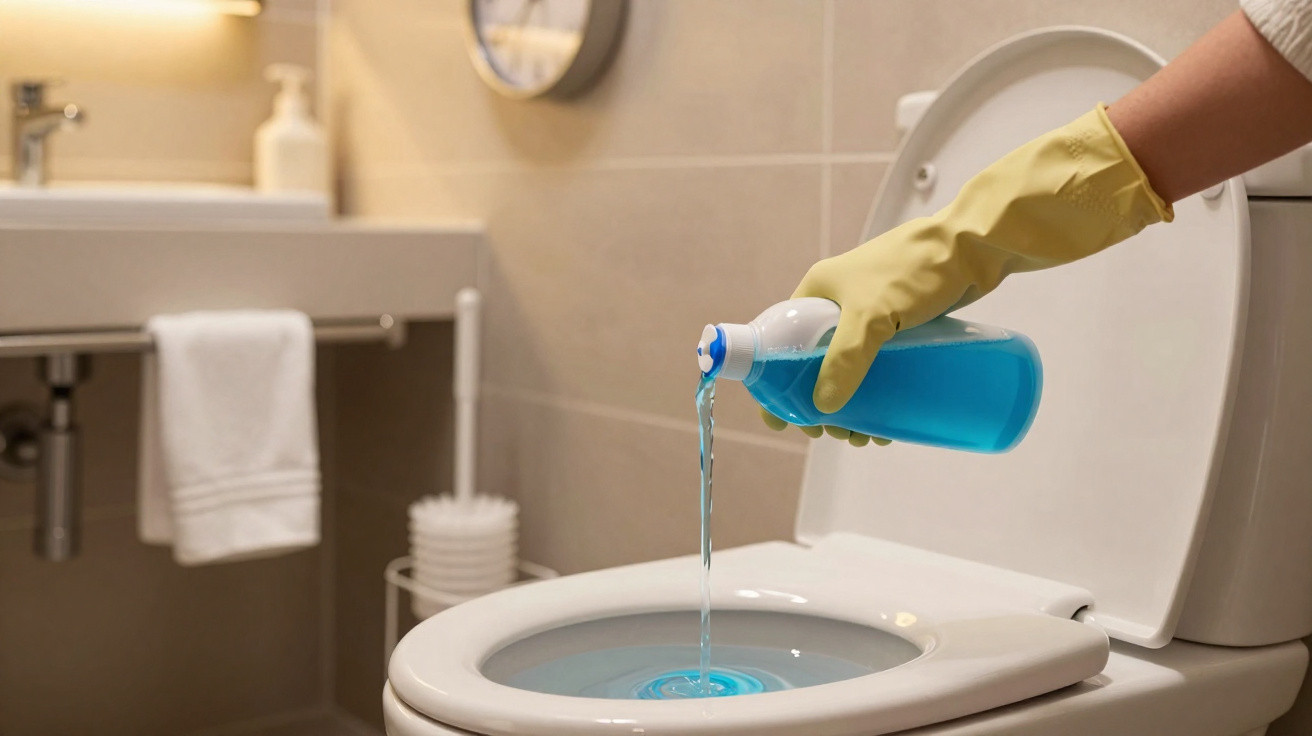
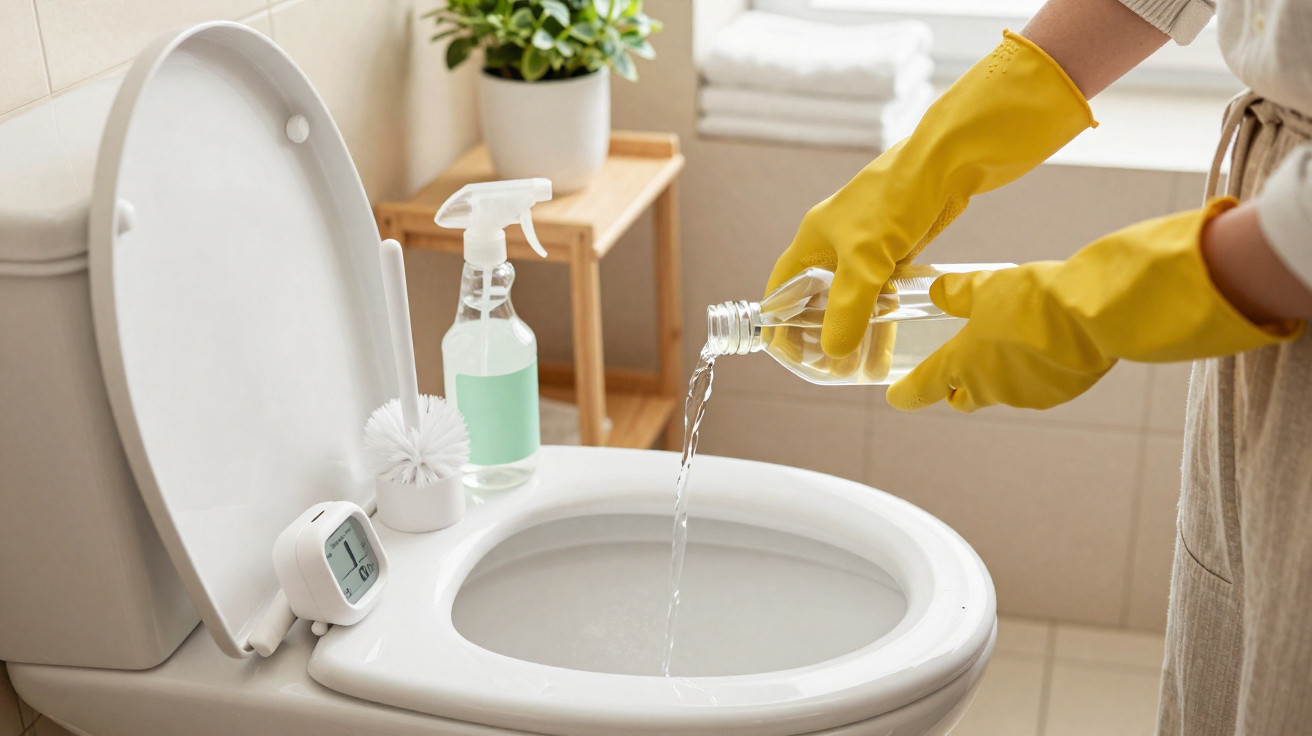
Washing-up liquid poured into the toilet before bedtime has become a widely shared household tip on social media, but it only makes sense as a useful aid to toilet cleaning, rather than a miracle solution. As part of good bathroom hygiene, the principle is straightforward: it can loosen greasy residue, reduce the drag of the brush and make it easier to remove film, splashes and light marks from the toilet bowl.
Why does this cleaning trick often work overnight?
Contact time matters. When washing-up liquid remains in the water and on the inner surfaces of the toilet for several hours, its surfactants can soften stuck-on dirt, organic residue and the darker ring that often forms around the waterline. By morning, brushing usually takes less effort, particularly in bathrooms used every day.
This effect is helpful for maintenance rather than deep disinfection. The cleaning trick helps the brush glide more easily, can assist with odour control and gives the surface a more even appearance, but it does not replace a dedicated cleaning product where there is heavy build-up, mineral staining or a need for disinfecting action.
What precautions prevent mistakes in bathroom hygiene?
Bathroom hygiene relies more on a proper routine than on improvised recipes. If you want to use washing-up liquid as an extra measure, a few precautions can prevent waste and help protect the toilet bowl, pipework and the surrounding cleaned areas.
- Use a small amount, enough to coat the water and part of the inner rim.
- Brush in the morning before flushing, reaching the bend, rim and waterline.
- Clean the seat, lid, flush button and nearby floor as well, as splashes can collect there.
- Never mix washing-up liquid with bleach, chlorine or acidic descalers.
In practice, toilet cleaning works best when the appropriate product is combined with mechanical scrubbing, ventilation and suitable frequency. In a heavily used bathroom, leaving the bowl unbrushed for several days harms the result more than choosing one bottle over another.
When is washing-up liquid not enough for toilet cleaning?
There are situations in which washing-up liquid is less effective. Mineral scale, rust, old stains and limescale build-up require products designed specifically for toilet bowls, formulated to dissolve deposits and remove microorganisms more reliably. This cleaning trick works best on recent dirt and as part of weekly upkeep.
It is also worth considering the type of residue involved. Body oils, cosmetic splashes and light biofilm respond well to washing-up liquid, but bathroom hygiene also requires attention to areas that are not visible in the toilet water, including hinges, the flush mechanism, the bin, grout and the door handle.
How can you create a simple, effective routine?
The best results come when the cleaning trick forms part of a short, consistent routine. Rather than waiting for the toilet bowl to become heavily soiled, spread tasks across the week to prevent scale, unpleasant odours and accumulated splashes.
- At night, use washing-up liquid for light maintenance on alternate days.
- Once or twice a week, apply a dedicated cleaner to the inside of the toilet bowl.
- After brushing, wipe the seat, lid and flush control with a cloth or disinfectant.
- Replace or sanitise the toilet brush regularly so that it does not redistribute dirt.
This approach makes toilet cleaning more predictable and reduces the effort needed for more intensive cleaning sessions. For many people, the real benefit of washing-up liquid is not so much instant shine as easier maintenance between one full clean and the next.
Is this habit worth including in your household routine?
Yes, provided it is treated as support rather than an absolute shortcut. Washing-up liquid can help loosen residue, improve brushing and keep the toilet looking clean until the next thorough wash. In homes with moderate use, this can significantly reduce visible build-up on the toilet bowl.
Ultimately, bathroom hygiene depends on method: sufficient contact time, a clean brush, a compatible product and attention to surfaces that receive splashes after flushing. The cleaning trick is worthwhile when it fits into this maintenance approach, as it makes the toilet easier to look after without disguising the need for regular disinfection.
Comments
No comments yet. Be the first to comment!
Leave a Comment