
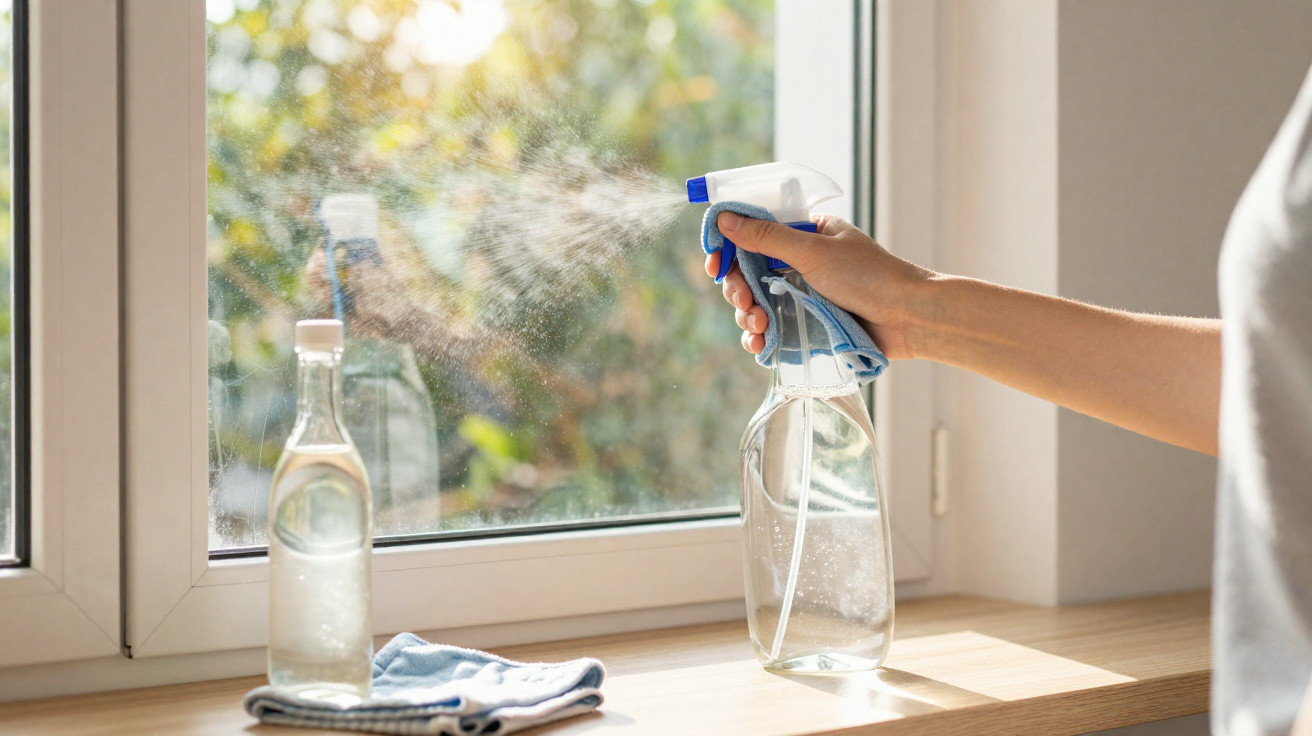
Keeping glass and mirrors clear can be difficult in many homes. Fingerprints, water splashes and built-up product marks can leave surfaces cloudy and neglected-looking. However, a simple blend of white vinegar and water is becoming increasingly popular because it is practical, inexpensive and reduces the use of industrial chemical products.
How does white vinegar clean glass?
Distilled white vinegar has degreasing and mildly disinfecting properties, helping to lift grease, soap residue, dust and minor everyday marks. Once diluted with water, it becomes gentler, has a less powerful smell and lowers the risk of damaging glass or mirrors.
On exterior windows, the solution helps loosen heavier pollution particles, which can otherwise leave marks as they dry. On bathroom mirrors, using it correctly prevents the cloudy finish often caused by water alone or unsuitable products, provided that the right cloth is used and the amount of liquid is carefully controlled.
What is the ideal vinegar-to-water ratio for cleaning glass?
A commonly used ratio is 1 part white vinegar to 3 parts water. This is enough to remove everyday dirt without harming the surface, particularly on mirrors and indoor glass. For heavier grease, a 50:50 mixture can be used, but it should always be tested first on an inconspicuous corner.
To make everyday cleaning easier, many people keep the solution in spray bottles. This makes it easier to control the amount applied and prevents the glass from becoming saturated. For this straightforward mixture, it is important to choose clear distilled white vinegar, as coloured varieties may leave marks and affect the shine.
- Fill roughly 3/4 of the bottle with clean water;
- Top up the remaining space with distilled white vinegar;
- Shake gently before each use to combine the ingredients thoroughly.
How should vinegar be applied to glass without leaving marks?
The application method has a direct effect on the result, since too much product or an unsuitable cloth raises the likelihood of streaks and marks. It is best to work in quick stages and dry the surface immediately afterwards, especially on very warm days or in brightly lit rooms.
Before spraying the mixture, remove dust and loose debris with a dry cloth or duster. Then apply the diluted vinegar straight onto the glass or onto the cloth, spreading it with a microfibre cloth in top-to-bottom strokes or an “S” pattern. Dry straight away with a clean, lint-free cloth, checking the glass from different angles of light to assess the finish.
What care and cleaning frequency keep glass clean for longer?
A few simple measures help prevent marks while protecting both the glass and its surrounding frames. For older mirrors with damaged edges, apply the solution to the cloth rather than spraying it directly onto the mirror. This avoids speeding up deterioration of the reflective backing or allowing liquid to run onto wood, plaster or metal.
How often it is needed depends on exposure to dirt. Indoor windows generally stay in good condition when cleaned every 15 to 20 days, whereas exterior glass may need weekly attention. For bathroom mirrors, frequent light cleaning works well: use diluted vinegar to maintain their shine, reduce limescale build-up, limit the need for stronger products and cut the time spent on intensive cleaning.


Comments
No comments yet. Be the first to comment!
Leave a Comment