
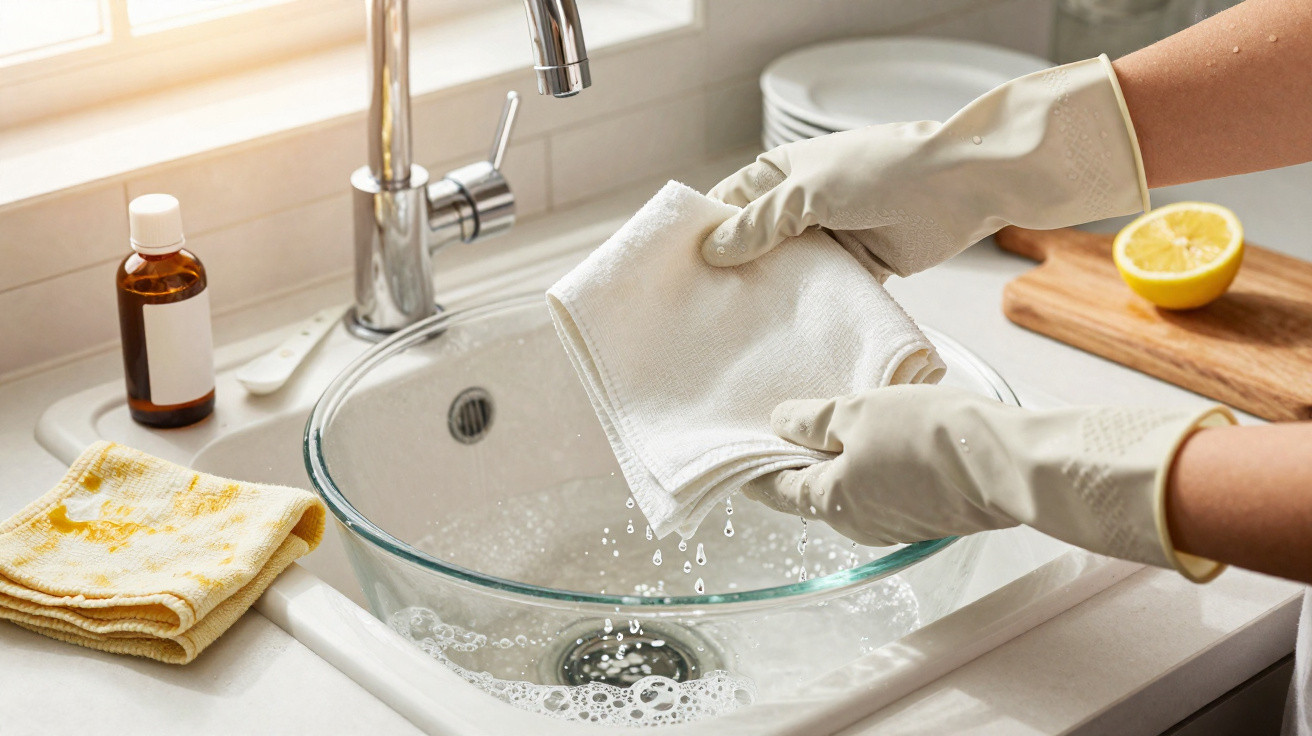
Keeping the kitchen hygienic calls for particular care with cotton tea towels, which collect stubborn grime through everyday use. A straightforward, low-cost technique using hydrogen peroxide can revive white fibres and lift away all the embedded grease with ease.
How does hydrogen peroxide work on tea towel fibres?
Daily kitchen use exposes fabrics to food residue, leading to persistent yellow stains that can be difficult to remove. When applied to a cotton tea towel, peroxide works deep within the material, loosening dirt without damaging its physical structure.
This chemical reaction oxygenates the fabric, releasing tiny bubbles that move through the weave and break down grease molecules built up over time. The process efficiently refreshes white fibres, restoring a like-new appearance to your favourite household item.
How can you whiten heavily soiled tea towels without scrubbing at the sink?
There is a practical method that quickly removes yellow marks from fabrics, bringing back their original whiteness without exhausting physical effort… Read more
What is the ideal recipe for removing embedded grease?
To make a powerful solution for stubborn dirt, combine bicarbonate of soda with 40-volume hydrogen peroxide in a suitable container. This high-performance chemical combination reacts by breaking apart grease and yellow stains that may have seemed impossible to remove from your household items.
Add coconut washing-up liquid to boost the cleaning action, then pour boiling water over the ingredients. Carefully submerge the heavily soiled tea towels and allow the mixture to do the hard work for several hours, until the original whiteness of your household linen is restored.
Below is a video from the YouTube channel Dicas da Eliana, which shows how to prepare this solution in practice:
What is essential for an effective washing soak?
A successful result relies directly on a proper washing soak, which gives the active chemical ingredients time to work on stubborn stains. Leaving the items immersed for long enough ensures that the agents break down grime without damaging the cotton tea towel.
The temperature of the boiling water is crucial, as it opens the fibres and enhances the effects of both the washing-up liquid and peroxide. This initial stage softens heavy grease, making it easier to remove every trace of residue during the final rinse.
Whitening kit
Ingredients for the mixture
These components work together to break down the toughest dirt molecules trapped in the fibres:
- Bicarbonate of soda to neutralise odours and improve stain removal;
- 40-volume hydrogen peroxide, which acts as a powerful active whitening agent;
- High-quality coconut washing-up liquid to thoroughly clean the cotton weave.
What care helps keep tea towels white?
Maintaining the whiteness of your kitchen items requires consistency in daily routines and a few straightforward habits after every wash. Avoiding excessive use of chlorine-based products is essential to preserve fibre strength and prevent premature wear to the fabric.
Always leave tea towels to dry directly in the sun, as sunlight acts as an additional natural whitening agent for cotton. This care routine prevents the build-up of micro-organisms, keeping the cooking area completely hygienic and free from stains.
To extend the useful life of your kitchen tea towels, follow these care practices:
- Keep tea towels used for drying dishes separate from those used to clean greasy surfaces;
- Carry out the whitening soak immediately after use to prevent permanent stains;
- Allow the items to dry fully before storing them in drawers.
Why should you avoid throwing away heavily soiled tea towels?
Restoring old tea towels prevents unnecessary pressure on the household budget and encourages conscious consumption at home. Rather than discarding cotton tea towels affected by heavy grease, use solutions that support sustainability and everyday savings.
With simple, inexpensive ingredients, it is entirely possible to keep your household linen immaculate, bright white and free from unwanted odours. Value smart domestic care by choosing to restore older items with effective methods that genuinely work in everyday household life.
Comments
No comments yet. Be the first to comment!
Leave a Comment