
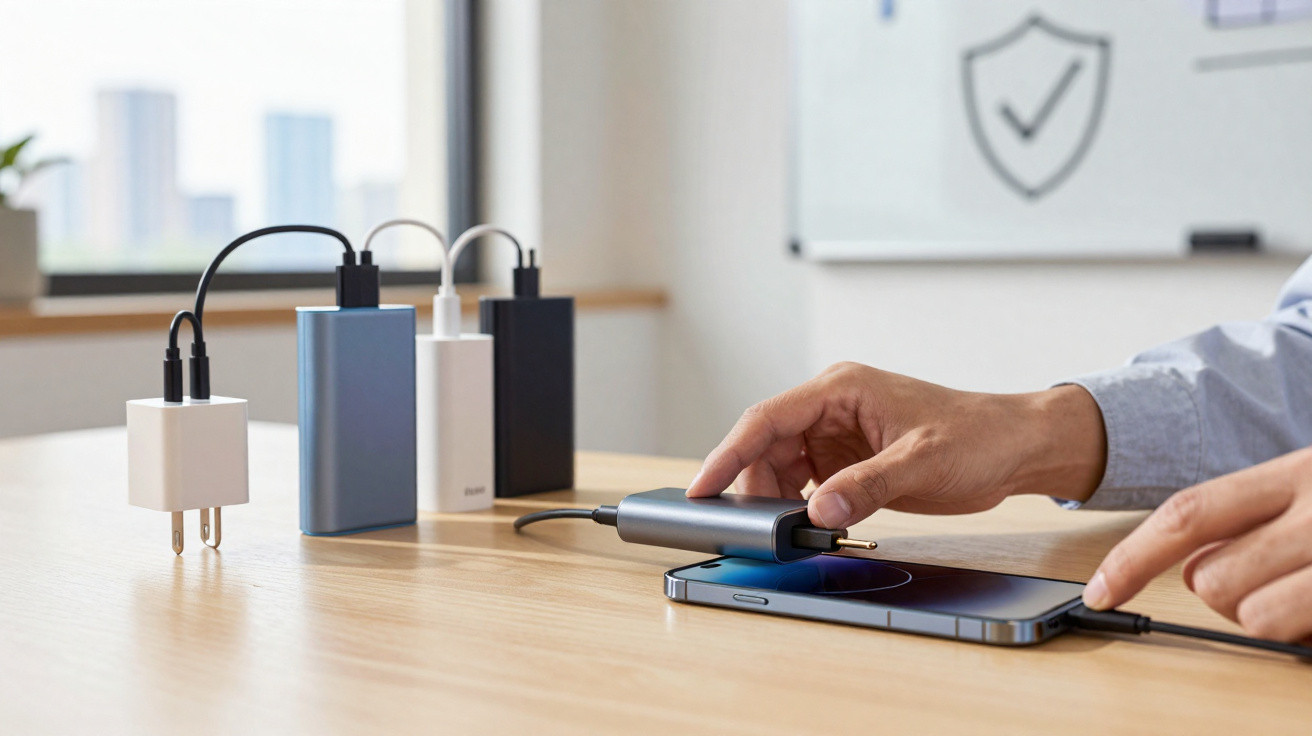
Developed by Huawei, CATL, Lenovo, Xiaomi, Oppo, Anker, Ugreen and other companies
On Wednesday, 2 April, China introduced its first mandatory national standard, “Technical Specifications for the Safety of Portable Chargers”. The standards were jointly created by the China Electronics Technology Standardisation Institute and 30 leading companies, including Huawei, CATL, Lenovo, Xiaomi, Oppo, Anker, Ugreen and others.
Safety tests for portable chargers
The following are among the tests and requirements that new portable chargers must meet:
- Needle penetration test. A 4 mm-diameter steel needle will pierce the geometric centre of a fully charged battery cell at a speed of 20 ± 1 mm/s and remain inside it for five minutes. To pass, the battery cell must neither catch fire nor leak.
- Temperature and other tests. High-temperature resistance has been raised to around 135°C for 60 minutes. Meanwhile, the overcharge test voltage has been increased to 1.4 times the rated voltage. The testing procedure also now includes mechanical safety checks, including drop, compression and impact-resistance tests.
Recycling and manufacturer requirements
- Waste recycling. Companies will no longer be permitted to use recycled or refurbished battery cells in new products. Manufacturers must state the product’s safe service life, the manufacturer (OEM) and the battery materials. They must also carry out safety testing following cyclic ageing.
According to HuaweiCentral, the new safety standard could make such devices more expensive. On the other hand, it should reduce the number of cheap, poor-quality portable chargers on the market and provide users with greater safety and better charging quality for their devices.





Comments
No comments yet. Be the first to comment!
Leave a Comment