
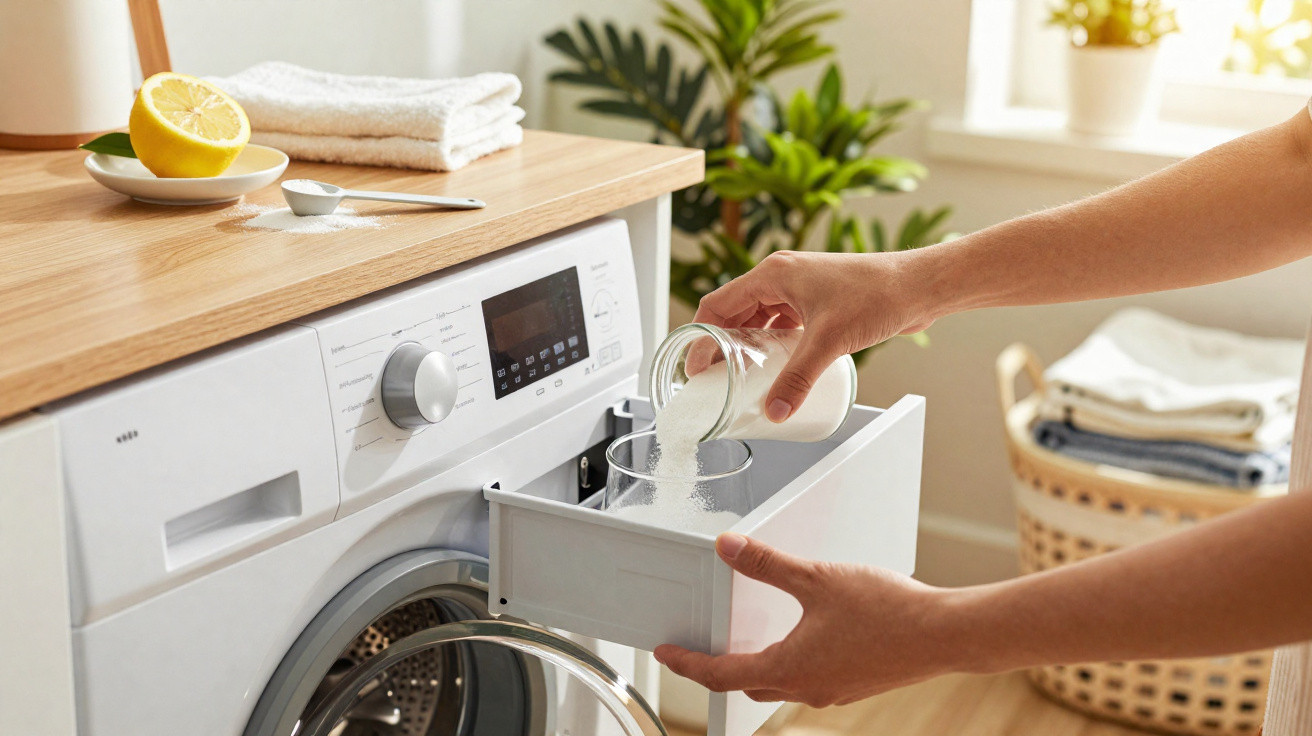
Citric acid can help to remove mineral deposits, soap residue and some of the dirt that builds up inside a washing machine, all of which can contribute to unpleasant smells on clothes. The drum, detergent drawer and door seal stay damp after each cycle and, without regular cleaning, may develop a residue layer that provides favourable conditions for microorganisms to grow.
Why does a washing machine start leaving a musty smell?
The smell does not usually result from just one wash. Detergent and fabric conditioner residue, body oils, lint and moisture can remain in poorly ventilated areas, creating deposits that cling to surfaces. Front-loading machines require particular attention around the door seal, as water can remain trapped in its folds long after a cycle has finished.
- Using too much detergent or fabric conditioner that is not fully rinsed away
- Standing water caught in the folds of the door seal
- A detergent drawer that remains constantly damp
- Frequent washes at low temperatures
- Closing the door straight after use
How does citric acid work on drum residue?
Citric acid is particularly effective against mineral deposits left by water, as well as scale that combines with washing-product residue. Its acidity helps to loosen this material from the internal surfaces, making it easier to flush away during an empty cleaning cycle.
It should not, however, be regarded as a solution that can remove every type of biofilm or contamination on its own. If there are visible marks, slime or a persistent smell on the seal and in the drawer, these parts will still need to be cleaned manually. An internal cycle works best when used alongside the physical removal of accumulated dirt.
How should you clean the washing machine without clothes inside?
The washing machine must be empty for this process, and the amount of product used should follow the appliance manufacturer's instructions. Different models use different rubbers, metals and coatings, so a concentrated homemade formula should not be treated as suitable for every washing machine.
- Remove all clothing from the drum
- Clear lint and visible dirt from the door seal
- Wash the detergent drawer separately
- Use the drum-cleaning programme if the appliance has one
- Once finished, leave the door and drawer open until the inside has dried
Can bleach and citric acid be used together?
No. Citric acid and bleach must never be mixed. Hypochlorite-based products can release irritating and dangerous gases when they come into contact with acidic substances. If the washing machine has been run with bleach, the system must be thoroughly rinsed before any acidic product is used.
It is also incorrect to say that bleach always damages a washing machine's rubber seal. Some manufacturers permit it in specific concentrations and cycles, while others advise using products designed for cleaning the drum. The main risk comes from excessive, concentrated or off-instruction use, which can damage components and shorten their service life.
What stops the smell returning after cleaning?
Citric acid can remove some existing build-up, but preventing its return depends on managing moisture and residue after washing. Using the correct amount of detergent and fabric conditioner reduces the product left behind in the drum, while leaving the door slightly open allows water trapped on internal surfaces to evaporate.
The seal should also be dried and checked regularly, especially around the lower folds, where water, hair and small objects often remain hidden. When the drum, drawer and seal are kept clean and ventilated, there is less material available for biofilm to form, and the musty smell should be less likely to affect future loads of laundry.


Comments
No comments yet. Be the first to comment!
Leave a Comment