
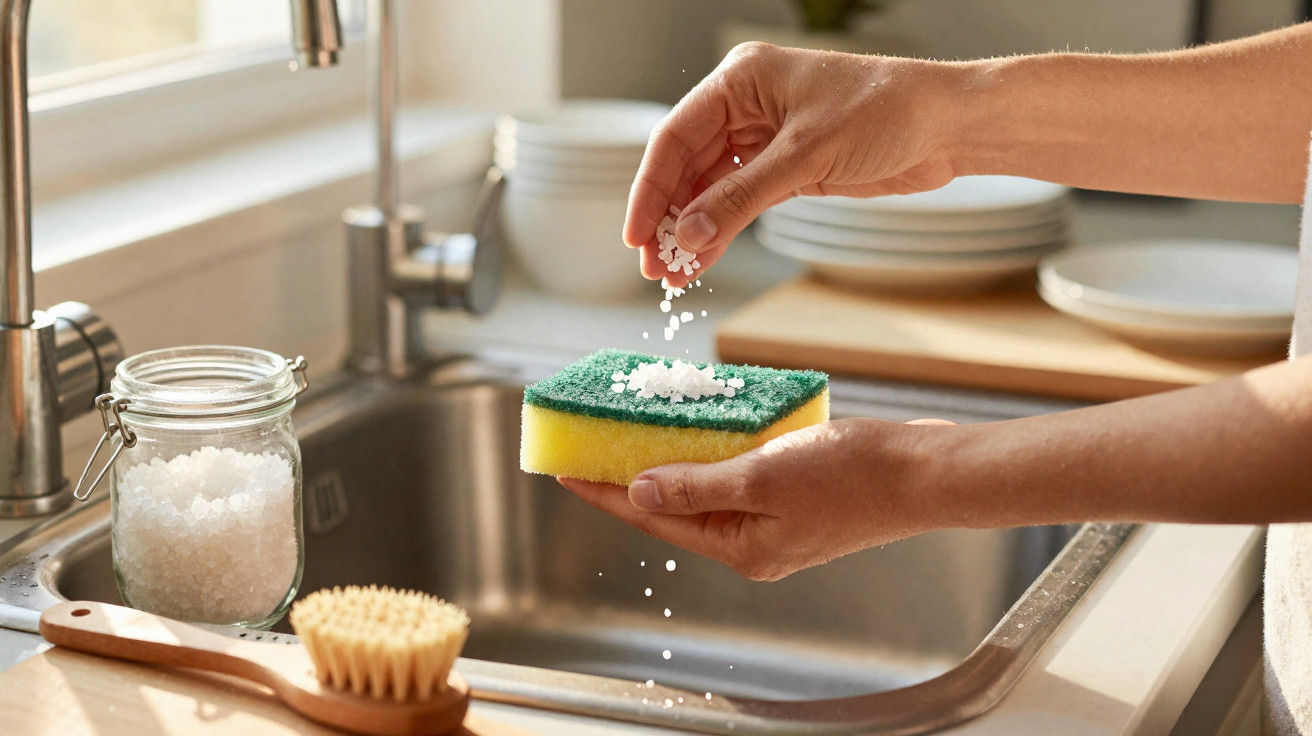
Keeping a kitchen genuinely clean requires care with the everyday items used most often. A washing-up sponge quickly collects grease and a wide range of harmful microorganisms. Using coarse salt is a home-based alternative for restoring hygiene and shifting stubborn residues.
How does coarse salt clean a sponge?
Sodium chloride is an effective natural abrasive for dense grime. When placed directly on the fibres, it helps loosen built-up grease. This mechanical friction makes it easier to remove residues without harming the structure of a household sponge.
Alongside its physical action, the substance helps neutralise unpleasant smells caused by food remnants. Applying it once a week helps the utensil retain a cleaner appearance. This straightforward habit improves the quality of washing up and extends the material’s temporary usefulness.
Why should you never leave a wet sponge in the sink?
Constant moisture provides the ideal environment for harmful microorganisms to multiply quickly on the surface and… Read more
Why is regular application so beneficial?
The ongoing build-up of organic matter turns the inner cavities into favourable places for bacteria. Periodic treatment with hot water and salt limits the excessive multiplication of these agents. Maintaining this practice prevents strong odours and helps preserve safety around the sink.
Carrying out this process weekly also clears the synthetic pores very effectively. The method stops hardened grease from remaining attached to the deeper layers. As a result, your kitchen utensils stay properly protected against any unwanted contamination.
Below is a video from the Fazendo em Casa channel on YouTube that explores the points discussed in this topic in more depth:
What is the correct step-by-step hygiene method?
To use this home method, first wash the sponge with mild washing-up liquid to remove visible dirt. Next, place it in a clean container and cover it with coarse salt. Direct contact with the mineral assists in disinfecting the porous surface.
Pour boiling water into the container until the item is completely covered, then leave the solution to stand for fifteen minutes. Once that time has passed, rinse thoroughly under running water and squeeze it out well. Allowing the material to dry in the sun completes the cleaning process very effectively.
Practical Care Guide
Essential steps for your routine
Follow these guidelines to keep your utensils free from dirt:
- Wash the sponge with washing-up liquid and hot water after daily use;
- Leave the accessory to dry in a well-ventilated place, away from sink moisture;
- Replace the item every week to prevent microbial growth.
Why does salt not replace weekly replacement?
Even with frequent home treatments, no sanitising technique can completely remove the accumulated microbes. Over time, the fibres wear down and hold deep grease that cannot be removed. Replacing the utensil regularly remains the safest measure for the home.
Hygiene specialists advise throwing away an old sponge after every seven days of continuous kitchen use. Using it beyond this period encourages cross-contamination of crockery and cutlery. A disposal routine helps ensure your family remains free from invisible risks.
Several essential practices help prevent health problems in the kitchen:
- Dispose of the used sponge at the end of each week of use;
- Avoid storing the item while damp inside closed containers;
- Use separate sponges for greasy pans and delicate crockery.
How can you keep the worktop and dishes protected?
In addition to caring for the sponge, keeping the sink area hygienic at all times significantly reduces sanitation risks. Standing water accumulating on the worktop attracts unwanted microorganisms. Making a daily habit of drying surfaces protects clean plates and glasses.
Combining home tips such as salt use with regular replacement creates an efficient protective barrier. Small daily actions transform the household routine and increase the lifespan of items. This ongoing attention ensures a healthy environment and fully protected meals.

Comments
No comments yet. Be the first to comment!
Leave a Comment