
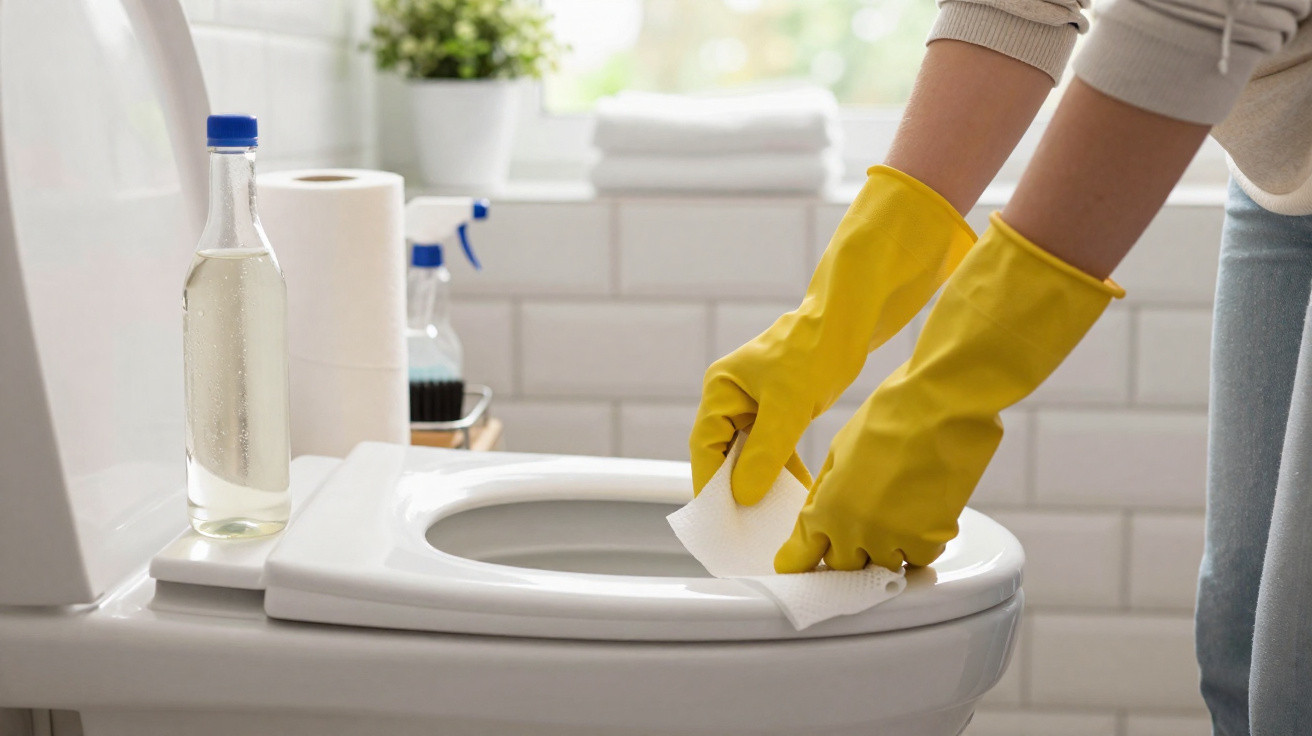
Limescale deposits on bathroom sanitaryware often gradually develop into stubborn, unsightly crusts. Applying paper towels soaked in white vinegar softens these mineral deposits effectively, providing a thorough clean without harming ceramic surfaces.
Why does limescale build up beneath the toilet rim?
The water supplied to homes naturally contains a range of dissolved minerals, including calcium and magnesium. As water evaporates around the inner rim, these solid residues cling to the porcelain and create yellowish or brownish rings that routine cleaning struggles to remove.
As well as spoiling the appearance of the room, these built-up layers can harbour invisible colonies of bacteria and fungi. Only prolonged chemical action from substances or natural acids can dissolve this hardened mineral layer and restore the sanitaryware’s original shine.
How can you clean a toilet without using abrasive brushes?
Clever homemade mixtures can lift heavier grime from the toilet without scrubbing, using only… Read more
How does the paper towel method work on mineral crusts?
Ordinary liquid cleaners tend to run quickly down the curved sides of the toilet bowl, limiting the required contact time. Paper towel acts as a secure compress, holding the acidic product directly against mineral stains so the chemical dissolution can take place.
This ongoing contact breaks down the rigid limescale structure without wearing away the protective glaze on the sanitaryware. Once the reaction has worked for several hours, the softened deposit comes away easily, removing the need for excessive physical effort when cleaning.
See the detailed guidance shared by the Natural Health Remedies YouTube channel below:
What materials are needed for proper cleaning?
Preparation requires only a few accessible ingredients that most people already have in their kitchen cupboard. Using basic safety equipment, such as sturdy rubber gloves, protects hands from bacteria and prevents skin dryness caused by acidic contact.
Choosing distilled white vinegar or cleaning vinegar provides the ideal acidity level for dissolving the crusts. Simple supporting tools, including a spray bottle and an old toothbrush, also make it easier to reach narrow corners.
Essential toilet descaling kit
Recommended items
Gather these materials before starting the cleaning process:
- A bottle of distilled white vinegar or cleaning vinegar;
- A roll of strong paper towels and a hand spray bottle;
- A pair of rubber gloves and a brush for finishing.
What is the step-by-step method for applying vinegar?
Start by removing the excess water collected at the bottom of the bowl with a plunger or disposable cup. This ensures the product works directly on the stained surface, preventing the liquids from becoming diluted too early.
Next, soak layers of paper towel in vinegar and carefully press them beneath the toilet rim. Leave them in place for several hours or overnight, then scrub lightly and flush for the final rinse.
Follow these practical steps to achieve the most effective result:
- Soak sheets of paper towel in undiluted white vinegar;
- Place the paper directly beneath the inner rim of the toilet bowl;
- Allow the solution to work for several hours before brushing and flushing.
How can you keep a toilet free from everyday stains?
Regular bathroom maintenance stops new calcium sediment from hardening into crusts that are difficult to remove later. Spraying vinegar weekly around the rim and cistern prevents the ongoing build-up of mineral grime, helping the ceramic retain its shine.
This sustainable, economical approach avoids harsh chemical products that can damage pipework and the environment. Adopting this natural solution simplifies the household routine while maintaining a high standard of hygiene at all times.

Comments
No comments yet. Be the first to comment!
Leave a Comment