
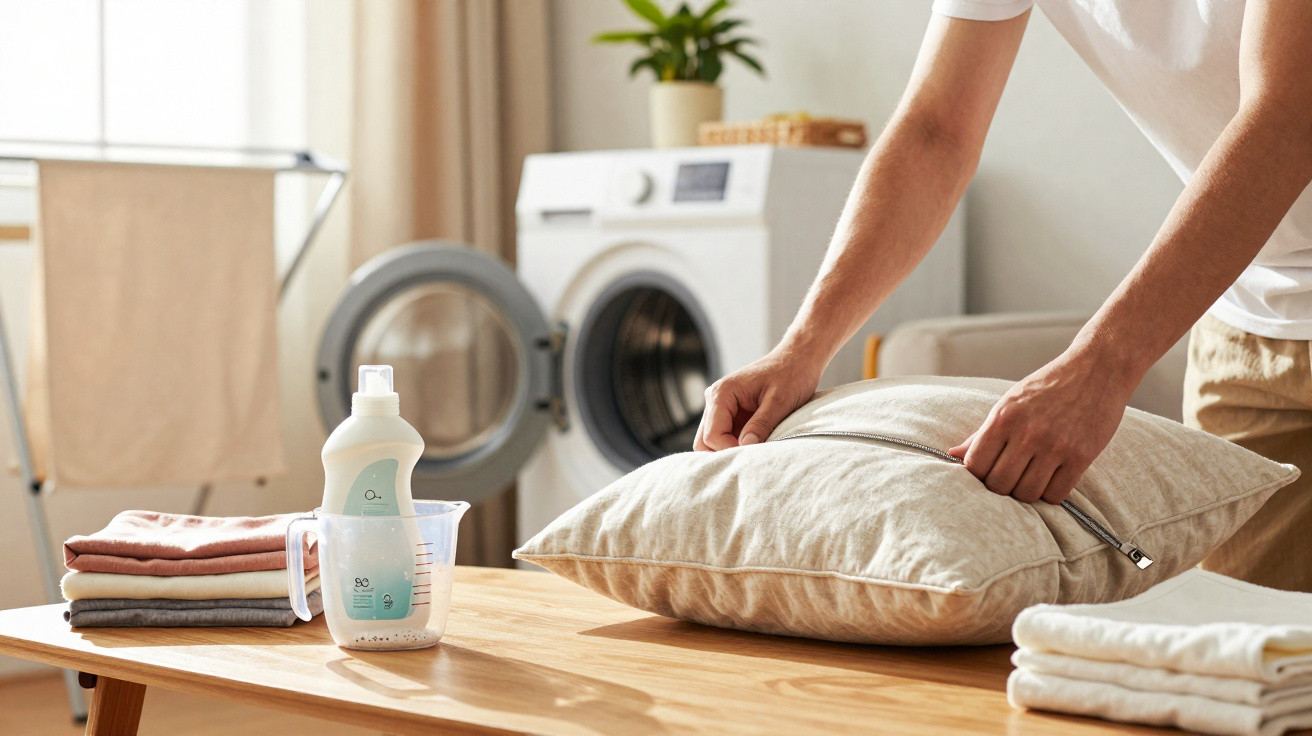
Cleaning removable covers calls for particular care to remove embedded odours and deeply settled residue from everyday use. Using the right detergent for synthetic fabrics and cotton refreshes cushions without wearing down their fibres.
How does enzyme detergent work on dirt in covers?
The enzymes in this product act as biological catalysts, breaking down grease particles and proteins attached to fabrics. This chemical process speeds up the deep cleaning of fibres, lifting stubborn dirt from cotton while leaving its structure intact.
Unlike conventional products, this solution cleans effectively even when used in cold water during washing. It therefore helps protect items from shrinkage, retains the fabric’s softness and provides excellent sanitising results.
How can you clean the inner filling without misshaping the cushion?
To stop the foam from losing its shape and volume during washing at home, the key is to… Read more
What is the right way to set the dosage and washing-machine cycle?
Before beginning the cleaning process, check the care instructions on the label of every removable cover. Use the amount of product advised by the manufacturer and select a cycle that will preserve the material.
Synthetic fabrics need gentle agitation to prevent pilling and wear on surfaces exposed to continual use. Avoiding too much detergent also prevents residue from building up, which can make the fabric stiff and cause unwanted stains.
Below is a video from the Clean My Space YouTube channel with additional tips for organising and cleaning your home:
What precautions should be taken when washing delicate fabrics?
Cleaning formulas containing the protease enzyme require extra caution when maintaining household textiles. As this substance breaks down proteins, it can affect the integrity of wool or silk items and result in permanent damage.
For these particular fabrics, neutral products that do not chemically react with natural fibres are recommended. Choosing the appropriate cleaning product removes sweat and unpleasant odours while keeping the surface texture soft.
Essential Washing Kit
Items for Effective Cleaning
Here are the essential items for washing cushion covers safely:
- Suitable enzyme detergent to break down grease and body residue;
- A protective laundry bag to prevent friction against seams and zips;
- A well-ventilated, shaded place for fabrics to dry completely.
How can you ensure odours and mould are completely removed?
The combined action of enzymes such as amylase and lipase helps break down body oils deposited in upholstery. This thorough degradation neutralises odours trapped in the fabric, restoring a pleasant freshness to covers without artificial fragrances.
Once the machine rinse is complete, proper drying is essential to prevent moisture from encouraging fungal growth. Drying in a ventilated, shaded setting protects colours against fading and prevents unwanted mould.
Follow these key steps for effective rinsing and drying in your household routine:
- Remove all excess product under cold running water;
- Hang the item in a ventilated place away from direct sunlight;
- Check that it is completely dry before replacing the filling.
Why should cushions be washed regularly?
Regularly sanitising removable covers prevents dust mites from multiplying and stops invisible everyday dirt from accumulating in the living room. This routine care extends the life of upholstery, maintaining the pleasant feel and attractive appearance of the space.
In addition to supporting the family’s health, looking after fabrics properly enhances the décor and ensures everyone remains comfortable. Efficient methods and suitable products make household care a straightforward, practical and highly rewarding task for the home.


Comments
No comments yet. Be the first to comment!
Leave a Comment