
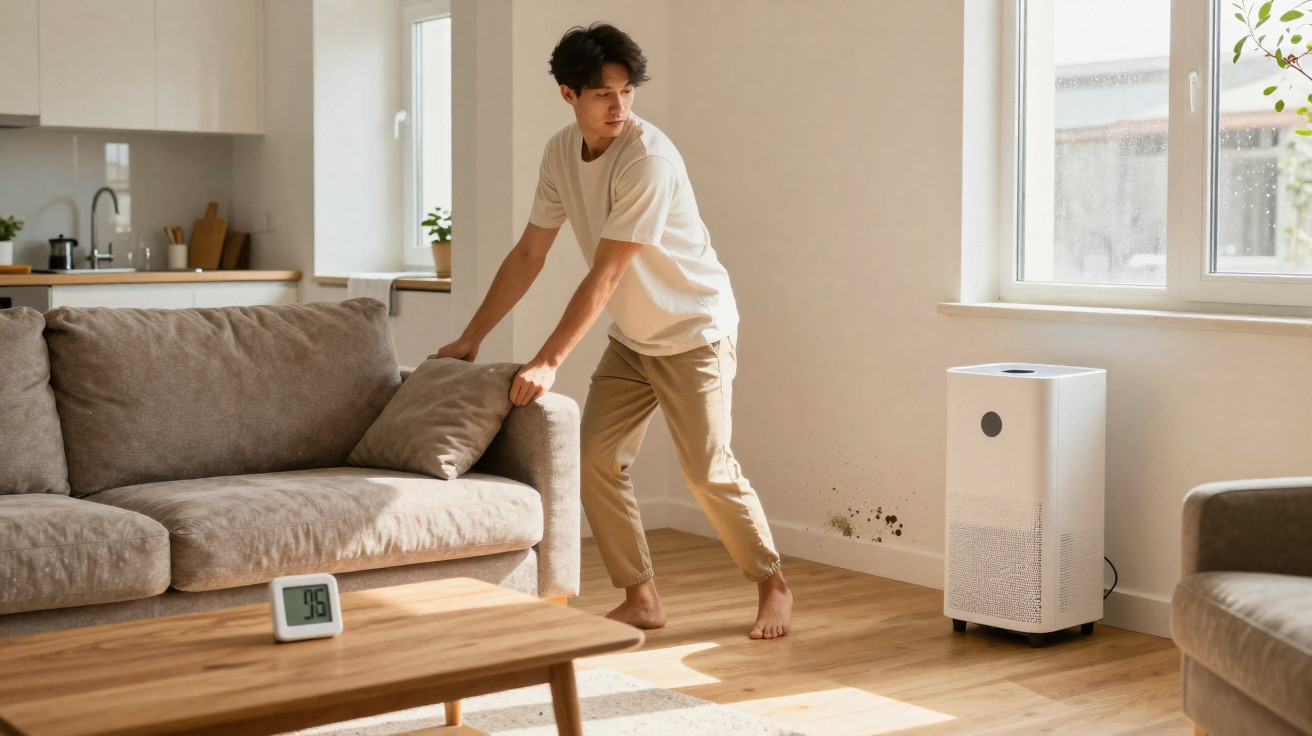
Moisture does not always first show up as large patches on a wall. Certain objects and places inside the home can hold water for longer, particularly in poorly ventilated areas or where they are regularly exposed to steam and splashes. Spotting these areas during routine cleaning may help prevent moisture from remaining concealed.
Why do some objects retain moisture unnoticed?
Water can become trapped in fabrics, gaps, porous surfaces and spaces with limited airflow. Even if an item feels dry on the outside, moisture may still be present inside it or on the side resting against another surface.
Bathrooms, kitchens and utility rooms tend to contain more steam and splashes, but this does not mean that other rooms are free from the issue. Poor ventilation can slow evaporation, extending the time some materials need to dry fully.
What are the 4 places that need attention?
Several examples commonly arise in everyday household routines:
- Bathroom mats: Their undersides may stay damp after a shower, especially when they are placed directly on the floor.
- Sponges and cleaning cloths: If stored while still wet, they can remain damp for several hours.
- Shower curtains: Folds and sections close to the walls may take longer to dry in a poorly ventilated room.
- The backs of furniture: When furniture is positioned too close to a cold or damp wall, airflow may be restricted.
These areas will not necessarily retain moisture in every home. The risk is determined by the material, how often the item is used, ventilation and the conditions in the room.
How can you stop moisture becoming trapped in these places?
After showering, position mats and curtains so that they are more exposed to the air. Cloths and sponges should be wrung out and left to dry completely before being put away.
It is also worth checking furniture and objects placed against walls. Where the manufacturer specifies a clearance, it should be maintained to allow air to circulate. In naturally damp rooms, regular ventilation may help speed up drying.
Who should pay closer attention to these places?
Homes with limited ventilation, rooms exposed to substantial steam, or places where clothes and objects take a long time to dry require greater care. In these circumstances, small areas that retain water can stay damp for longer.
If persistent marks, a musty smell or signs of deterioration appear on walls and furniture, simply drying the objects may not address the cause. It is important to investigate where the moisture is coming from. Monitoring the things that retain moisture inside the home can therefore help identify areas overlooked during cleaning.

Comments
No comments yet. Be the first to comment!
Leave a Comment