
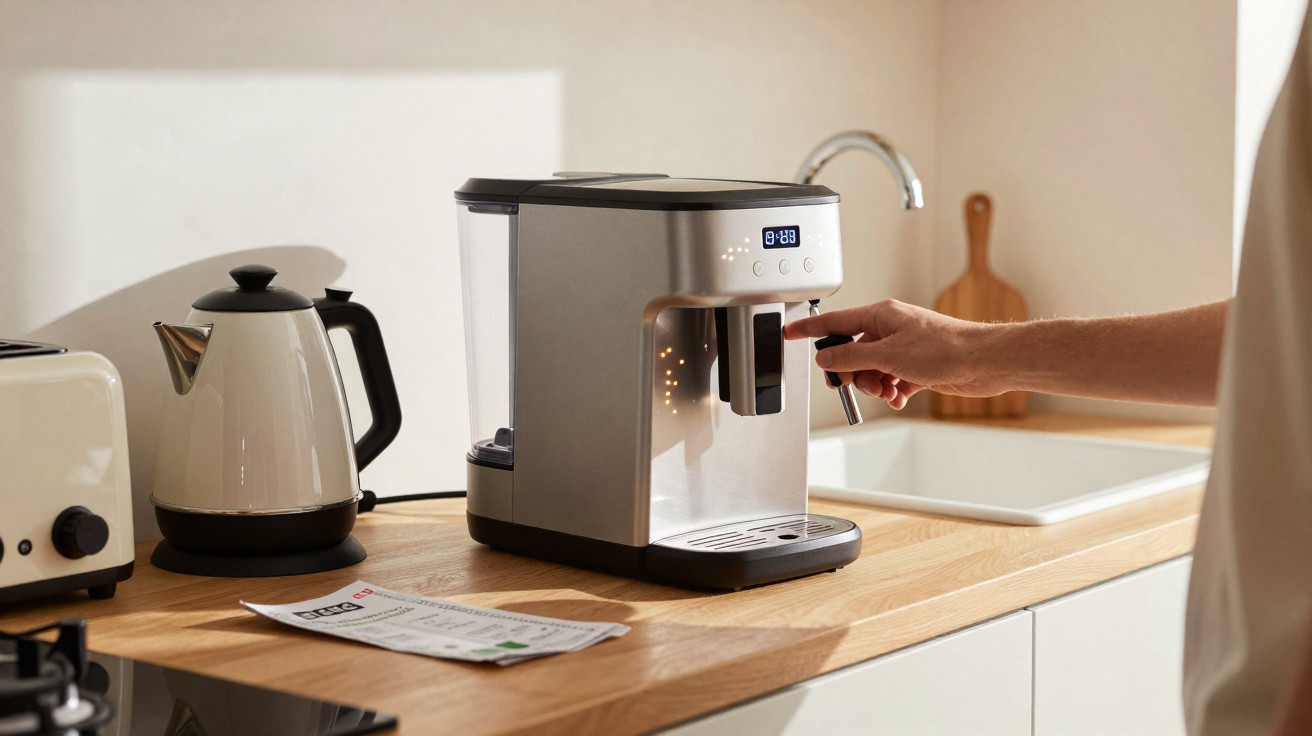
Most people assume they already know which appliances consume the most energy in the kitchen. The oven, fridge-freezer and dishwasher are usually the first to come to mind. However, energy experts point to an often-overlooked appliance that can quietly use far more electricity over a year than many people realise.
The real energy guzzler: often small, often on – and usually forgotten
The issue is appliances that produce heat or hot water and are used very regularly: kettles, bean-to-cup coffee machines, capsule coffee machines, electric boilers or the compact air fryer on the worktop. In many homes, the bean-to-cup coffee machine is the real drain on energy rather than the large oven.
The explanation is straightforward: an oven may be used only once or twice a week. A coffee machine or capsule machine, by contrast, is switched on several times a day, often stays powered up, keeps its water and internal pipes warm, and remains on standby continuously.
The unassuming everyday appliance that makes your coffee or provides hot water can use more electricity by the end of the year than some “large” kitchen appliances.
Why bean-to-cup coffee machines use so much energy
A modern bean-to-cup coffee machine heats water, keeps its brewing unit warm and often heats the cup shelf too. Many machines remain switched on throughout the morning so that an espresso is ready at any time. This is precisely where the problem arises.
- High power demand: During heating, many machines draw 1,400 to 1,800 watts.
- Long operating periods: Appliances can be left on for hours even when no one is making coffee.
- Standby consumption: Displays, electronics and heating systems continue to use electricity while the machine is in standby mode.
For example, a bean-to-cup coffee machine that is switched on for around two hours each day and also remains on standby can consume 150 to 250 kilowatt-hours annually. At an electricity price of 30p per kilowatt-hour, that can amount to as much as £75 – for coffee alone.
Which kitchen appliances use the most electricity – and why
Electricity use is determined by two factors: an appliance's power rating and how long it is used for. An oven rated at 2,000 watts is powerful, but it may only be used occasionally. An 800-watt appliance that is on for most of the day can consume more electricity overall.
| Appliance | Typical power rating | Use (example) | Estimated annual consumption |
|---|---|---|---|
| Bean-to-cup coffee machine | 1,400–1,800 W | On for 2 hrs/day + standby | 150–250 kWh |
| Capsule coffee machine | 1,200–1,500 W | Several short uses/day | 70–140 kWh |
| Kettle | 1,800–2,200 W | 3–5 times/day | 60–120 kWh |
| Electric boiler / under-sink unit | 1,500–2,000 W | Permanently ready for use | 200–400 kWh |
Under-sink boilers and compact hot-water appliances in the kitchen are especially deceptive. They keep a water reservoir at temperature all the time, including overnight. Over a year, this adds up to a substantial amount of energy.
The standby effect in the kitchen
In many kitchens, displays remain illuminated around the clock: the coffee machine, microwave, combination appliance, radio and smart speaker. Every single watt used in standby mode adds up.
An appliance that constantly draws just 5 watts uses around 44 kilowatt-hours a year – without any active use.
Leaving several appliances connected at once wastes money. Older bean-to-cup and capsule coffee machines in particular often have much higher standby consumption than current models with an Eco mode.
How to identify the energy guzzler
To establish which kitchen appliance is pushing up your bill most, use a simple meter that plugs in between the socket and the appliance. These energy-cost meters are inexpensive and make it very clear which appliances are using an unusually high amount of electricity.
A typical approach is:
- Connect each larger kitchen appliance to the meter in turn for one or several days.
- Record the consumption in kilowatt-hours and calculate the figure for a full year.
- Multiply it by your current electricity price to identify the true cost.
Many people are surprised to find that it is not the large fridge but the always-ready coffee machine that tops their list of energy guzzlers.
Practical saving tips for bean-to-cup coffee machines, kettles and more
Using a bean-to-cup coffee machine properly
- Switch the machine on only when you genuinely intend to use it.
- Enable its automatic switch-off function or shorten the delay time.
- Avoid keeping cups permanently warmed.
- Descale it regularly, as a limescale build-up makes the appliance use more energy.
If you drink only one or two cups a day, a straightforward filter coffee maker or an economical capsule coffee machine will often be a better option. A bean-to-cup machine can still make sense for offices or large families, but it should then be run with optimised settings.
Using a kettle efficiently
Although a kettle is considered comparatively efficient, it can also become an unnecessary expense if it is routinely overfilled.
- Fill it with only the amount of water actually required.
- Use the kettle's level markings to prevent overfilling.
- Descale the appliance regularly, because limescale reduces heating performance.
If you repeatedly boil fresh water for tea, every heating cycle costs a few extra pence. A vacuum flask can keep hot water usable for longer.
Why paying attention to small appliances is becoming more important
As electricity prices rise, everyday consumption is receiving greater attention. Many households have already bought newer, more economical fridges and dishwashers. The hidden cost drivers are now often among the smaller appliances.
Modern kitchens also contain an increasing number of helpers: air fryers, multicookers, rice cookers, blenders with standby functions and smart displays. Each additional appliance means another plug socket and a potential source of continuous electricity use.
Combined effects: when many small consumers become expensive
One coffee machine on its own may not seem especially significant. Combined with a boiler, microwave, air fryer, smart speaker and a cooker hood with permanently lit controls, however, it creates a noticeable increase in consumption.
Anyone aiming to reduce annual electricity use therefore needs to scrutinise all kitchen appliances. Many measures can be taken without sacrificing convenience, including timer plugs, consistently switching appliances off, Eco modes and regular maintenance.
Practical guide: how much is still normal?
For an average household with a normally equipped kitchen, the following broad guide values apply for kitchen electricity use alone:
- One-person household: 300–500 kWh per year
- Two- to three-person household: 500–800 kWh per year
- Family household with frequent use: 800–1,200 kWh per year
If your consumption is considerably higher, check the electricity use of hot-water appliances and coffee machines in particular. Even small changes to everyday habits can then have noticeable effects on the annual bill.
Terms such as “kilowatt-hour” and “standby consumption” may initially sound technical, but they are easy to understand: one kilowatt-hour is roughly the amount of energy used by an appliance rated at 1,000 watts running for one hour. An appliance rated at 100 watts that is on for ten hours also uses one kilowatt-hour. This quickly shows why prolonged use of an appliance matters so much.
Those prepared to measure consumption for one or two weeks and make small adjustments to their habits can often save three-figure sums per year in the kitchen alone – without giving up fresh coffee.



Comments
No comments yet. Be the first to comment!
Leave a Comment