
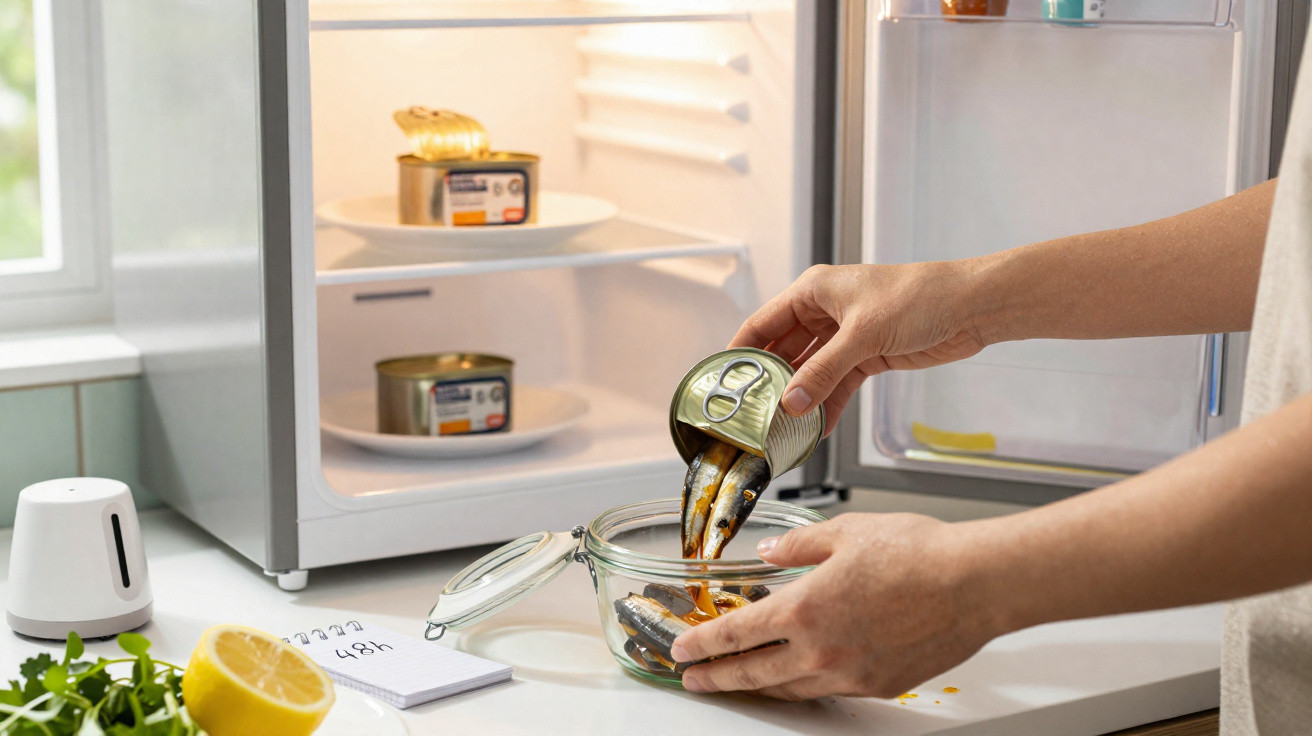
One ordinary fridge habit can quietly make sardines a problem.
You make pasta, lift a couple of sardines from the tin with a fork, press the metal lid back into place and put the rest in the fridge. It feels sorted: the fish is chilled, the tin seems “closed enough”, and its use-by date is still years away. Yet food safety specialists warn that this reassuring reasoning is precisely where things can go wrong.
Why an open metal tin in the fridge is a problem
Before you lift the pull-ring, a tin of sardines is effectively a small sterile container. Canning heat treatment destroys most micro-organisms, while the sealed metal can protect the food for years. As soon as the seal is broken, however, the situation changes.
Air, moisture and bacteria from the kitchen and fridge can enter. Refrigeration slows their growth but does not halt it. The opened tin contains oily fish, liquid, residue from your fork and oxygen - ideal conditions for microbes.
Once opened, a sardine tin turns from long-life food to fresh food with a very short clock ticking.
Chemistry is involved too. Once exposed to air, the metal can begin to corrode, particularly in salty brine or acidic tomato sauce. Sardines contain plenty of omega-3 fats, which oxidise rapidly. As a result, they become rancid more quickly, with their aroma and flavour changing well before their appearance changes dramatically.
As corrosion continues, tiny quantities of metal or substances from the internal coating may pass into the food. Regulatory thresholds are stringent, so one tin left in the fridge is unlikely to poison you directly. However, routinely storing food carelessly erodes the safety buffer created by the original canning process.
Food poisoning: what could actually happen?
In most cases, fish from an opened tin leads to an unpleasant flavour and an upset stomach rather than a hospital visit, but there is a genuine risk. Bacteria such as Staphylococcus aureus and certain Clostridium strains may grow when the conditions allow.
Botulism, which is caused by Clostridium botulinum, is frequently associated with tinned food. It is important to be clear: botulism is uncommon, and the greatest danger comes from unopened tins that have been poorly processed or damaged. Refrigerating an opened tin reduces the risk, but if the product was compromised from the outset, leaving leftovers warm or keeping them too long makes the odds worse.
Any sign of a swollen, leaking, or heavily rusted can is a red flag: do not even taste, just bin it.
More often, the effects are less severe: nausea, stomach cramps and diarrhoea a few hours after eating unsafe leftovers. For children, pregnant women, older people and anyone with a weakened immune system, even a “mild” episode can make for a very bad day.
How long can you keep tinned sardines after opening?
An unopened tin of sardines may have a best-before date three to five years in the future. Once the lid has been opened, that shelf life falls from years to days.
Safe storage at a glance
| Stage | Where to store | Maximum recommended time |
|---|---|---|
| Unopened tin | Cool, dry cupboard | 3–5 years (check date and can condition) |
| Opened, transferred to container | Fridge (0–4 °C) | 24–48 hours (up to 3–4 days at most) |
| Frozen leftovers | Freezer (≤ -18 °C) | Up to 3 months |
Food agencies and many nutritionists recommend keeping opened sardines in the fridge for no longer than 48 hours, as long as they have been moved into a clean, airtight, non-metal container. Some advice allows 3 or 4 days where the fridge stays reliably cold and the container remains sealed.
For young children, pregnant people and anyone living with a chronic illness, it is sensible to use a shorter timeframe. Eat leftovers the following day or freeze them.
The right way to store sardines once the tin is open
The answer is simple and should begin as soon as you open the tin. Treat sardines as fresh fish that happens to be sold in metal packaging, rather than as indestructible emergency food.
- Take the sardines from the tin with a clean fork or spoon - do not use fingers or double-dip.
- Immediately move the fish and its oil or sauce into a spotless glass jar or food-grade plastic container.
- Close it tightly, label it with the date and time, then store it in the coldest area of the fridge rather than in the door.
- Aim to eat the sardines within 24–48 hours, or freeze any portion you know you will not use promptly.
Never leave sardines sitting in the opened metal tin, even “just for tonight”. The metal is part of the problem.
If you reheat sardines or add them to a cooked meal, ensure they are steaming hot throughout. If they are going into a salad or spread, keep them properly chilled instead.
Flavour matters: why sardines taste worse from a forgotten tin
Safety is not the only concern; flavour matters too. Sardines are naturally assertive in taste. Once oxidation begins, their pleasant richness can become harsh and greasy.
Typical warning signs include a metallic taste, a faintly bitter note and a softer, almost mushy consistency. The oil may turn cloudy or develop a slight old-paint or putty smell - familiar indications of rancid fat.
Once these off-flavours develop, they cannot be reversed. Lemon juice, chilli or seasoning may mask them, but they will not repair degraded fish. Discarding the sardines then avoids an unpleasant meal and possible stomach trouble.
Smart ways to use up an opened tin fast
The most practical approach is not to let opened sardines sit around. Keeping a few dependable recipes in mind means half a tin need rarely remain unused for more than a day.
Quick ideas for the next 48 hours
- Speedy sardine toast: mash sardines with a squeeze of lemon and a little mustard, spread over hot toast, then add sliced onion or pickles.
- Five-minute pasta: combine hot pasta with sardines, their oil, garlic, parsley and a spoonful of pasta water.
- Potato salad upgrade: mix sardines through boiled potatoes, capers and a yoghurt or mayonnaise dressing.
- Sardine “rillettes”: combine with soft cheese or Greek yoghurt, herbs and pepper to make a spreadable dip.
These straightforward meals turn leftovers into an easy dish while keeping you comfortably within the recommended storage period.
What “oxidation” and “migration” really mean
Food safety guidance about tinned fish often refers to two technical terms: oxidation and migration. Although they may sound abstract, both describe processes taking place inside an opened tin.
Oxidation is the chemical reaction between oxygen and the fats in sardines. Omega-3 fats are especially vulnerable. When they break down, they produce small compounds with unpleasant smells and flavours. You may not see the change immediately, but your nose will often detect it before your eyes do.
Migration means that minute amounts of substances move from the packaging into the food. Modern tins have coatings intended to minimise this, and they work extremely well while the tin is unopened. If acidic or salty food is left in an open tin that is beginning to corrode, the balance shifts and those protective conditions no longer fully hold.
When to trust your senses - and when not to
Many people use the “sniff test” for leftovers, and this instinct can be partly helpful with sardines. If they smell strongly sour, metallic or simply wrong, do not taste them. A change in colour, bubbles in the liquid or a slimy surface are also warning signs.
There is an important limitation: some harmful bacteria do not alter a food's smell or appearance immediately. Sardines stored incorrectly can therefore look acceptable while still posing a risk. This is why storage time and refrigeration are as important as what your nose tells you.
If you are hesitating over a two‑day-old portion of sardines, the safest choice is usually the bin, not the plate.
Tinned sardines offer years of shelf life before opening. Afterwards, they require a little care: clean containers, genuinely cold storage and a quick journey to the table.

Comments
No comments yet. Be the first to comment!
Leave a Comment