
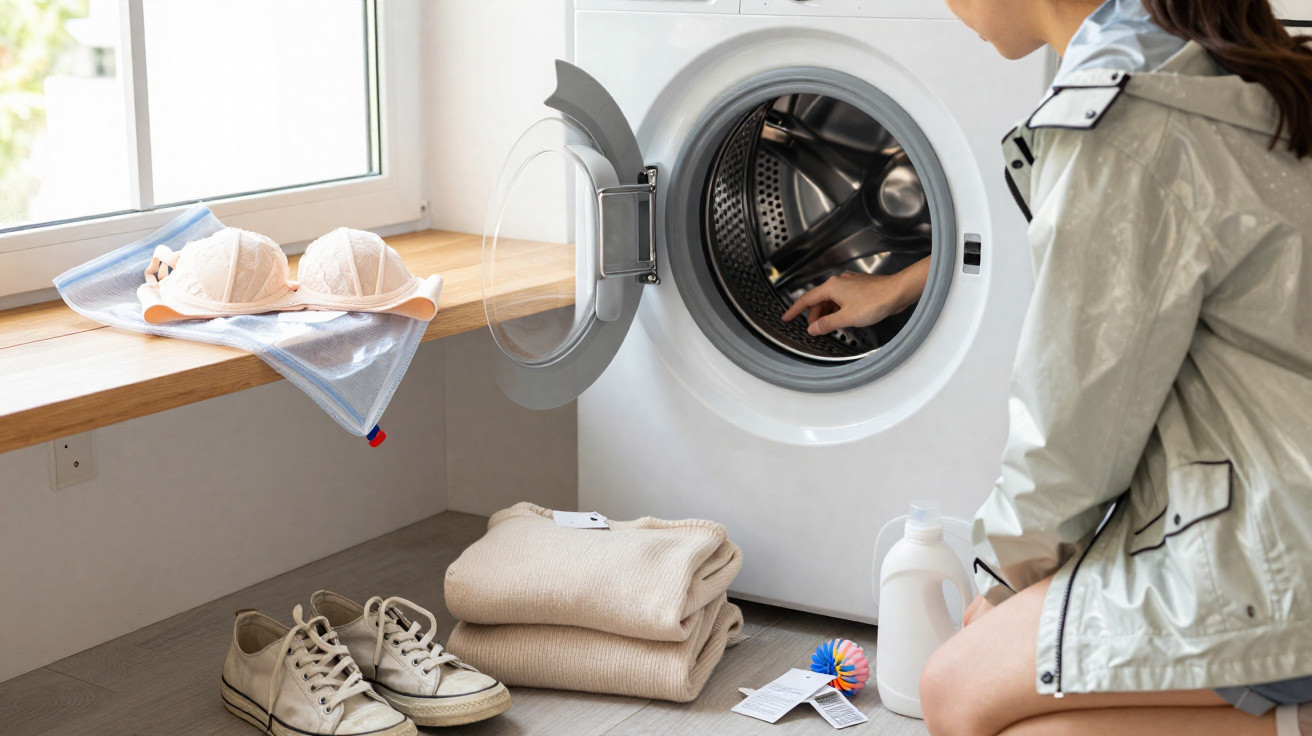
Many households unknowingly damage both their washing machine and favourite items because certain textiles are simply thrown in with the rest – even though they do not belong there at all.
A quick wash between appointments, everything goes into the drum as usual, press start – then the machine suddenly rattles, vibrates or “walks” across the floor. Often, the appliance itself is not the problem: a few common textiles behave very differently in the drum from a towel or T-shirt. Handling them incorrectly can damage both the machine and the clothing.
Why some textiles become troublesome in the washing machine drum
People often expect more from a washing machine drum than it can safely handle. It turns, speeds up and slows down, meaning that anything hard, heavy or highly delicate can become a risk. Three factors are particularly problematic: hard impacts, constant friction and water trapped in fabric.
“Every hard item in a wash acts like a small hammer during the spin cycle, striking the drum again and again.”
As soon as a load is unevenly distributed, it becomes unbalanced. The machine vibrates, almost moves away during spinning or repeatedly stops the cycle. Delicate fibres suffer at the same time: they snag, lose their shape or shrink completely. This is where four groups of textiles, which are washed incorrectly in many homes, become important.
Special case: how underwired bras damage the drum and fabric
Underwired bras are among the biggest troublemakers in a washing machine. Their metal wires are secured within the fabric, but vigorous movement can quickly change that. During washing, they may bend, work their way out of the fabric channel or, in the worst case, pierce through the laundry.
The hooks on the fastening are another issue. They can catch on knitwear, pull threads or tear delicate materials. Meanwhile, the metal components strike directly against the drum during spinning.
“Bent wires, misshapen cups and scratches inside the drum are classic results of incorrect bra care.”
How to care for bras gently
- Always wash them with the fastening closed so that the hooks cannot catch.
- Use a laundry bag to keep metal parts away from the rest of the load.
- Select a delicates or gentle cycle and set a low spin speed.
- Do not wring them out after washing; press out the water gently and dry flat.
- Avoid the tumble dryer: heat misshapes cups and wires, while also ageing elastic more quickly.
If you own particularly high-quality lingerie, it is better to rinse some pieces by hand in a basin with lukewarm water and a small amount of delicates detergent. This helps the garments last longer and keeps loose wires out of the washing machine.
Shoes in the washing machine: seemingly harmless, potentially costly
Throwing trainers or sneakers into the washing machine can seem tempting. It is quick, convenient and avoids scrubbing. Inside the drum, however, something else happens: the heavy soles hit the metal and glass with force on every rotation. The spin cycle in particular creates strong impacts and vibrations.
For the appliance, this places strain on the bearings, suspension and shock absorbers. For the shoes, it can mean loose glued sections, distorted toe caps and cracked materials, especially with faux leather or delicate foam.
“What seems like a clever shortcut can significantly shorten the life of a washing machine.”
If shoes must go in the washing machine, do it this way
- Always place them in a sturdy laundry bag or a dedicated shoe bag.
- Add a few towels to soften the impacts and reduce noise.
- Choose a low temperature (maximum 30°C) and a delicates or sportswear programme.
- Use a low spin speed or, preferably, no spin cycle at all, then air-dry them.
The traditional method is far gentler on materials: remove the laces, wash the insoles separately, and clean the upper with a brush and mild cleaner. Then loosely fill the shoes with newspaper and allow them to dry slowly in the air – never on a radiator.
Wool on a standard programme: the sure route to a doll-sized jumper
Wool jumpers, scarves and cardigans are sensitive to two things: heat and vigorous movement. Together, these cause a familiar result – your favourite jumper comes out of the machine two sizes smaller and with a felted appearance.
The process known as felting happens when wool fibres rub together under pressure and heat. They become permanently tangled, causing the fabric to shrink and harden. A standard cotton programme is far too harsh for this.
“One ordinary wash cycle can turn an expensive wool jumper into an unwearable item in a single go.”
How to keep wool soft and shape-retaining
- Always use the wool or delicates programme.
- Wash cold or at a maximum of 30°C, using a specialist wool detergent.
- Select a very low spin speed; ideally, spin briefly and gently.
- Never wring or twist wool vigorously, as this intensifies the felting process.
- Lay it flat on a towel, reshape it and leave it to dry flat.
For complete peace of mind, check for the small hand-in-a-wash-basin symbol before washing. This marking means that hand washing is considerably safer than any machine programme, even the wool setting.
Water-repellent and waterproof textiles: a hidden risk during spinning
Membrane jackets, waterproof trousers, outdoor covers and coated covers present a different issue: they barely allow water to pass through. That is an advantage in rain, but it puts pressure on the washing machine during a wash.
Water collects in folds and hollow spaces but cannot drain away properly. This creates individual, extremely heavy “packages” inside the drum. During spinning, the weight shifts suddenly, throwing the machine off balance, stopping the cycle or, in the worst case, causing it to hammer against the wall and floor.
“Waterproof fabrics can turn into genuine water bombs during a wash cycle – with consequences for the drum and suspension.”
How to wash rain jackets and similar items correctly
- Wash only a few items at once and never overfill the drum.
- Use a gentle cycle with plenty of water and a low-speed spin.
- Do not use fabric conditioner – it can clog membranes and reduce breathability.
- If necessary, run an additional rinse cycle to remove detergent residue.
- Renew the water-repellent treatment after several washes, for example with a spray or specialist wash-in product.
Many manufacturers give precise guidance on the label about the permitted programme and temperature. It is worth following these instructions, particularly for expensive technical clothing.
Warning signs from your washing machine that should not be ignored
Certain signs clearly indicate that something is wrong inside the drum:
- unusually loud banging or metallic clattering during the spin cycle
- the machine repeatedly stops spinning or turns only briefly
- laundry comes out badly misshapen, compressed or with pulled threads
In these situations, it is worth stopping the wash, opening the drum carefully and checking the load. A bra wire may be lodged in a hole, a shoe may have become jammed, or a heavy wet item may be hanging to one side.
Helpful extras: small accessories, major effect
A few simple aids can noticeably reduce the strain on both the machine and textiles:
- laundry bags for bras, sheer tights and small items
- shoe bags or old pillowcases for sneakers
- laundry balls for down and synthetic jackets to loosen the filling
- anti-vibration mats beneath the machine if the surface is problematic
These useful items cost little, yet can save genuine repair costs over time. Clothing also remains wearable for longer because it is not pushed to its limit with every wash.
How to carry out a “drum check” before every wash
A quick check before pressing start prevents many types of damage. Ask yourself three questions before each wash:
- Is there anything hard or heavy in a garment, such as metal wires, heavy soles or large buckles?
- Can water collect inside the textile, for example because it is waterproof, heavily padded or made with a membrane?
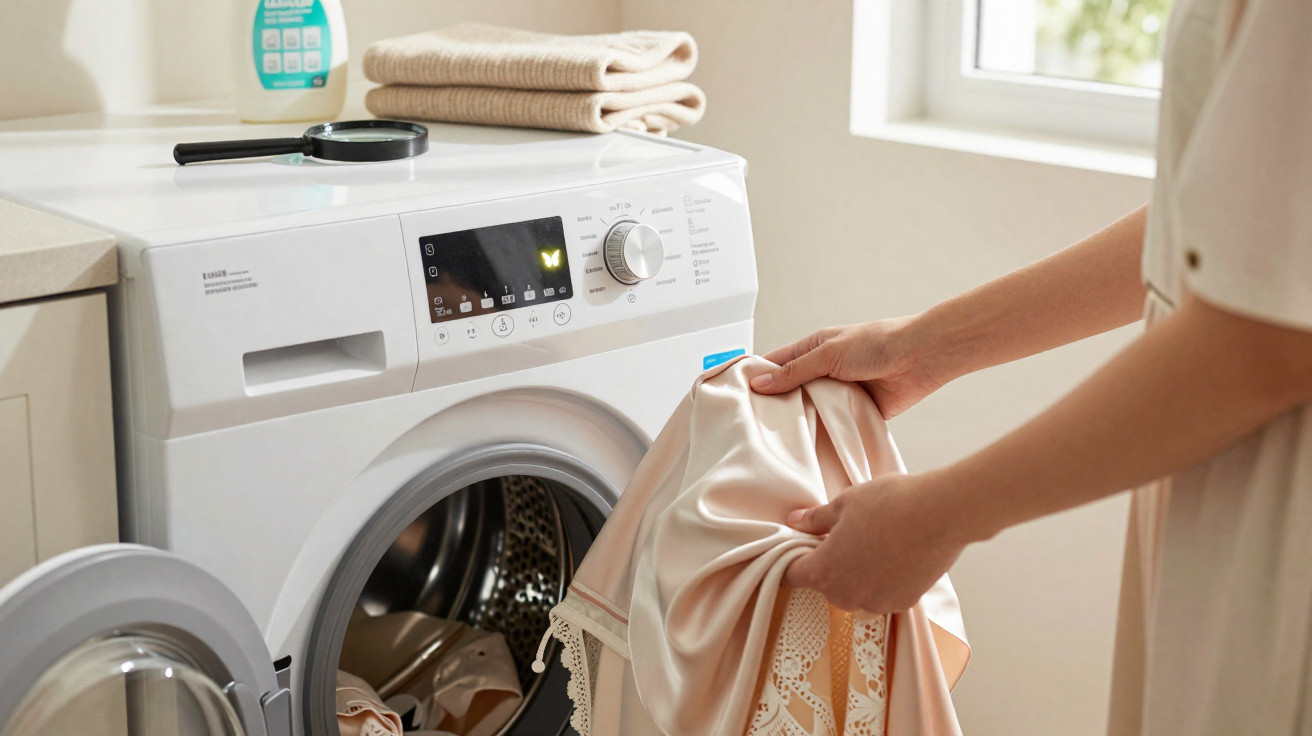
- Is the fabric made from delicate fibres such as wool, silk or fine lace?
If you have to answer “yes” to any of these questions, select a gentler programme, place the item in a laundry bag or, if in doubt, clean it by hand instead. This not only keeps the washing machine working well for longer: bras, sneakers, wool jumpers and rain jackets will also survive far more seasons without becoming unwearable.

Comments
No comments yet. Be the first to comment!
Leave a Comment