
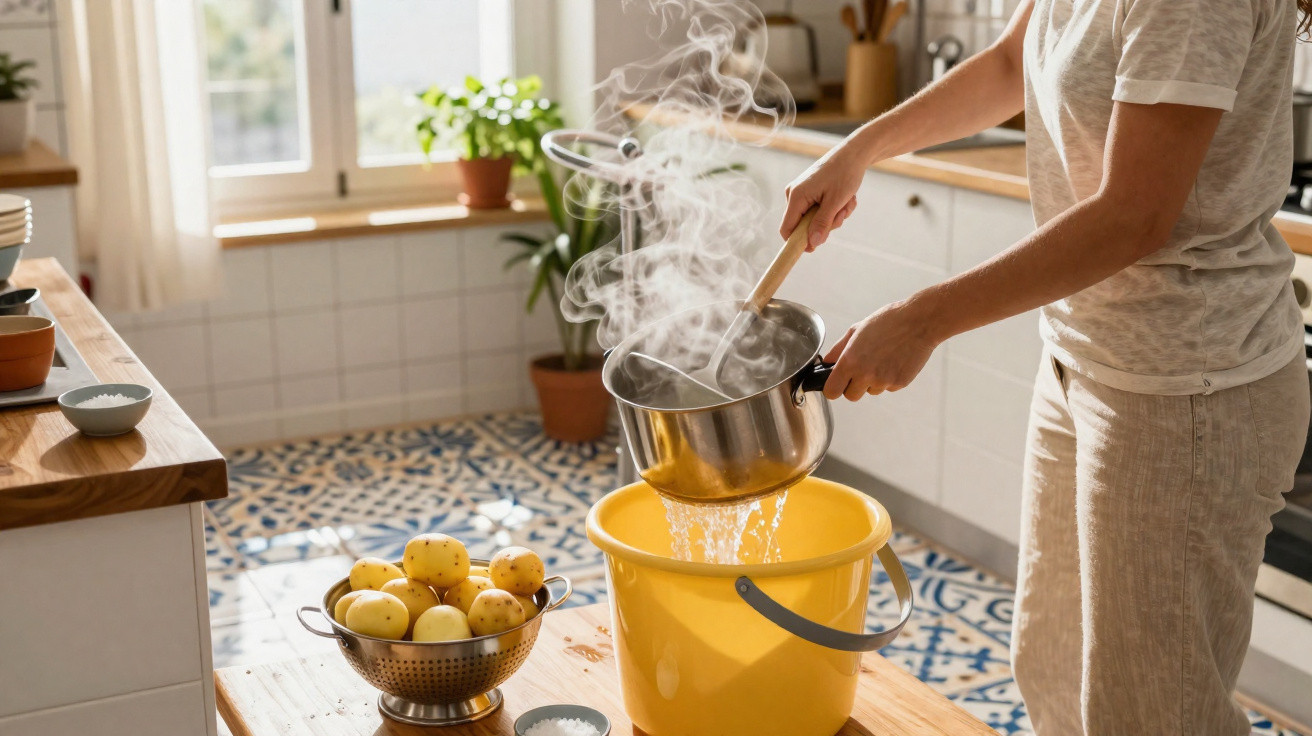
In plenty of kitchens, an unassuming leftover is tipped down the drain, despite being a quiet rival to your usual floor cleaner.
As households increasingly reduce their use of aggressive chemicals and expensive detergents, a starchy leftover from everyday evening meals is attracting attention as an unexpectedly capable cleaner for dull, greasy floors.
From saucepan to mop bucket: potato water’s hidden cleaning power
As potatoes cook in boiling water, they give off starch. This makes the water cloudy and a little thicker. After it has cooled slightly, the cloudy liquid can work as a gentle, natural cleaning solution.
Applied to tiles, vinyl or linoleum, the starchy coating binds to grease and fine dust. It releases the grime so that a mop can remove it with less effort. This leaves the surface cleaner, without the chemical odour or tacky residue often associated with supermarket cleaners.
Potato cooking water creates a very thin, almost invisible layer that traps grease and dirt, then rinses away easily.
Its mild abrasive effect will not scratch hard, non-porous flooring. Rather, it can restore the surface’s natural sheen. People who have tested it often report that their kitchen feels cleaner and less “loaded” with synthetic fragrance after the floor has been washed with starch water.
There is a psychological benefit too. Making use of something that would otherwise be discarded suits low-waste routines perfectly. Transforming a leftover into a cleaning helper can make the weekly mopping job feel more rewarding and less wasteful.
How to make potato water for cleaning
No particular potato variety or specialist kit is required. The process is much like cooking a straightforward side dish, except for one important rule: do not use salt, herbs or fat.
Basic recipe for one floor-cleaning session
- 1 litre of water
- 3 medium peeled potatoes
Put the peeled potatoes and water into a saucepan. Bring the water to the boil, then cook for 20 to 25 minutes. Starch will seep into the water as the potatoes become tender.
When cooking is finished, take out the potatoes to eat as normal and retain the cooking water. Let it cool until warm rather than hot, then transfer it to a clean bucket.
Do not add salt, stock cubes, oil or spices: they can damage some floor finishes and grout over time.
Using potato water on the floor, step by step
- Soak a clean mop or microfibre cloth in the warm potato water.
- Wring it thoroughly until it is damp, not dripping wet.
- Clean the floor one area at a time, beginning with the greasiest spots, such as the space around the hob.
- On heavily soiled patches, leave a light coating on the floor for two to three minutes.
- Go over the floor again with the rinsed and wrung-out mop, or use a second bucket of plain water if you prefer to remove any leftover film.
For an average-sized kitchen, this one litre is generally enough for the full floor. Double the amounts for a large open-plan room. Use the water on the day it is made: after it has fully cooled and been left for several hours, it may begin to smell and becomes less effective at cleaning.
Where potato water works best - and where it does not
This approach is particularly suitable for contemporary non-porous surfaces. Such floors are less prone to swelling and staining, and respond well to quick, mild cleaning.
Floors that usually cope well with potato water
| Floor type | Effect | Frequency |
|---|---|---|
| Ceramic or porcelain tiles | Helps remove kitchen grease and bring back a light shine | Up to once a week |
| Vinyl flooring | Clears footprints and cooking splatters without strong solvents | Every 1–2 weeks |
| Linoleum | Cleans gently and leaves a light protective coating | Every 1–2 weeks |
On these surfaces, the starchy layer may even simplify future cleaning, as residue is less likely to adhere to the floor. Many homes find that a weekly potato-water wash, alongside quick sweeps between cleans, keeps the kitchen respectable without frequent detergent use.
Surfaces requiring greater care
Starch is not suitable for every type of floor. Materials that absorb liquid or show marks readily may react poorly.
- Solid wood parquet: Starch can remain in the grain and leave a cloudy, dull-looking finish.
- Oiled or waxed floors: The natural surface treatment may become hazy or lose its even appearance.
- Natural stone (such as limestone or unsealed slate): Liquid may penetrate the pores, leading to patchy staining.
If you would like to test this method on a delicate surface, try it first in a small, concealed spot. Use potato water that has been heavily diluted and inspect the area once dry. Any whitening or sticky patches indicate that you should return to a cleaner made for that specific material.
When in doubt, keep potato water for tiles and vinyl, and stick to specialist cleaners for wood and stone.
Why starch tackles household dirt
Starch is a carbohydrate formed from lengthy chains of glucose molecules. In cooking, it thickens sauces and gives foods such as mashed potato and gnocchi their structure. It behaves differently on flooring, but remains equally useful.
The starch molecules can help disrupt the “bridge” holding greasy particles to the floor. Once this connection is weakened, the mop’s friction and the liquid’s slight thickness help carry dirt away. As the solution is fairly gentle, it does not remove protective coatings from tiles or vinyl in the way that repeated use of powerful degreasers can.
One further advantage is that unsalted, unseasoned potato water is close to pH-neutral. This is relevant for grout and certain sealants, which may gradually deteriorate when exposed to strongly acidic or alkaline cleaners.
Practical uses in a typical home
Picture a weekday evening after a fry-up or a tray of roast potatoes. The kitchen floor will often be dotted with crumbs and oil. Rather than reaching for perfumed detergent, cook potatoes for the meal without salt, retain the cooking water and use it while it remains warm.
The heat can help loosen greasy marks near the oven. Starch attaches itself to the residue, allowing the mop to pick it up in a few strokes. A rinse with clean water may still be helpful, particularly in corners where more starch can collect. The floor has been cleaned effectively, without another plastic bottle being added to the shopping list.
The technique is also useful after baking, when flour has settled across the floor. Starch on starch may seem unnecessary, yet the damp coating collects dry particles that sweeping alone often merely moves around.
Benefits, limitations and sensible precautions
In budget terms, potato water costs almost nothing. The potatoes have already been bought, while the water would normally have been thrown away. Replacing a branded floor cleaner with it once a week can gradually reduce cleaning expenditure over a year.
It also places less pressure on the environment. Fewer synthetic surfactants enter wastewater and fewer plastic bottles pass through household waste. However, the method is not a universal answer for every type of mess. Stubborn stains, mouldy grout lines and deeply ingrained marks will still require purpose-made products or professional treatment.
A few simple measures help ensure the method remains safe:
- Allow the water to cool sufficiently so that wringing out the mop cannot cause burns.
- Never keep potato water for several days; use it that day, then dispose of it.
- Air the room to help the floor dry promptly and prevent a musty odour.
- If the floor feels slippery, mop the affected area again using clean water.
Potato water and broader low-chem cleaning habits
Using cooking water as a cleaner belongs to a broader change in the way people approach household jobs. Many homes now make do with a short list of basic products: white vinegar, bicarbonate of soda, black soap and, at times, lemon juice. Potato water provides another option for this simplified cleaning kit.
Some households combine these approaches. A diluted vinegar mixture, for example, may be used on bathroom limescale, while starch water is kept for greasy kitchen tiles. This flexible approach limits chemical use without requiring impractical amounts of work.
Getting children involved in these routines can be instructive as well. They learn that waste can be useful, that cleaning does not always call for pungent-smelling liquids, and that small actions - such as saving a saucepan of cloudy water - can alter how a household functions from day to day.
Comments
No comments yet. Be the first to comment!
Leave a Comment