
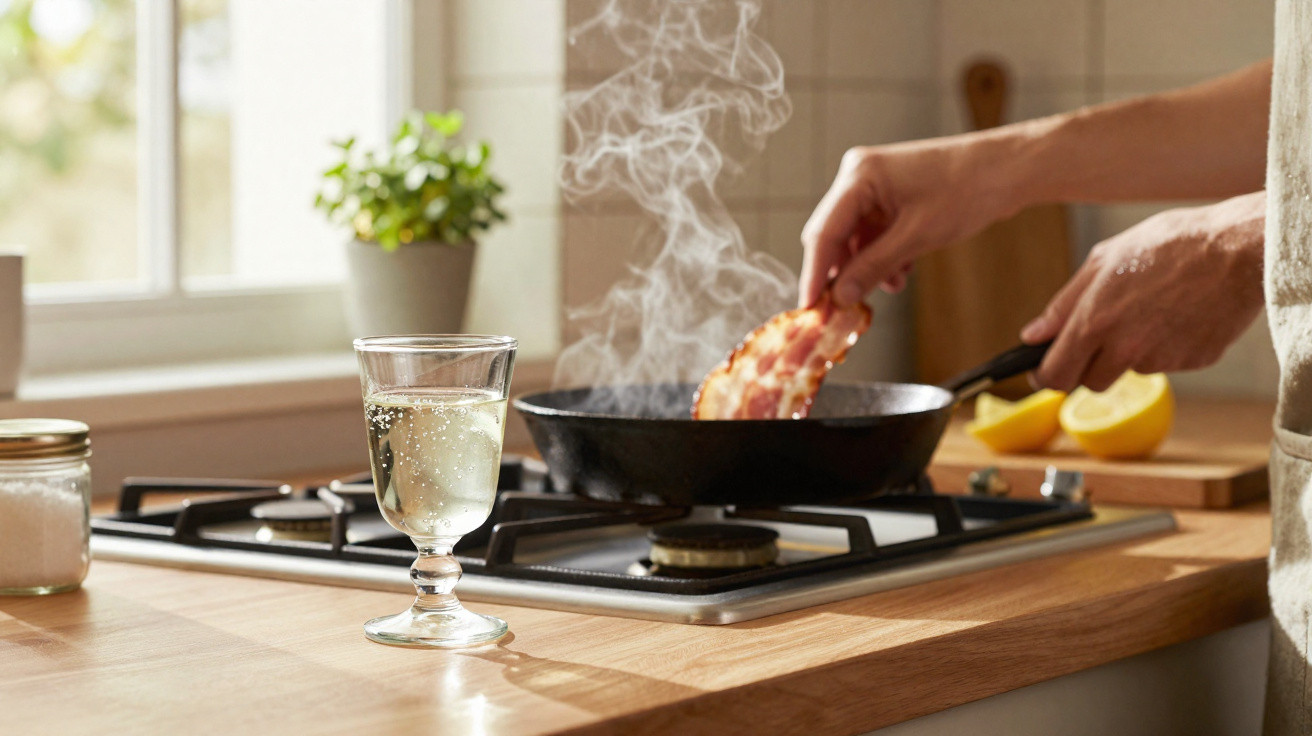
The first rashers of bacon meet the frying pan with that wonderfully satisfying sizzle. Or perhaps it is a lovely salmon fillet, its skin crisping, the sort of supper that makes you feel as though you have your life properly sorted for once.
Ten minutes on, the kitchen smells fantastic. After twenty minutes, the hallway has the aroma of a budget café at 7 a.m. An hour later, your bedroom has quietly taken on the scent of… lunch from yesterday. You open a window, flap a tea towel about and light a candle, only to create an odd bacon-and-vanilla fragrance.
Then, one day, somebody’s grandmother shares an unusual little suggestion: set a small bowl of white vinegar beside the hob before cooking. No wizardry or devices involved. Only vinegar. And the difference can feel almost too good to be true.
Why kitchen smells linger long after the pan has cooled
Walk into a kitchen after someone has fried fish and the smell seems almost visible. It sticks to the steam clouding the window and travels in the light greasy haze you tend only to notice while cleaning the extractor hood the following day. The odour does not simply remain airborne: it settles into textiles, walls and even your hair.
Our homes are less sealed than we imagine. Air moves between rooms, transporting microscopic grease particles and odour molecules with it. Curtains, cushions and coats draped over a hallway chair all behave like little soft sponges. That is why the sitting room can smell of cod an hour after dinner, even when the dishes are already loaded in the dishwasher.
Most people respond with perfume: scented candles, air fresheners or diffusers. Yet these products do not remove the odour; they merely cover it. Fish with vanilla, or bacon with artificial lavender. The real difference comes from dealing with odour molecules before they have the chance to settle. This is where an unassuming bowl of white vinegar enters the picture.
Imagine a small clear bowl placed unobtrusively beside the hob while you cook. There is nothing elaborate about it: simply a shallow dish half-filled with white vinegar. It neither bubbles nor steams; it just sits there, almost absurdly straightforward. Meanwhile, you carry on cooking: turn the bacon, baste the fish and stir the pan sauce. Initially, the room still smells of dinner.
Once the pans are washed and the worktops wiped down, though, there can be a small surprise. The familiar heavy, greasy after-smell that would normally linger is simply… less intense. The hallway is not filled with that persistent fishy note. When you enter the bedroom, rather than catching a faint stale trace of bacon, there is almost nothing. The kitchen smells like a kitchen that has already moved on.
This is not magic but understated chemistry. White vinegar contains acetic acid, which can bind with certain compounds that cause odours and neutralise them rather than disguising them. More alkaline smells encounter vinegar’s mild acidity and are cleared from the air more quickly. It is rather like giving roaming odour molecules somewhere to settle instead of allowing them to circulate through every curtain and cushion in the house.
The simple white vinegar bowl trick for kitchen odours
The technique could hardly be easier. Before switching on the hob, pour a little plain white vinegar into a bowl; a depth of a few centimetres is enough. Put it near the cooking area, close to the burner you will use for fish or bacon. Do not place it where it could be knocked over, but keep it within the invisible zone where steam and smoke tend to gather.
Keep the bowl in place throughout cooking, then leave it out while the kitchen cools. The idea is for the vinegar to be present at the moment the smell is released, when grease particles are still circulating in the air. A shallow dish exposes more surface area, subtly improving its effect. Some people place another bowl on the opposite worktop, forming a sort of invisible odour-catching net around the hob.
It is worth being candid: a bowl of vinegar will not eliminate every trace of a smell as though a magician had clicked their fingers. Powerful spices, very fatty bacon or a major fish fry can still leave an aroma behind. What changes is its strength and how long it remains. Rather than waking to the ghost of last night’s mackerel, you are more likely to notice a faint reminder that disappears after a brief airing. That alone may be the difference between saying, “I never cook fish at home,” and, “Yes, let’s have salmon on Tuesday.”
One wet evening in a small city flat, a young couple chose to try the tip. They were fed up with washing their duvet cover whenever they treated themselves to crisp bacon. Before the first rasher reached the pan, they put a small glass ramekin of white vinegar beside the hob. They cooked as usual, without running the extractor fan at full power or opening the windows wide in the cold.
After eating, they performed their standard test: shut the bedroom door for an hour, then go back in. Normally, the smell arrived first, a soft greasy cloud that made the room seem smaller. This time, there was only the ordinary mixture of laundry, books and a touch of detergent. No phantom bacon. The kitchen retained a warm, gently savoury scent, but the air felt lighter. They laughed at how low-tech the solution was. No filter and no sophisticated appliance humming in a corner. Just a bowl of vinegar quietly working in the background.
Similar experiments take place in thousands of homes, with no lab coats in view. People try the vinegar bowl with pan-seared salmon, then breaded fish fingers, duck breast or chorizo. However informal these trials are, a pattern emerges: the more powerful and fatty the odour, the more people tend to notice a difference when the vinegar is there from the outset. Nobody records figures on a spreadsheet, but everyday life supplies its own evidence. There are fewer remarks from housemates about “yesterday’s dinner”, and fewer questions of “What did you cook?” when somebody comes in three hours later. That is the feedback most home cooks genuinely value.
At a microscopic level, kitchen air becomes a busy junction whenever food meets hot fat. Minute droplets of grease and steam rise, carrying odour molecules with them. Such molecules often have alkaline characteristics, which contrast with the mildly acidic quality of white vinegar. When they meet, they may be neutralised or altered, making them less noticeable to the nose.
The bowl of vinegar acts as a quiet worker stationed amid this invisible traffic. As air circulates, odour molecules touch the acetic acid at the liquid’s surface. Some are absorbed by the vinegar itself, while others react chemically and become less perceptible. Instead of travelling freely into fabrics and distant rooms, they reach a kind of final stop. It does not provide complete coverage - air is untidy and kitchens are chaotic - but it is often sufficient to change the overall sensory experience of the home after a meal.
How to use vinegar against kitchen odours without making your home smell like a salad bar
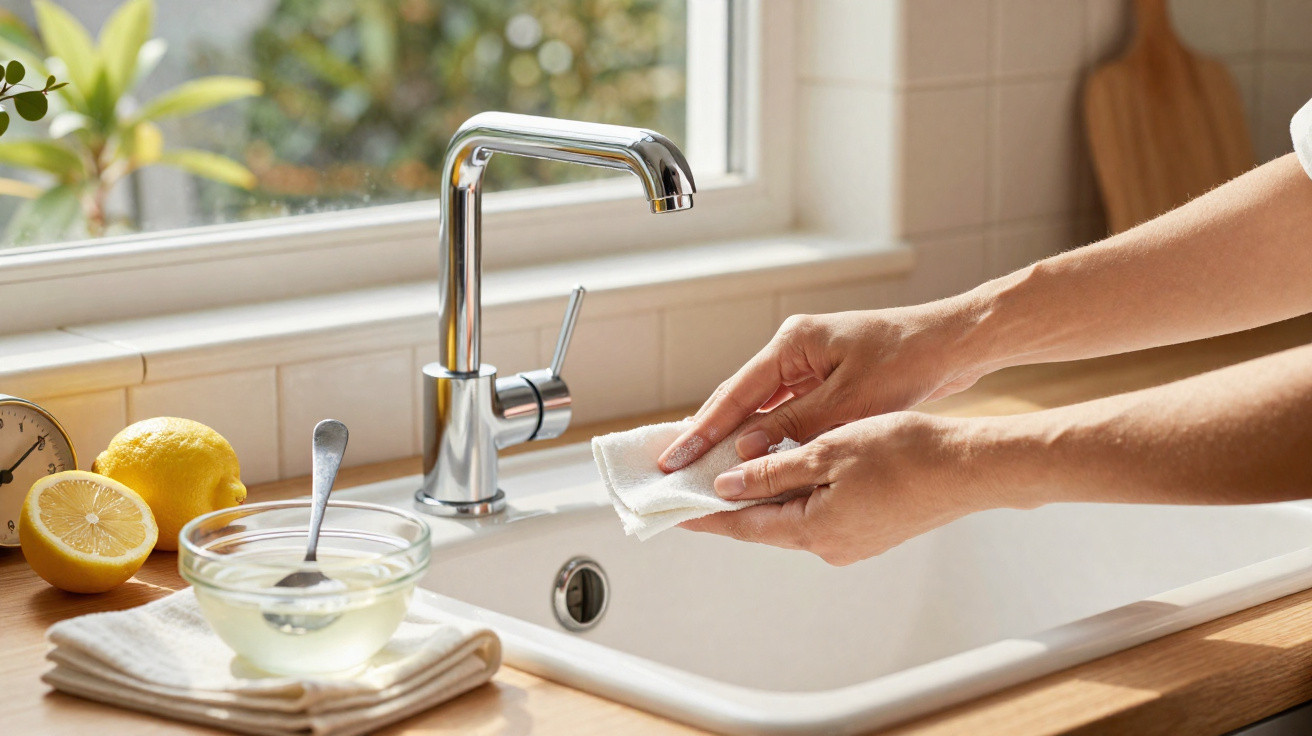
Keep it modest and straightforward. Choose plain distilled white vinegar, rather than cider vinegar or balsamic. Pour a small amount into a wide, shallow dish; a soup plate or ramekin is ideal. Set it near the hob before heating the pan, so it is ready to work as soon as the first fumes rise.
When cooking something especially pungent, such as oily fish or very smoky bacon, put a second bowl on a nearby worktop or even the dining table. Leave both bowls in place for at least 30–60 minutes after cooking. Then pour the used vinegar down the sink rather than reusing it. If the smell is particularly strong, quickly wiping the hob area with freshly diluted vinegar can add to the effect on nearby surfaces.
Many people use far too much the first time, then conclude, “I’ve just swapped fish smell for pickles.” Filling a large mixing bowl in a small room is a common mistake. You do not need that much: a few tablespoons in a shallow dish will often do. Another error is putting the bowl somewhere arbitrary and far from the hob, as though merely having it in the room will somehow work magic.
Others do not remember the vinegar until the entire place already smells of fried cod. It can still offer a little help then, but much of the problem has already developed. This method is preventative rather than reactive. And let’s be honest: nobody really does it every single day. Life becomes busy, cooking happens on autopilot, and you remember the vinegar only after the smell has already taken over. That is fine. Using it whenever you can still makes a difference over weeks of cooking.
What catches many people out is how fast the nose adjusts to the vinegar itself. The sharp acidic smell noticeable immediately after pouring usually fades into the background once cooking begins. Bacon, onions and garlic take over instead. Ultimately, the result is not a vinegar-scented home but one that recovers more quickly from whatever you have fried.
“I used to open all the windows, light two candles, and still go to bed in a house that smelled like fish,” says Claire, 42, who cooks a lot of salmon. “With the vinegar bowl, it’s like the smell has an off-switch. Not gone, but softer. My kids stopped complaining that their pajamas smelled like dinner.”
This small routine works best alongside other easy habits that acknowledge how smells move and settle:
- Switch on the extractor hood as soon as cooking starts, rather than halfway through.
- Open a window in the opposite corner of the room to create a gentle flow of air.
- Wipe up splatters promptly, as dried grease continues releasing odours for longer.
- Wash or replace kitchen towels regularly; they are secret magnets for smells.
- Allow pans to cool, then wash them instead of leaving them until morning.
Combined, these little actions give your home a different baseline scent. It is not sterile or artificially perfumed, merely less trapped in the previous evening’s meal. You can still enjoy bacon on a lazy Sunday or make a garlicky fish dish during the week, without your home smelling like a snack bar for the following 24 hours.
Living with smells rather than fighting them: what this small bowl changes
There is a subtle relief in entering the kitchen on the morning after fried fish and noticing… nothing especially. No reproachful cloud of residual grease, nor a faint reminder of the previous night’s pan hanging in the air. Perhaps there is coffee or toast instead: the normal rhythm of a new day. It can make you feel more comfortable in your own home, particularly when it is small and every odour feels magnified.
Smell is emotional, influencing whether a room feels welcoming or overcrowded. A lingering cloud of bacon may feel cosy on Sunday, but strangely stifling on a Wednesday when you are trying to work at the kitchen table. That little bowl of white vinegar is more than a trick: it is a quiet way of reclaiming that emotional space. You can cook what you want without having to negotiate with curtains, bed linen or the housemate who dislikes fish.
The more interesting question is not, “Does this work perfectly every time?” It is closer to, “What could change in everyday life if cooking did not cast such a long shadow?” Perhaps you would feel able to fry sardines in winter without fearing days of smell. Maybe bacon would no longer be reserved for special weekends with every window open. Small experiments like these - a bowl of vinegar here, an open window there - make homes feel more adaptable, forgiving and easier to live in and share. That is the sort of story people pass from one kitchen to another.
| Key point | Detail | Why it matters to the reader |
|---|---|---|
| Bowl near the hob | Place a shallow dish of white vinegar close to the pan before cooking | Neutralises odours as they form, rather than hours later |
| Use the right vinegar | Plain distilled white vinegar, a small quantity and a wide surface | Strong effect on smells with minimal vinegar scent in the room |
| Combine with airflow | Extractor hood, an open window and prompt wiping of splatters | Faster, lighter-feeling air at home, even after strongly scented meals |
FAQ:
- Does the vinegar bowl completely remove the smell of fish or bacon? Not entirely, but it often makes the odour noticeably less intense and shorter-lived. The house gets over the smell much more quickly.
- Will my kitchen smell of vinegar instead? Usually not. Vinegar is most noticeable immediately after pouring, then its scent recedes behind the cooking smells. Once you have finished, the air is simply more neutral.
- How much vinegar should I put in the bowl? A few tablespoons, or a shallow layer in a small bowl, is sufficient. Surface area matters more than depth, so a wide dish is better than a tall glass.
- Can I reuse vinegar once it has absorbed odours? It is better not to. Dispose of it after use, as it will have collected odour molecules and lost some of its effectiveness.
- Is it safe to do this every time I cook? Yes, white vinegar is food-safe and non-toxic. If you find its smell unpleasant, use a smaller quantity or position the bowl a little further from where you are standing.



Comments
No comments yet. Be the first to comment!
Leave a Comment