
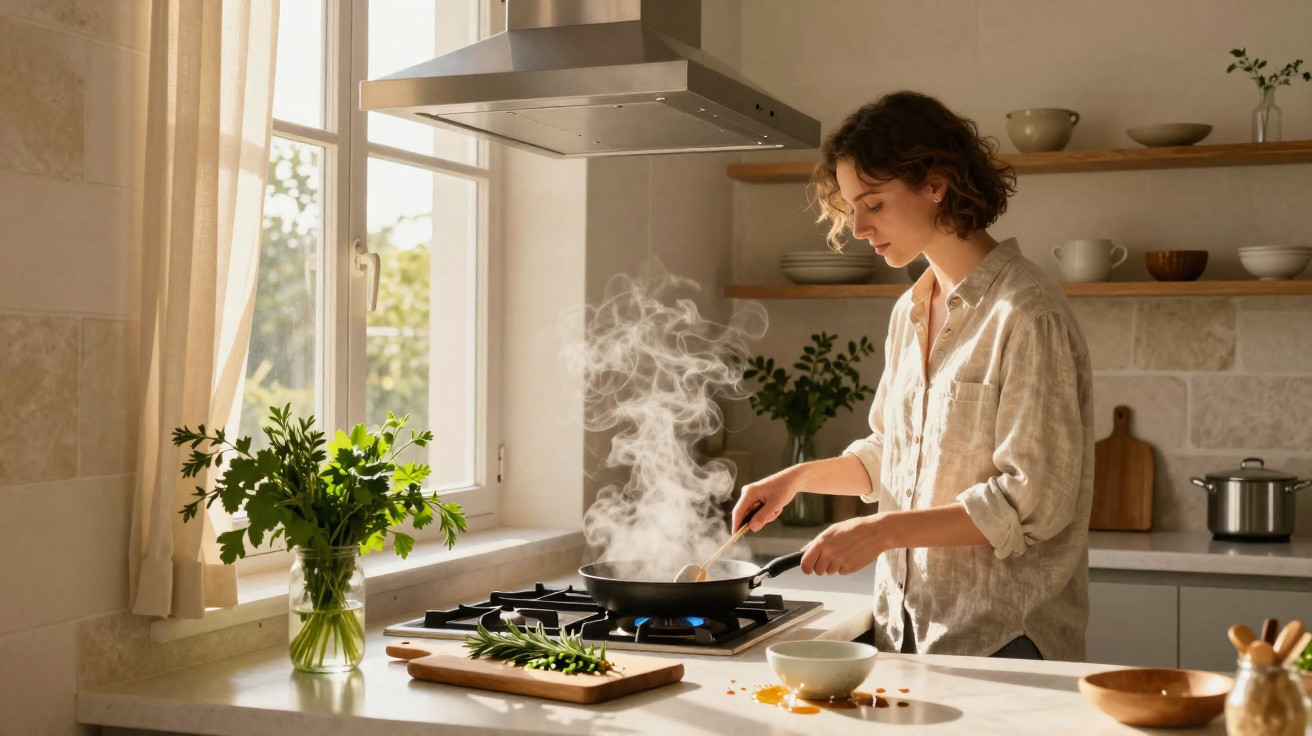
French homes often evoke visions of stylish kitchens, herbs on the windowsill and very little smoke lingering in the air. Yet coverage of lifestyle and housing needs a technical reality check when linking aromatic herbs, greasy cooking smells and household ventilation. Indoors, odours, particles and cooking vapours are controlled above all by replacing stale air with fresh air.
Do fresh herbs really remove the smell of grease?
Not in the way that claim implies. Pots of basil, thyme, rosemary and mint can add fragrance to a kitchen and change how it smells to us, but they do not remove aerosols, volatile compounds or residues released from a frying pan. Grease odours result from the cooking process, the oil used, its temperature and how long these compounds remain in the room.
In reality, aromatic herbs provide a sensory layer rather than an extraction system. In compact kitchens, they may create an impression of fresher air, but the nose detects fragrance; it does not measure particulate matter. The appealing look of French homes therefore cannot replace a cooker hood, air purifier, ducting or cross-ventilation.
What usually makes a kitchen feel free from heavy odours?
For controlling smoke and vapours, several factors matter more than a pot of herbs by the window. They feature in both residential design and indoor-air-quality guidance.
- Using a cooker hood or extractor fan that captures emissions close to the hob
- Opening windows and doors to establish airflow
- Keeping oil at the right temperature to prevent fat from burning
- Cleaning surfaces, filters and built-up splatters regularly
- Choosing cooking techniques that produce less smoke
A clean, well-ventilated kitchen allows fewer odour molecules to settle into curtains, cupboards and fabrics. This is why two homes cooking the same dish can finish a meal with very different impressions of the air.
Why do images of French homes combine cooking with green fragrance?
French homes are frequently shown in magazines, videos and social media as places where the kitchen flows into the living area, benefits from natural light and keeps pots of aromatic herbs within easy reach. This setting reinforces a sense of constant freshness by associating food preparation with freshly picked leaves, butter, wine and pans over a low heat, rather than only with intense frying.
There is also a cultural element. In many domestic routines, aromatic herbs are added from the very start of cooking, releasing their fragrance as food cooks. That scent can compete with greasy odours and reshape the sensory memory of the space, but it is still not the same as lowering the actual concentration of air pollutants.
Can aromatic herbs actually reinforce this myth?
They can, when they are presented as a technical solution. Studies show that cooking with herbs, peppers and seasonings releases terpenes into indoor air. In other words, aromatic herbs contribute to the kitchen's chemical profile, adding scent and complexity to the room rather than necessarily neutralising the smell of grease.
For anyone seeking a more balanced everyday result, objective measures deserve attention before the visual appeal of herb pots:
- Install the cooker hood at the correct height and clean its filter
- Avoid overheating olive oil and refined oils
- Use a lid during searing or frying stages
- Ventilate the room from the beginning of cooking, rather than only afterwards
- Keep fresh herbs as a culinary and aromatic resource, not as extraction
What really lies behind this charming idea?
French homes may indeed have kitchens that are more pleasant to smell because of a combination of factors: more practical design, regular cleaning routines, gentler cooking and the constant presence of aromatic herbs. However, crediting the absence of greasy smells to growing these plants indoors greatly oversimplifies how the environment actually works.
In a kitchen, odours, smoke, airborne grease and comfort rely on effective ventilation, vapour capture and proper management of the hob. Aromatic herbs serve as sensory support and cooking ingredients, while clean air remains dependent on circulation, extraction and control of the cooking process.

Comments
No comments yet. Be the first to comment!
Leave a Comment