
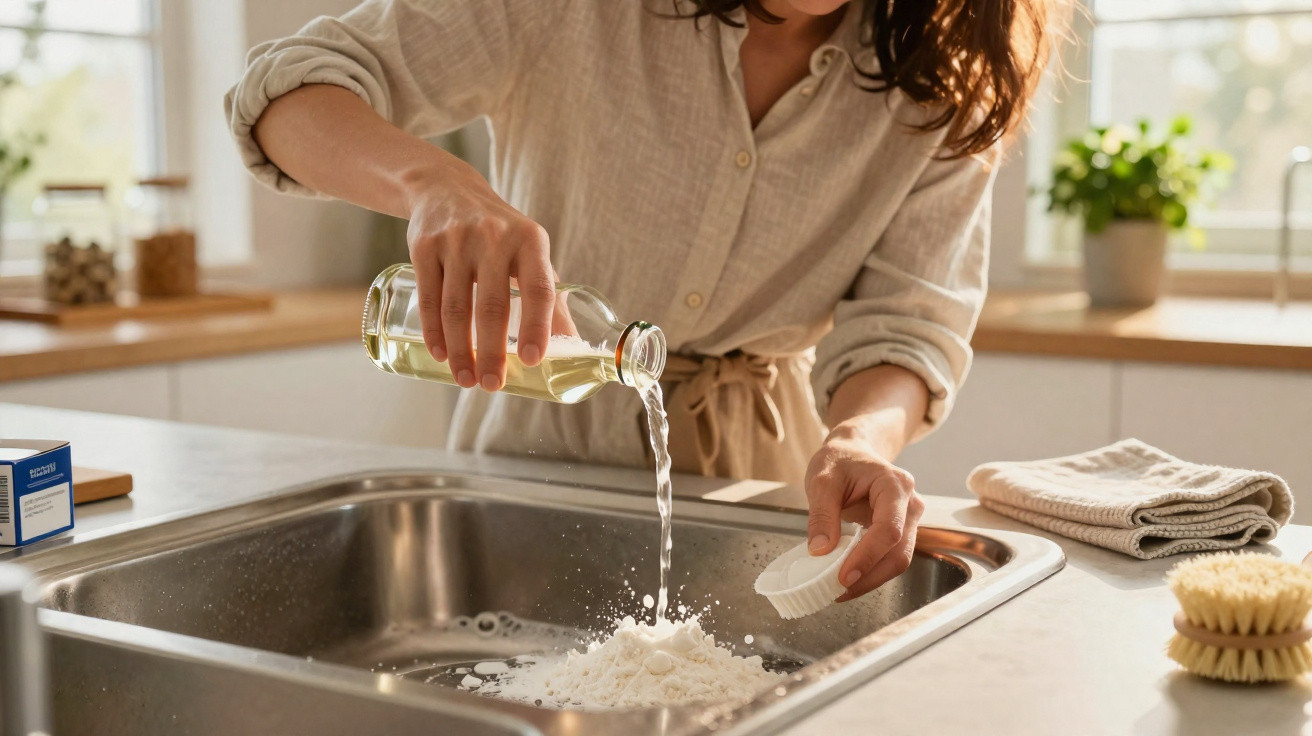
Mixing baking powder and vinegar is a familiar practice in many households and often arouses curiosity. This pairing of two straightforward ingredients, found in most kitchens, is widely linked with household cleaning and home care, as the fizzing reaction is eye-catching and can serve practical, everyday purposes.
Why does a baking powder and vinegar mixture help with household cleaning?
Baking powder and vinegar are mainly recommended together because they create an effervescent reaction on contact. Baking powder contains compounds that react with the acid in vinegar, releasing gas and producing bubbles that can help lift residue from hard-to-reach areas.
In everyday use, this combination is commonly applied to drains, tile grout and surfaces with light grease build-up or soap residue. As an acidic product, vinegar helps to break down surface grease and lessen odours, while baking powder boosts the mechanical action of the bubbles, making it a useful addition to cleaning with a sponge or brush.
How should you prepare and apply the baking powder and vinegar mixture?
For a straightforward application, first spread the baking powder directly over the area, then gradually add the vinegar. For drains, for instance, it is usual to use 1 to 3 tablespoons of baking powder, followed by around half a cup of vinegar. Leave it to work for a few minutes before rinsing.
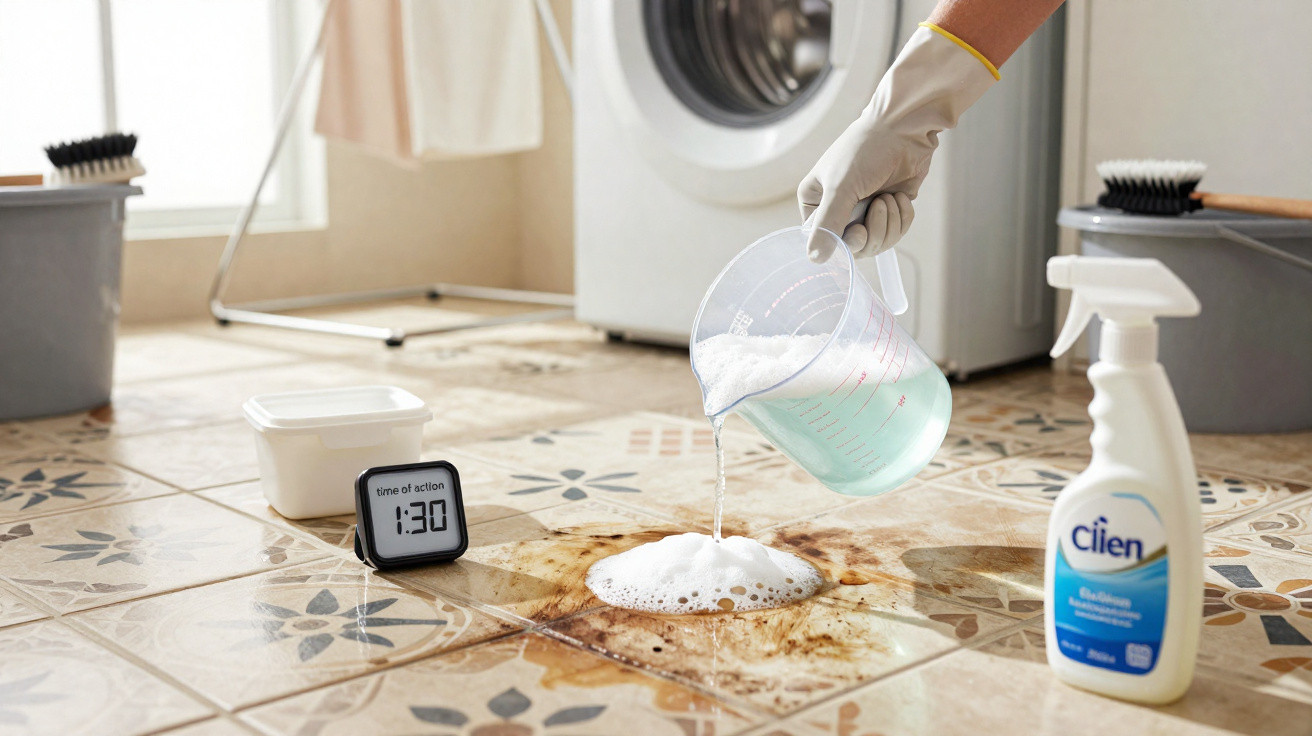
On flat surfaces such as hobs or sinks, many people make a paste using baking powder and a small amount of water, apply it to the dirt, and then spray vinegar over it. For grout, apply the mixture only along the lines between tiles and leave it for 5 to 15 minutes before scrubbing. Avoid using it on highly delicate or porous materials without testing a small area first.
When is a baking powder and vinegar mixture most effective?
This combination is best suited to light-to-moderate cleaning, helping to loosen stuck-on grime, reduce odours and tackle surface residue. It is not a replacement for powerful drain unblockers or dedicated disinfectants, but it can support regular household maintenance, particularly in areas where dirt frequently builds up.
Several practical everyday uses are often highlighted in home-cleaning advice, especially in damp or greasy settings. The most common applications include:
- Drains and surface pipework: helps shift light grease residue and soap remnants, while reducing odours.
- Tile grout: supports the removal of embedded dust and light marks from everyday dirt.
- Hobs and ovens: helps loosen food splashes and grease that is not too old.
- Sinks and worktops: can help reduce odours after preparing food, provided the surface is thoroughly rinsed.
What precautions should you take when using baking powder and vinegar for cleaning?
When using baking powder and vinegar, bear in mind that the reaction creates gas and foam. Containers should therefore not be sealed completely, to prevent pressure from building up. In drains, simply rest the cover in place without closing it fully until the fizzing subsides and the water can be used as normal.
It is also vital not to use vinegar on surfaces that may stain or react with acids, including certain natural stones and sensitive metals. Always test a small, inconspicuous area, rinse thoroughly afterwards, and choose products that are within their expiry date. This helps ensure an effective reaction and turns this kitchen curiosity into a useful part of your cleaning routine.


Comments
No comments yet. Be the first to comment!
Leave a Comment