
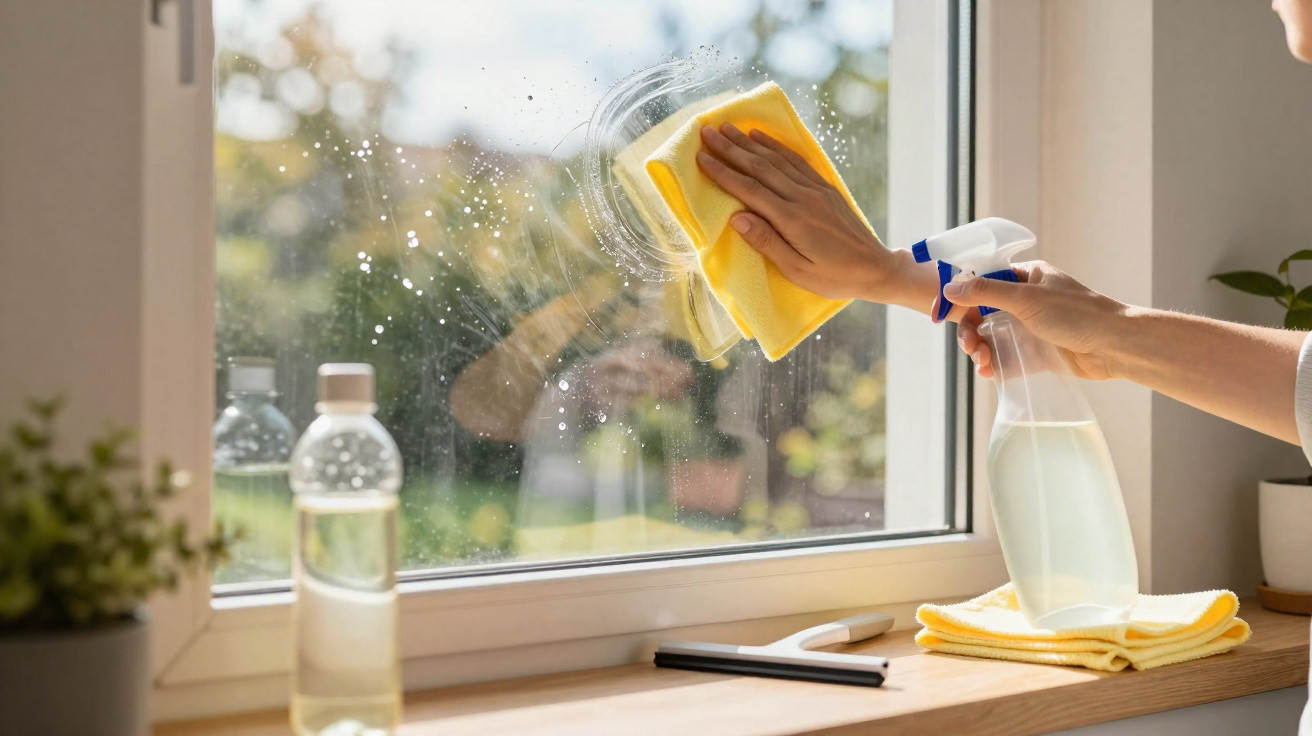
In many homes, the bottle of vinegar kept in the kitchen has also found a place in the cleaning cupboard. This straightforward, inexpensive and widely available product is now used on windows, glass doors, mirrors and shower screens. The most common question is how to clean glass with vinegar without leaving streaks, visible scratches or a cloudy finish once the surface dries.
Why is vinegar effective for cleaning glass?
White culinary vinegar contains acetic acid at a low concentration, which is enough to tackle light residue without being harsh on glass. Its mild acidity helps lift everyday dirt, including stuck-on dust, fingerprints, dried rain splashes and light grease.
When mixed with water, vinegar does not produce thick foam or leave a sticky feel, reducing the likelihood of invisible films forming on the surface. As it is colourless, it can be used on windows, mirrors and glass partitions without staining them, provided that it is not allowed to run onto varnished wood or sensitive surrounding metals.
How to clean glass with vinegar step by step
To use this method easily in practice, it is helpful to follow a basic process using approximate proportions that work well in most circumstances. This makes glass maintenance quick and consistent, without the need for a range of different products.
- Make the solution: fill a spray bottle with water, then add white vinegar to create a ratio of roughly 1 part vinegar to 8 or 10 parts water; for kitchen glass, a few drops of mild washing-up liquid may be added.
- Remove dry debris: before using any liquid, wipe the surface, tracks and corners with a dry cloth, duster or soft brush to prevent scratching from sand grains or heavier dust.
- Spray the mixture: apply a light mist across the glass, covering the whole area without soaking it; more stubborn marks can receive a second, targeted spray.
- Spread it gently: use a clean microfibre cloth or another soft fabric to distribute the solution with light movements, avoiding excessive scrubbing.
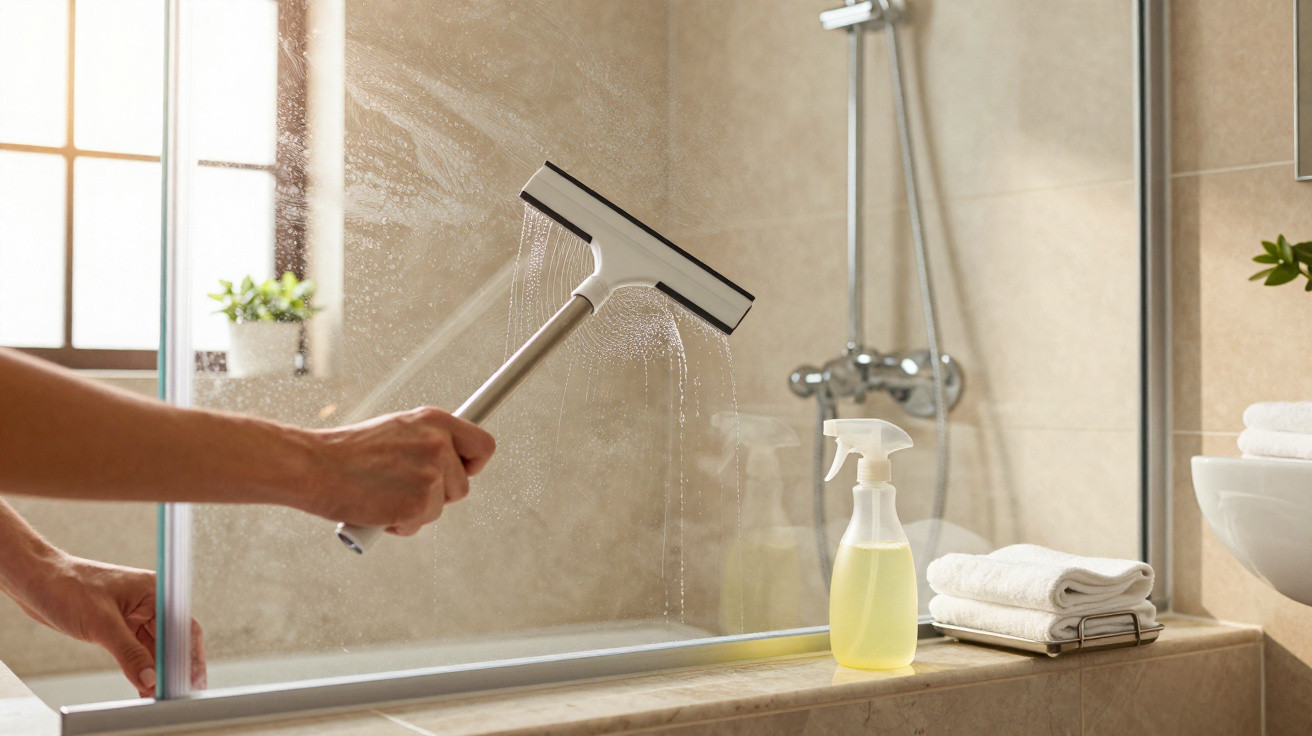
- Dry and finish: remove surplus liquid with a rubber squeegee, working from top to bottom, or use a dry cloth while keeping all strokes in the same direction.
Which accessories should be used with vinegar for glass cleaning?
The outcome when cleaning windows and glass panes with vinegar depends not only on the mixture, but also on the materials used for application and drying. Certain tools help prevent scratches, lint and streaks, making the task faster and improving the finish.
Useful items to use alongside a vinegar solution include those that lift fine dirt without damaging the surface, as well as tools that make it easier to reach larger or higher areas, such as sliding doors and shower screens.
- Microfibre cloths: these absorb moisture effectively, trap small particles and are unlikely to leave lint on the glass.
- Rubber squeegee: this quickly removes excess liquid from large windows and shower screens, reducing the need for a dry cloth.
- Soft brush or vacuum cleaner with a brush attachment: these help clean tracks, corners and upper sections before the wet-cleaning stage.
How can you prevent streaks and keep glass clean for longer?
The time of day at which cleaning is done directly affects the result. In strong sunshine, glass becomes warm and the water-and-vinegar mixture dries too quickly, leaving pale streaks behind. It is therefore best to clean early in the morning, late in the afternoon or on overcast days, when the surface is cooler and the solution has time to work.
To make the clean-glass effect last longer, it helps to deal with fingerprints and splashes as they appear, give extra attention to kitchen areas exposed to grease and steam, and keep tracks and frames tidy. Looking at the glass from the side after cleaning makes it easier to spot any remaining marks quickly and correct them with a dry cloth.


Comments
No comments yet. Be the first to comment!
Leave a Comment