
One morning, the light can catch your bathroom floor from an unflattering angle, making every tile joint seem worn, dark and faintly unpleasant. Bleach may seem like the fast answer, yet it irritates your eyes, has a harsh odour and can occasionally leave the problem worse than before.
One Saturday, I saw a neighbour with her sleeves pushed up, attacking her bathroom floor with the determined expression of someone ready to “fix it for good.” Chlorine filled the room. Although the grout had certainly paled, it also looked stripped and rough, as though its colour had been removed rather than its dirt. Her grandmother then came in carrying a small saucepan as if it contained a closely guarded remedy. She tipped a clear, warm kitchen liquid into a spray bottle, sprayed the grout lines and left it to work. The room smelt like a kitchen rather than a swimming pool. Ten minutes later, she used a toothbrush and a light scrub to reveal a subtle brightness that surprised me. The solution had been in the cupboard all along.
The cupboard staple hiding in plain sight
That “secret” ingredient is white vinegar: the everyday acid that gives pickles their sharpness and salad dressings their bite. Warming it slightly can help return stained grout towards its original shade, without the aggressiveness of bleach. Bleach oxidises stains on the surface, but it does not break down the mineral coating that traps dirt. Vinegar can. Rather than creating an unnaturally dazzling white, it produces a genuinely clean result.
Most of us have crouched beside the bath and noticed that the grout has collected months’ worth of steam, shampoo and dust. A light spray of vinegar can begin to loosen that build-up. I used it on the kitchen splashback after making pasta, when tomato sauce had speckled the pale grout like freckles. I applied warm vinegar, waited three minutes and scrubbed gently. The reddish outline came away instead of spreading. The tiles felt refreshed, without seeming as though they had been scrubbed within an inch of their life.
There is straightforward science behind this cupboard method. Grout is porous, behaving more like a sponge than solid stone. It absorbs soap scum, hard-water deposits and oils, which combine into a dull coating that changes the appearance of the whole joint. Vinegar’s pH helps break down alkaline residue and releases dirt from those pores. Bleach may brighten the surface while leaving the coating behind, allowing the dullness to return quickly. Vinegar clears that blockage, then washes away with water.
How to clean grout with warm white vinegar like a professional
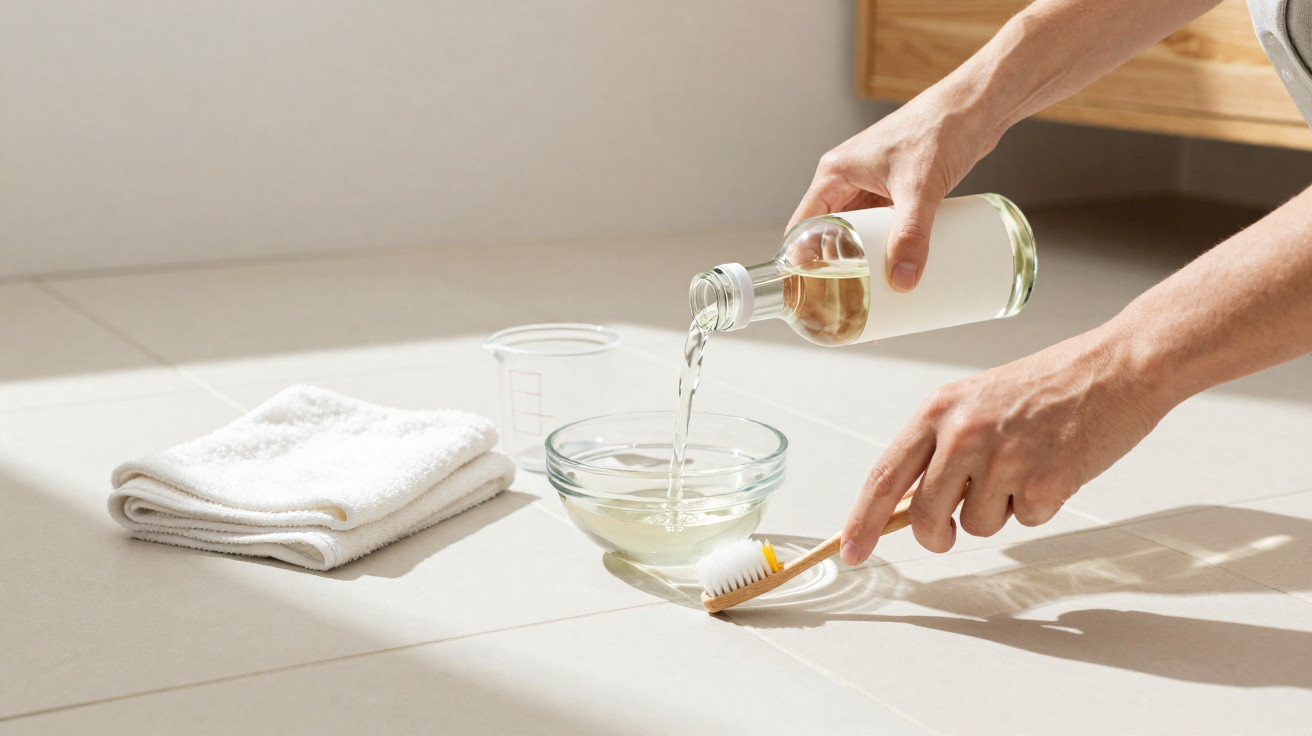
Warm one cup of white vinegar until it feels comfortably warm in your hand, rather than boiling hot. Transfer it to a spray bottle, then spray the grout lines until they are glossy. Leave it for five to ten minutes, treating small areas at a time. Return with a grout brush or an old toothbrush and gently scrub using short movements. Rinse with warm water, then dry the area using a microfibre cloth. If the grout is heavily marked, repeat the process once. It is a modest routine that can deliver a noticeable result.
Keep a window open, as vinegar’s sharp scent can linger. If you find the odour unpleasant, dilute it with an equal amount of warm water and add two drops of mild washing-up liquid. Avoid coloured vinegars; clear cooking vinegar is the one to use. Please do not apply vinegar to marble, limestone, travertine or any other natural stone, as acid can etch these materials. If you are uncertain, test it on an inconspicuous stretch of grout first. Realistically, this is not a daily task: once every few weeks is enough.
“Vinegar won because it lifted the haze that bleach left behind,” said a homeowner who tested both on adjacent grout lines. “The bright wasn’t blinding. It was real.”
- Avoid bleach on coloured grout, as its oxidising action may fade the pigment.
- For greasy kitchen grout, adding a very small amount of washing-up liquid gives vinegar extra degreasing power.
- Rinse thoroughly, because residue makes it easier for fresh dirt to cling on.
- Never mix vinegar with bleach-ever.
- Never use it on natural stone such as marble, travertine or limestone.
Why this small change works beyond the bathroom
Replacing bleach with warm vinegar may sound like a minor adjustment, but it changes the way you clean. Instead of attacking stains, you loosen the material holding them in place. It is less harsh on grout and easier on your nose. It can also encourage a useful routine: spray after a steamy shower, make a quick pass after a curry night, or spend a minute brushing while the kettle boils. Grout remains brighter for longer, the room feels fresher and the task becomes a brief, almost enjoyable break rather than a dreaded chore.
| Key point | Detail | Benefit for the reader |
|---|---|---|
| Warm white vinegar | Heated until hand-warm, then misted onto grout for 5–10 minutes | Releases mineral film and grime without harsh fumes |
| The right tools | Grout brush or old toothbrush, microfibre cloth, spray bottle | Quicker scrubbing, a cleaner finish and less residue |
| Where not to use it | Natural stone such as marble, travertine and limestone; do not mix with bleach | Avoids etching and dangerous reactions |
FAQ:
- Does vinegar actually whiten grout? It brightens grout by dissolving the film that makes it look dull, allowing its true colour to show again. With many stains, the result appears cleaner than the brief “flash” of bleach.
- Can I use pickle juice instead? Yes. Plain pickle brine is mainly vinegar, water and salt. It can work when needed, though its smell may remain for longer.
- How often should I do this? Every 2–4 weeks in high-traffic areas. A quick spray and wipe after steamy showers helps stop build-up from settling.
- What if the grout is mouldy? Vinegar can help with light mildew. For persistent patches, scrub with warm vinegar, rinse, then treat individual spots with hydrogen peroxide. Never mix peroxide or vinegar with bleach.
- Will vinegar damage sealed grout? Occasional use on correctly sealed ceramic or porcelain grout is fine. If the seal is wearing away, reseal it after a deep clean to help prevent stains.
There is a quiet satisfaction in dealing with a household nuisance using something already in your home. Vinegar does not arrive with superhero theatrics. It simply gets between the dirt and the surface, loosens what has adhered there and lets water take care of the rest. On long days when the house seems slightly too cramped, little achievements matter. One bottle of warm spray, five patient minutes and a small amount of scrubbing can make a difference. The grout lines brighten and the room feels gentler. It is almost as if the tiles themselves can breathe again. Next time somebody reaches first for the harsh chemicals, you may well pass on the tip.





Comments
No comments yet. Be the first to comment!
Leave a Comment