
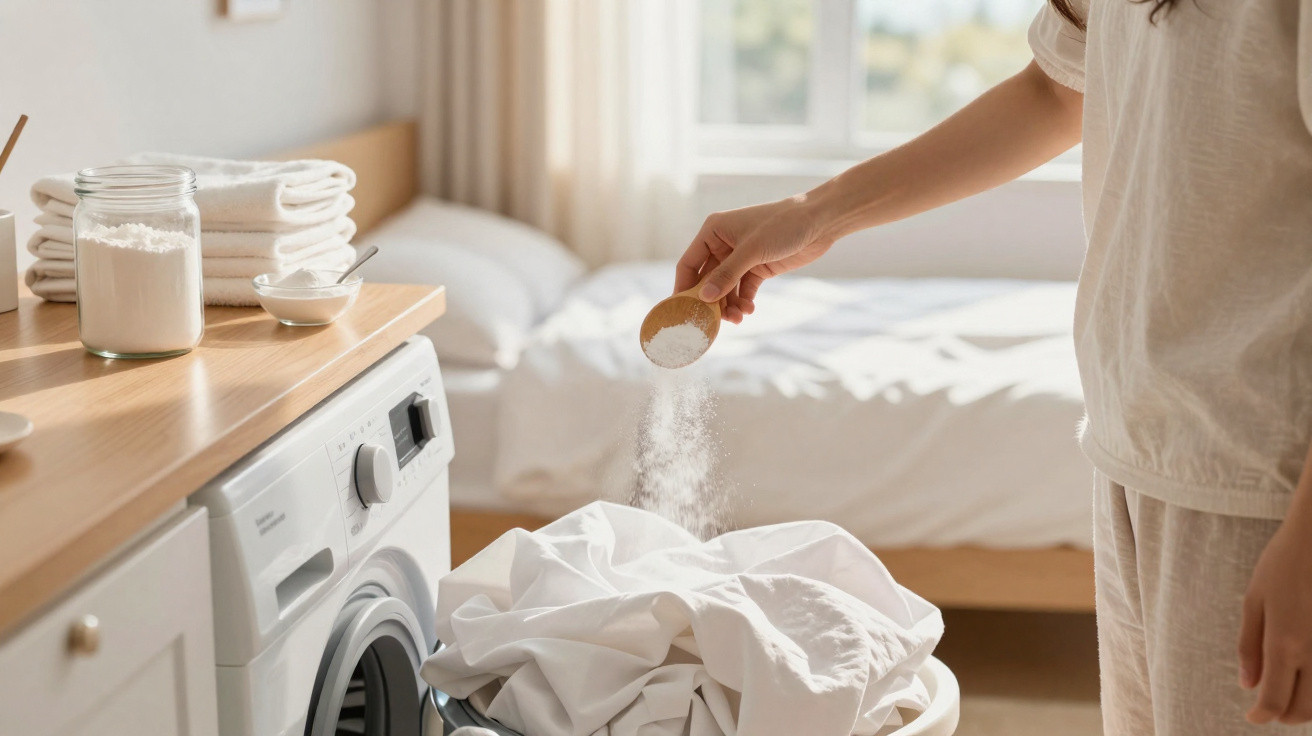
Keeping bed linen pleasant requires effective techniques as part of everyday household cleaning. Using bicarbonate of soda correctly helps to neutralise lingering odours and restore softness to fabrics, ensuring comfortable, properly sanitised items after every wash cycle.
Why do sheets develop unpleasant smells and become rough in the washing machine?
Continuous perspiration and natural body oils work their way deep into textile weaves over successive nights. This invisible build-up creates conditions that encourage strong odours, so specific cleaning care is needed to refresh cotton items properly.
In addition, using too much fabric conditioner often creates an unwanted waxy layer. Product build-up traps sweat within the deeper fibres, making the fabric stiffer and reducing freshness after washing.
Why does a towel smell unpleasant even after it has been washed?
The issue is not usually washing powder, but the invisible build-up of residue and fungi in the... Read more
How does bicarbonate of soda work during the sheet wash cycle?
This alkaline powder works directly on breaking down greasy residues trapped in the items. When it comes into contact with water, it helps remove unpleasant damp odours, delivering a deep clean without wearing down the structure of the fibres.
Its deodorising effect can effectively replace artificially scented products during routine cleaning. This straightforward method loosens embedded dirt and gently disinfects, allowing the bed linen to regain its soft feel and sense of freshness without scrubbing.
Below, watch the video from the YouTube channel A DICA DO DIA COM FLÁVIA FERRARI, which demonstrates practical tips for caring for your fabrics:
What is the correct proportion for using the product on bed linen?
The practical guidance is to add exactly one tablespoon for every ten litres of water in the machine. This balance prevents product waste and ensures it dissolves fully throughout the items during the washing cycle of the appliance.
For better results, combining it with warm water makes it easier for the alkaline component to work on more stubborn stains. Following the capacity limits stated by the manufacturer prevents overloading and ensures the solution reaches the entire bed linen evenly.
Practical Washing Guide
Recommended measurements and ingredients
Follow the right proportions when cleaning bed linen:
- Add 1 tablespoon of bicarbonate of soda for every 10 litres of water.
- Prefer warm water to help dissolve residues more easily.
- Combine it with neutral liquid detergent to protect the fabric and prevent build-up.
What additional care keeps bed linen soft and fresh?
Choose liquid detergent for routine washing of sheets and pillowcases. Powdered options are more likely to leave unwanted residue embedded in textile weaves, which affects the pleasant feel and harms the natural softness of the fibres.
Running an extra rinse cycle ensures that all accumulated products are removed from the fabric. This simple step prevents a rough texture, provides a thorough refresh and keeps bed linen clean and fresh-smelling for longer.
Adopt simple habits to improve daily bed-linen cleaning:
- Select a delicate cycle with warm or cold water to protect the fabrics.
- Do not fill the washing-machine drum beyond the capacity recommended by the manufacturer.
- Dry items completely in a well-ventilated, shaded place.
How can you clean bed linen without damaging the washing machine?
Evenly distributing items around the drum is essential for preserving the motor's mechanical balance. Avoiding an excessive load prevents too much friction between fabrics, reducing premature wear and ensuring effective washing of the bed linen.
Also, always following the washing-machine manufacturer's instructions and limits helps preserve the appliance's lifespan. Cleaning the system correctly allows bicarbonate of soda to work at maximum effectiveness, leaving your sheets soft and free from odours.




Comments
No comments yet. Be the first to comment!
Leave a Comment