
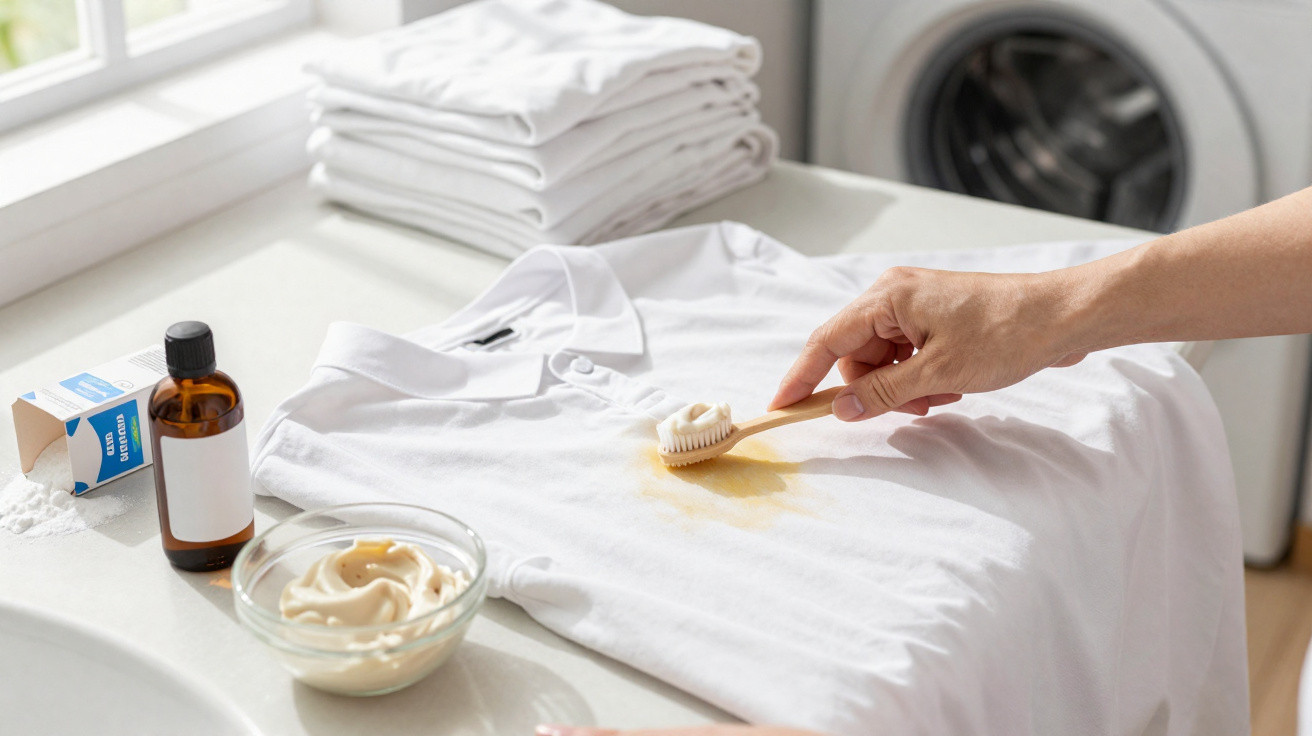
Yellow stains in the armpits of white shirts are not caused by sweat alone. Antiperspirant residue, body oils and salts in perspiration can build up in the fibres, creating a crust that is hard to remove. This is particularly likely when the garment has been washed and dried repeatedly without being pre-treated.
Why do sweat and antiperspirant turn a shirt yellow?
Many antiperspirants contain aluminium-based compounds that temporarily reduce the amount of sweat reaching the skin. On clothing, these ingredients can react with perspiration, body residue and other product components, producing deposits that become trapped chiefly in the underarm area.
As this material builds up, the affected area may become stiffer and more yellow. A standard wash does not always dissolve the crust fully, which is why older stains often need pre-treatment and more than one attempt before they are removed.
- Sweat and body salts become lodged in the fibres;
- Antiperspirant residue can create a hardened layer;
- Skin oils also contribute to the build-up;
- Tumble-dryer heat can make stubborn stains harder to remove;
- The older the mark, the more labour-intensive treatment is likely to be.
How should bicarbonate of soda and hydrogen peroxide be used on the stain?
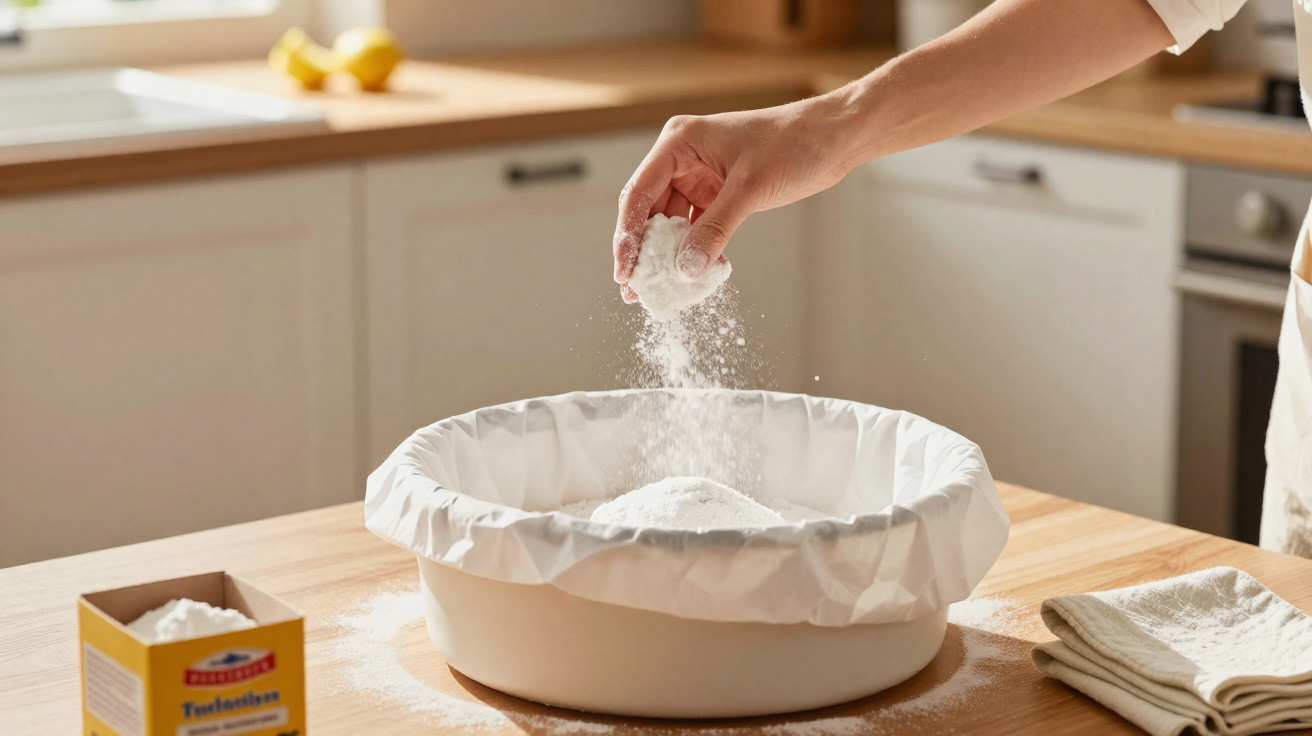
For white shirts that are suitable for these products, a mixture of bicarbonate of soda, water and 3% hydrogen peroxide can be applied to the yellowed area and left for a few minutes before washing. First test it on a concealed section, follow the garment care label and rinse thoroughly before putting the shirt in the washing machine. Similar mixtures are used to pre-treat deodorant deposits on white fabrics.
What is the step-by-step method for treating an old stain?
Turn the shirt inside out so that you can reach the section that was in direct contact with the skin. Apply a small amount of the paste to the stain without soaking the entire garment, leave it for around 30 minutes, then rub gently with your fingers or a soft brush before washing.
Next, wash at the highest temperature permitted by the care label and air-dry the shirt so you can inspect the result before using a tumble dryer. If yellowing remains, the treatment may need repeating. Other methods for restoring yellowed white clothes also require you to check the fabric composition first.
- Check the care label before beginning treatment;
- Test the mixture on an inconspicuous area;
- Apply it only to the yellowed section;
- Leave it to work for approximately 30 minutes;
- Rub gently, without wearing down the fibres;
- Wash as usual and inspect the stain before drying with heat.
Should chlorine bleach be avoided?
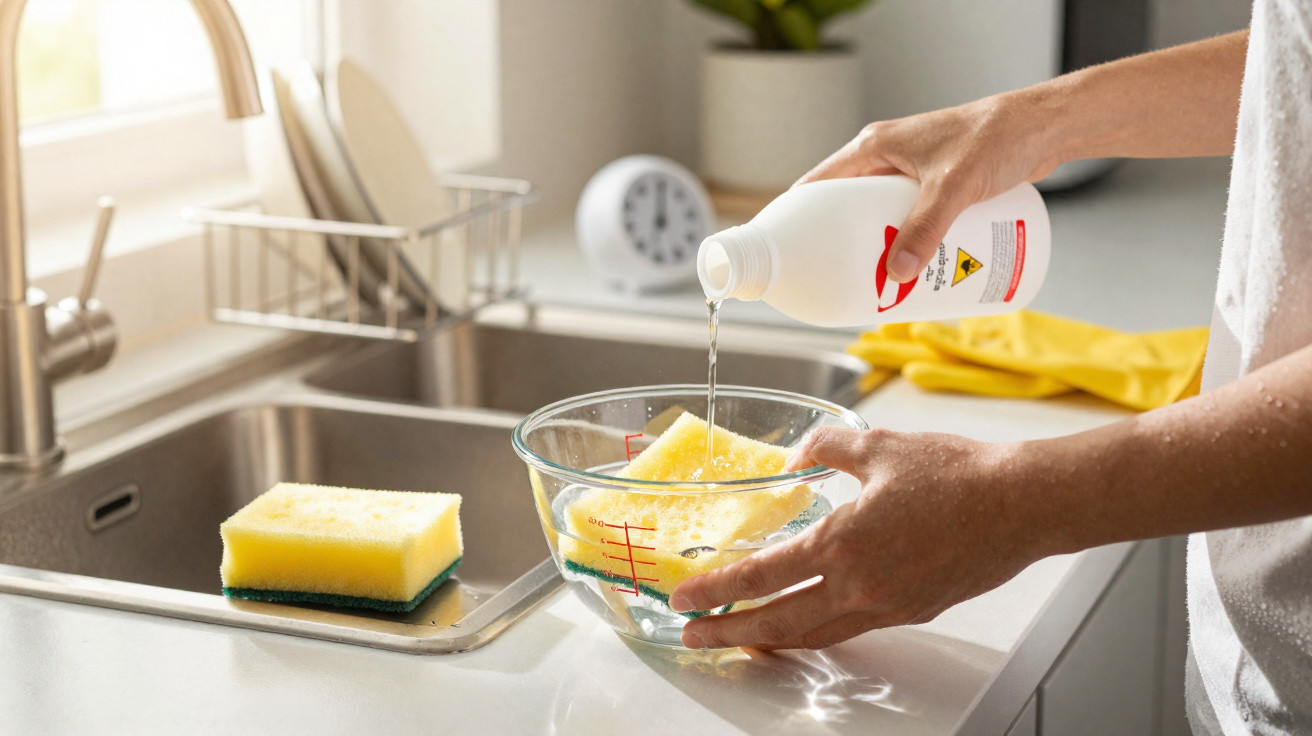
Chlorine bleach should not be considered forbidden for every white shirt: some cotton and polyester fabrics allow its use when the care label permits it. However, it must not be mixed with hydrogen peroxide or other products, and garments containing elastane, wool, silk or particular finishes may require non-chlorine bleach. For persistent sweat stains, enzyme-based products or oxygen-based bleaches are also suitable alternatives.
How can yellowing be prevented from returning to shirt armpits?
Allowing the antiperspirant to dry before putting on a shirt reduces the amount of product transferred directly to the fabric. An undershirt also forms a barrier against sweat and residue, while washing sweaty clothing-or at least allowing it to dry in a well-ventilated place-prevents it from staying damp and piled up for several days.
Prevention is most effective when build-up is removed before it develops into a thick crust. Washing shirts after heavy wear, avoiding excessive amounts of antiperspirant and checking the underarms before drying help stop successive layers of sweat and product from turning a faint mark into a permanent yellow stain.
Comments
No comments yet. Be the first to comment!
Leave a Comment