
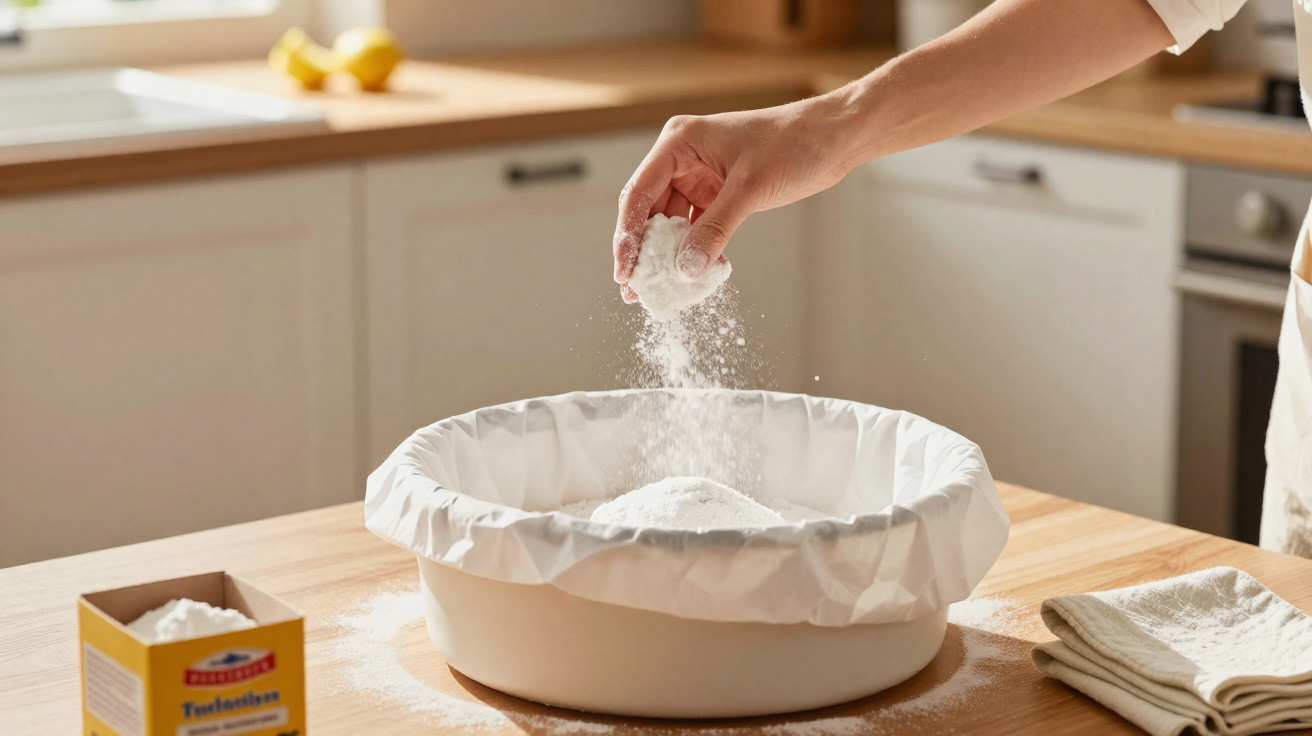
Putting sodium bicarbonate in the bottom of the bin is an easy way to reduce moisture and manage some of the odours created by household waste. Rather than acting as a fragrance, the powder can react with certain acidic compounds responsible for unpleasant smells and helps keep the base of the container drier. This is particularly helpful on hot days, when food scraps spoil faster.
What is the purpose of putting bicarbonate in the bottom of the bin?
Bicarbonate is mainly useful as an aid for odour control. As it is mildly alkaline, it can neutralise some acidic compounds found in waste, reducing their volatility. The powder can also take up small amounts of moisture that reach the bottom of the bin through bin-bag leaks or condensation.
This means it works better as a preventative measure than as a way to mask a bin that is already very dirty. Built-up organic waste still needs to be removed, and the container should be washed whenever there are liquids, grease or stuck-on residues.
- Helps manage some odours;
- Absorbs small amounts of moisture;
- Reduces smells without adding a strong fragrance;
- May make upkeep easier between washes.
Why does hot weather make bin smells stronger?
Higher temperatures speed up several chemical reactions and encourage microorganisms to act on food leftovers. Peels, meat, sauces, fruit and other organic waste release volatile compounds more quickly, allowing the smell to spread through the room. As a result, a kitchen bin can become noticeably odorous much sooner on warm days.
How should the powder be used without making a mess?
Once the bin has been emptied and cleaned, allow the inside to dry, then sprinkle a thin layer of bicarbonate directly across the base before fitting a fresh bag. There is no need for a thick coating: a small amount will already be in contact with any drops that leak from the bag and with the air in the lower part of the container.
The application can be replaced once a week or whenever the bin is washed, although the appropriate frequency depends on how it is used. A household that throws away plenty of wet waste may need more regular cleaning, whereas bins used only for dry packaging are unlikely to need the same attention.
- Wash the bin whenever liquid or dirt has built up;
- Wait for the base to dry before adding the powder;
- Use only a thin layer;
- Fit the bin bag over the bicarbonate as usual;
- Replace the product after the next clean.
Does bicarbonate replace washing the bin?
No. Sodium bicarbonate can help control smells, but it does not remove food residue, biofilm, grease or liquids that have escaped from the bag. Where dirt is stuck to the surface, wash the container with water and washing-up liquid, rinse it and let it dry before fitting a new bag.
- Empty the bin before it overflows;
- Do not allow liquids to collect at the bottom;
- Keep food leftovers properly contained;
- Wash the lid, rim and inner walls when they are dirty;
- Do not mix different cleaning products inside the bin.
Why does this trick work best before the smell becomes strong?
The benefit of this approach lies in addressing the conditions that encourage unpleasant odours from the outset. Positioned at the bottom of the bin, the powder comes into contact with small amounts of moisture and certain odour-causing compounds before they build up to a concentration high enough to take over the kitchen.
The result also relies on basic household cleaning habits. Changing the bag regularly, removing organic waste at the end of the day when needed and keeping the container dry remain more important than any single product. Bicarbonate complements this routine by helping to manage moisture and some of the smell, rather than simply covering it with fragrance.
Comments
No comments yet. Be the first to comment!
Leave a Comment