
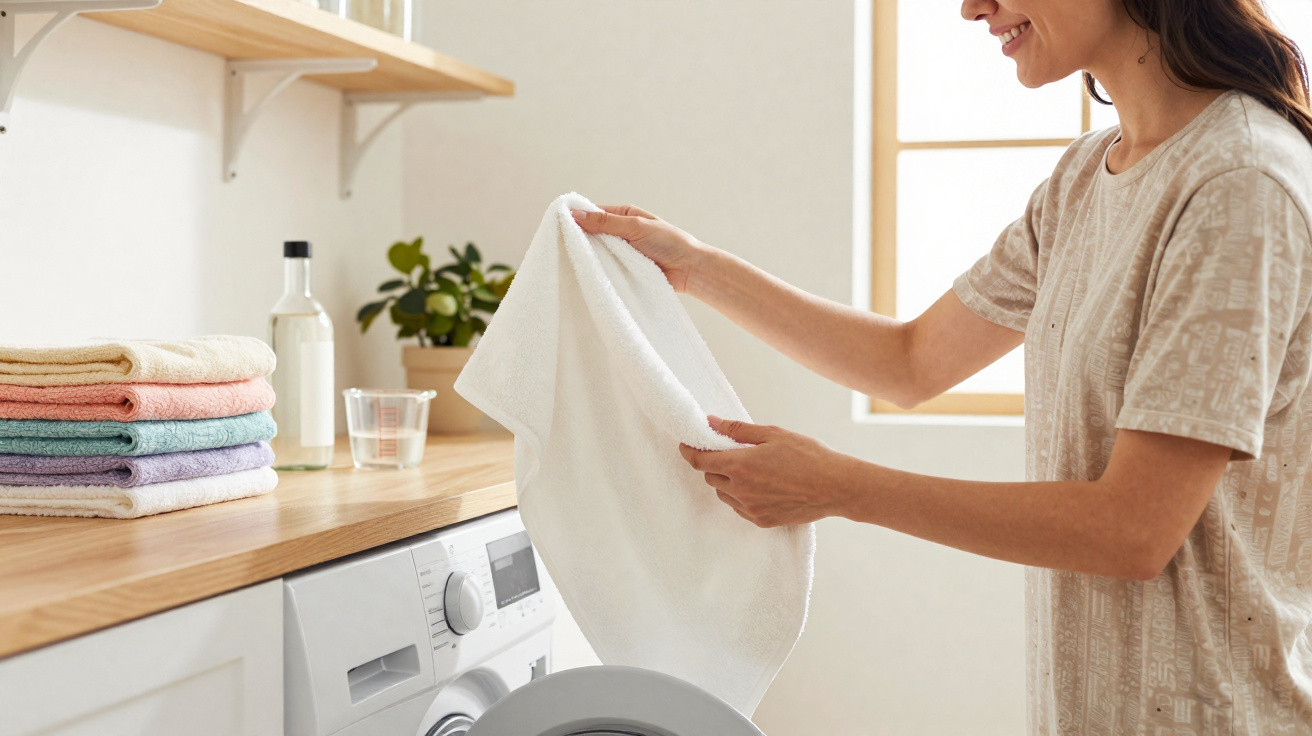
Many people find that bath towels lose their original softness after being washed repeatedly at home. The ongoing build-up of residue makes the fabric stiff, yet adding white vinegar can restore its natural softness and easily remove unpleasant smells.
Why do towels lose their softness over time?
Using too much detergent in a wash leaves greasy substances lodged deep within the cotton. This creates a water-repellent coating that limits absorbency, making the items feel heavy, rough and stiff during everyday family use.
Minerals in the water also create microscopic deposits that settle between the textile threads. Over successive wash cycles, trapped moisture encourages bacteria to develop, causing the familiar unpleasant musty smell after bathing.
How does the German method transform old towels?
The secret lies in the chemical reaction that breaks down accumulated soap molecules before they… Read more
How does white vinegar work on textile fibres?
The active component in this kitchen ingredient is acetic acid, a substance that can dissolve built-up chemical residues. This acidic reaction breaks apart the alkaline film left by detergents, freeing the cotton fibres so they can regain their natural flexibility.
At the same time, the liquid neutralises limescale and other mineral salts found in tap water. Once this rigid mineral barrier is removed, the fabric feels more pleasant, while its antimicrobial action eliminates volatile compounds responsible for lingering odour.
Below is a video from the Dri Pak YouTube channel that explores the points discussed in this topic in greater detail:
What is the correct way to use white vinegar in the washing machine?
For maximum effectiveness without harming the items, simply pour a moderate amount directly into the fabric-softener compartment. The appliance releases the liquid during the final rinse, allowing the product to work without affecting the main wash.
There is no need to worry that the towels will smell like salad once they have fully air-dried. The distinctive scent evaporates completely during drying, leaving only a feeling of deep cleanliness and long-lasting freshness in the laundry.
Practical guide
Step-by-step application
Follow these recommendations to revitalise the fabric of your towels:
- Add your usual detergent to the washing machine’s main dispenser.
- Put a measure of white vinegar in the fabric-softener compartment.
- Run the full cycle with a rinse, then dry in a well-ventilated area.
What are the benefits of replacing traditional fabric softener?
Conventional commercial fabric softeners often coat fabrics with synthetic waxes that reduce a towel’s ability to absorb water. Replacing them with a natural alternative protects the original structure, extending the life of the fibres and providing greater daily comfort.
This change also helps keep the inside of the washing machine clean and free from sticky, greasy build-up. The acid helps prevent mould from forming on the rubber seals, delivering excellent financial savings and ensuring continuous hygiene in the home.
The main benefits noticed when adopting this method for household tasks include:
- Immediate restoration of the natural ability to absorb water;
- Permanent removal of unpleasant odours trapped in the weave;
- Prevention of chemical residue build-up in the machine.
When do results start to appear in the wash?
A noticeable difference in the feel and texture of the fabric can be detected straight after the first use. The towels dry the body more quickly, lose their uncomfortable stiffness and show a clear recovery in the original volume of the cotton loops.
Keeping up this regular routine ensures items remain pleasant, odour-free and ready for the household’s everyday use. This sustainable practice extends the quality of bathroom items, providing proven practicality and excellent wellbeing for the whole family.



Comments
No comments yet. Be the first to comment!
Leave a Comment