
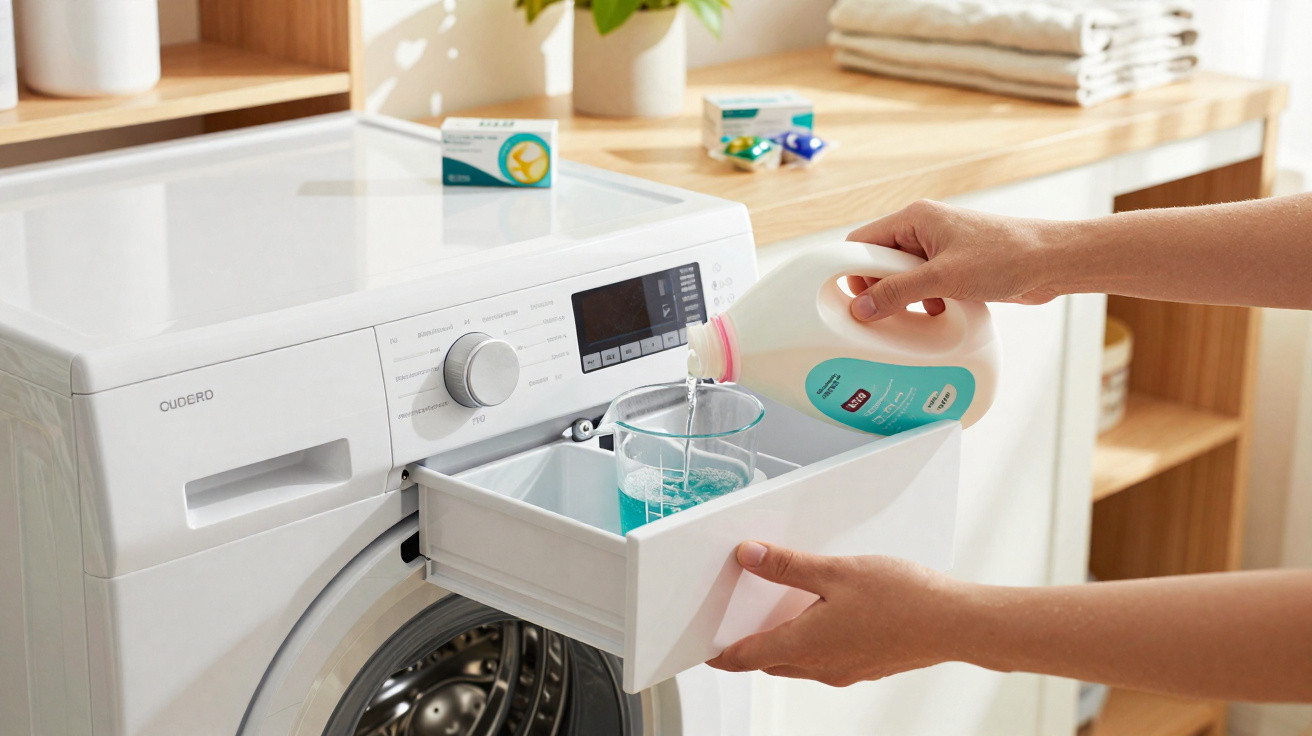
A washing machine may have three separate compartments so that each product is released at the right point in the cycle. Although they can look alike, these sections usually serve different purposes, and putting detergent or fabric conditioner in the wrong place can affect both the wash and the final result.
Why does a washing machine separate the products?
The compartments allow products to be dispensed at different stages. Detergent is generally used during the main wash, while fabric conditioner needs to reach the laundry nearer the final rinse in order to do its job.
Keeping them apart prevents the products from mixing too early. As drawer layouts vary by manufacturer and model, the symbols on the drawer and the guidance in the manual are the most reliable ways to identify each compartment.
What distinguishes the three compartments?
On many washing machines, the compartment labelled II is for detergent used in the main wash. The section marked I is usually used when a pre-wash stage has been selected, while the compartment displaying a flower symbol is generally intended for fabric conditioner.
Not every machine follows this exact layout. Some models include extra sections for bleach, capsules or particular products. For this reason, it is not advisable to presume that every appliance has the same arrangement simply because its drawer looks similar.
How should each product be placed in the right compartment?
First, check the numbers and symbols shown on the drawer. Put detergent in the compartment for the selected stage, and add fabric conditioner to its designated section, observing the maximum-level marking inside the container.
Special products, such as bleach or additives, should only be used in the compartment specified by the manufacturer. It is also important not to exceed the recommended amounts, as using too much product may leave residue on clothing and inside the washing machine itself.
Who needs to adjust this practice and when?
Anyone using pre-wash cycles should pay particular attention to the relevant compartment, since the product added there will be released at a different stage from the main wash. Those using standard cycles, on the other hand, will usually only need the detergent section and, if wanted, the fabric conditioner compartment.
Washing machines with an automatic dosing system may work differently, with dedicated reservoirs for the products. In those cases, the manual should take priority. Understanding the washing machine compartments therefore helps prevent mistakes and ensures that each product is used at the point intended by the appliance.




Comments
No comments yet. Be the first to comment!
Leave a Comment