
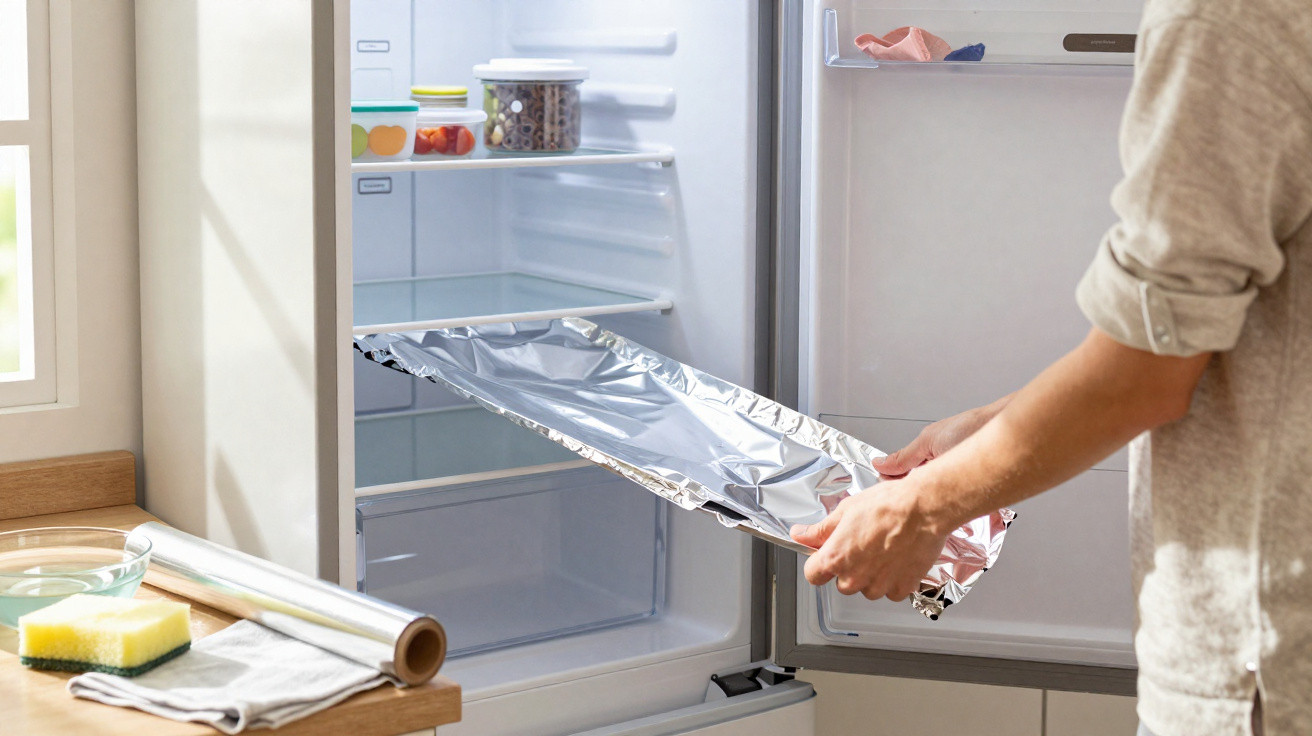
Opening a freezer often reveals the same familiar sight: thick layers of ice on the walls, drawers stuck fast and barely any space left for food. Many people put off defrosting it for months. Yet a simple trick using everyday aluminium foil can make maintenance far easier while also helping to protect both your appliance and your budget.
Why ice build-up in a freezer becomes a real electricity drain
Whenever the door is opened, warm, humid air enters the freezer. That moisture settles on the cold interior surfaces and freezes. Over time, it forms layer upon layer of ice, which is not merely inconvenient but has tangible consequences.
The thicker the layer of ice, the harder the compressor has to work – and the higher the electricity bill will ultimately be.
Ice acts as an extra insulating layer. Cold air does not reach the interior as effectively, so the freezer has to run for longer and more frequently to maintain its target temperature. This increases energy use and places ongoing strain on the appliance’s components.
There is another issue too: if ice accumulates around the seals or along the front edge, the door may no longer close properly. Even a tiny gap allows warm air to enter continuously. This creates a self-reinforcing cycle: more moisture, more ice and more electricity consumption.
Food stored at the back can eventually disappear entirely beneath a layer of frost. Packaging may tear when pulled out, bags can freeze to the surface and containers may become misshapen. What should be a practical place for storing provisions turns into a source of frustration.
Why conventional defrosting is so unpopular
It is hardly surprising that many households delay defrosting. The process is laborious: empty the appliance, unplug it, wait for hours, collect the water and scrape away the ice. Few people want to deal with that after a busy day.
In an attempt to speed things up, some people use kitchen knives or rigid scrapers. This is risky. One misplaced jab can damage the inner lining or puncture components; in the worst case, the freezer will be beyond repair.
The underlying issue is how firmly ice sticks to plastic walls – and that is exactly where the aluminium foil trick comes in.
How aluminium foil helps with stubborn freezer frost
Ice adheres particularly well to rough or slightly porous surfaces. Although the inner walls of many freezers are smooth at first, they can develop fine scratches over the years from drawers, storage boxes and defrosting tools. Frost effectively anchors itself in these tiny grooves.
Aluminium foil, by contrast, has a very smooth, sealed surface. The key point is that ice will still form, but it cannot bond as firmly to the wall. Instead, it sits on the foil and can later be peeled off as a loose layer.
Aluminium foil acts as a protective layer: the ice sticks to the foil rather than directly to the freezer compartment.
Step-by-step guide: fitting aluminium foil in the freezer compartment correctly
Preparation: the trick is of little use without thorough drying
Some preparation is needed if you want a noticeable effect. Applying foil to damp or icy surfaces will soon cause problems: it can come loose, bubble up and tear.
- Empty the freezer completely and store the food elsewhere temporarily, such as in a cool bag or, in wintry weather, on a balcony.
- Switch off the appliance and allow any existing ice to defrost in a controlled manner.
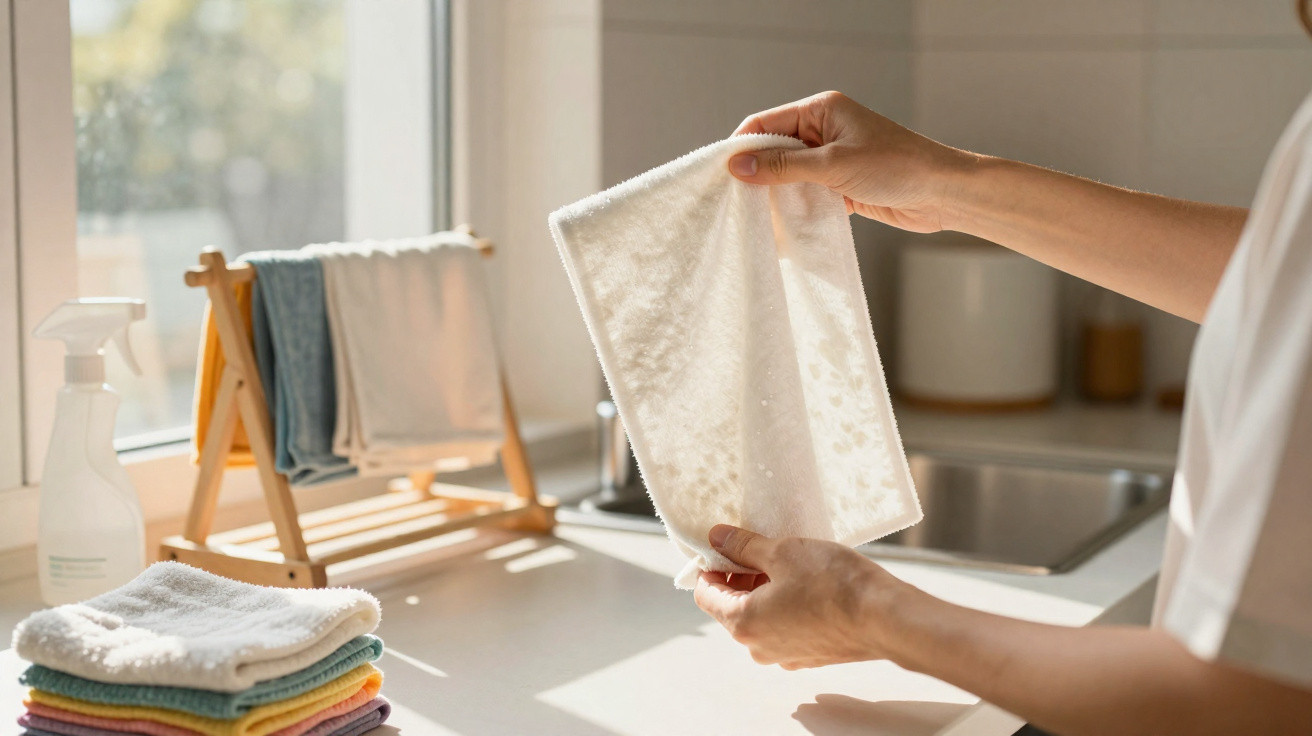
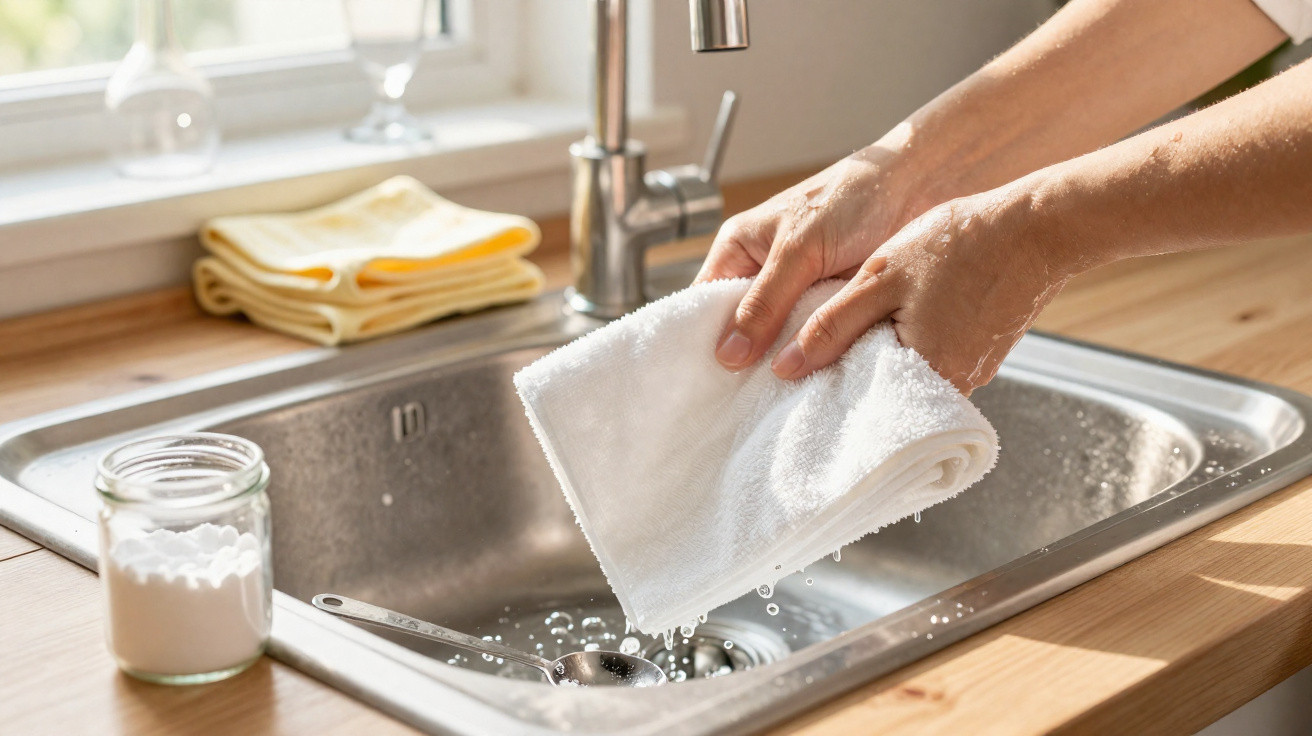
- Soak up the meltwater with cloths and dry the interior thoroughly, including corners and grooves.
Only once every surface is completely dry is it worth moving on to the next stage.
Cutting and applying the foil
This is the straightforward part. Standard household aluminium foil is entirely sufficient.
- Cut sheets to cover the back wall, the upper section and areas especially prone to frost.
- Smooth the foil down with the palm of your hand, carefully pressing out any trapped air.
- Fold and press down the edges slightly so the foil is less likely to come loose while food is being put in or taken out.
- Do not cover slots, vents or sensors, so that air can continue to circulate.
The result does not need to look perfect. What matters more is keeping creases to a minimum and ensuring that nothing rattles or sticks out.
How foil makes the next defrosting session easier
Ice will gradually build up again, but it will be far less firmly attached. Rather than having to scrape for ages, the next defrost can usually be simplified to a few quick steps:
- Loosen the foil at one corner and peel it away slowly.
- Most of the ice will fall away or break off with it.
- Allow any remaining ice to thaw briefly, wipe the compartment clean and apply fresh foil – job done.
Many users report that the time needed for defrosting has more than halved since they began protecting the walls with foil.
There is an added benefit: the internal surfaces are protected from scratches. Hard tools repeatedly leave grooves when foil is not used, and even more ice can collect in them later. The aluminium layer prevents precisely this type of wear.
How often should aluminium foil be replaced?
The protective layer will not last forever. Temperature changes, moisture and movement will eventually make it brittle. As a rough guide, replace it every few months, or whenever:
- the foil has torn;
- the layer has become very uneven or wrinkled;
- a particularly large amount of ice is hanging in individual areas.
It is useful to keep a roll of aluminium foil near the freezer. That makes it easy to replace on the spur of the moment, for example after the weekly shop, when the compartment is being briefly rearranged anyway.
Where the aluminium foil trick has the greatest effect in a freezer compartment
In many appliances, the thickest layers of ice form in certain areas:
- in the upper interior section;
- on the back wall;
- directly along coolant lines or evaporator areas.
If aluminium foil is in short supply, these zones should take priority. A pattern will become apparent over time: every freezer has its own typical trouble spots. Once you know them, you can place the foil exactly where it will have the greatest effect.
Saving electricity by opening the door less often and organising frozen food better
The foil trick works directly on the appliance. However, adjusting a few everyday habits can slow ice formation even further.
- Label frozen food so you do not have to search for long.
- Store similar items together, such as vegetables in one drawer and bread in another.
- Freeze only as much as you are realistically likely to use over the coming months.
- Open the door only briefly and avoid leaving it ajar for extended periods.
Every shorter door opening means less moisture enters the freezer, resulting in fewer layers of frost being able to form.
Risks, limitations and useful additions
This method has its limits. In frost-free appliances with active air circulation and automatic defrosting, aluminium foil is often unnecessary and may interfere with airflow. For these models, it is worth checking the instruction manual before covering the walls.
With older chest freezers, take care not to cover ventilation slots, drainage points or temperature sensors. Otherwise, the thermostat may work inaccurately and energy consumption could rise despite the foil.
For maximum reassurance, combine several simple measures:
- apply aluminium foil to the critical surfaces;
- clean the seals regularly and check them for cracks;
- do not place the appliance directly beside a radiator, cooker or dishwasher;
- inspect and reorganise the freezer compartment thoroughly at least once a year.
Why using aluminium foil is worthwhile over the long term
Very little material is needed, yet the everyday benefit can be noticeable: fewer ice crusts, quicker defrosting and less risk of damage to the interior. Those who try the trick once often make it a permanent part of their household routine.
Over the lifespan of a freezer, the combination of shorter running times, reduced material wear and manageable maintenance can save many pounds. At the same time, stored food remains easier to see, items can be removed more easily and spur-of-the-moment cooking plans are not derailed by frozen drawers.
A small strip of aluminium foil will not transform the entire household, but it can make one of the kitchen’s most tiresome jobs far less daunting – with just a few simple steps and no specialist tools.


Comments
No comments yet. Be the first to comment!
Leave a Comment